
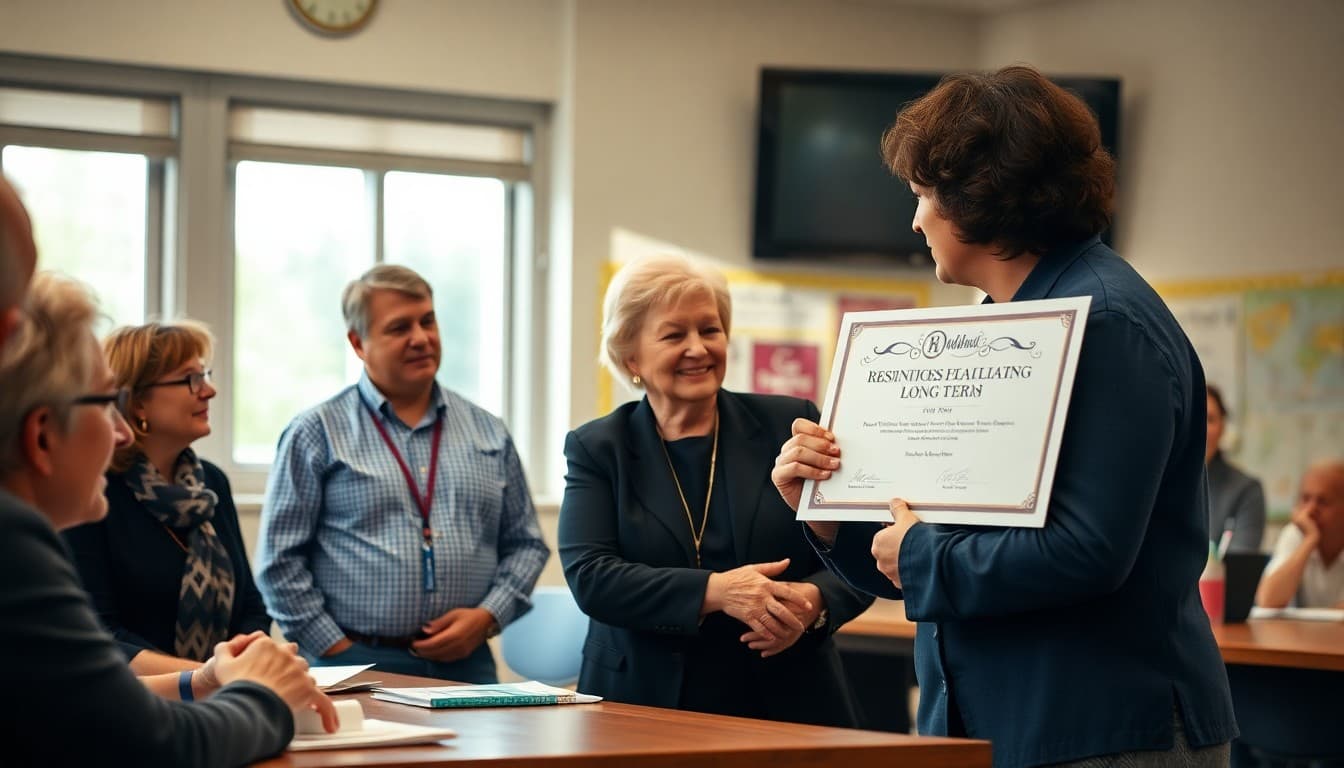
School Board Staff Retirement Celebration Newsletter

Educators who spend 25 years in the same district have shaped thousands of students. A board newsletter that honors their retirement with specific, genuine recognition does something that a generic plaque in a supply closet does not: it makes the community part of the farewell. It also signals to current staff what commitment to the district looks like and how the board values it. The retirement newsletter is one of the few communications where the purpose is purely human, and it deserves to be written that way.
Getting Permission Before You Publish
Before writing the retirement newsletter, confirm what the retiree is comfortable having shared publicly. Some educators prefer a quiet retirement. Others are happy for a full spotlight. Ask whether they approve of the newsletter, whether they want to provide a quote, and whether they are comfortable having their photo published. Get this confirmation in writing, even a brief email reply. A newsletter that shares details the retiree did not approve turns a celebration into an intrusion. This step takes five minutes and prevents a significant awkwardness.
Writing the Recognition Paragraph
The recognition paragraph should be specific, not generic. "Ms. Reyes dedicated 31 years to Lincoln Elementary, serving as a first-grade teacher for 22 years before becoming the school's literacy coach. She helped build the district's phonics curriculum that is now used in all eight elementary schools and mentored more than 40 student teachers over her career." That paragraph says something real about the person's contribution. "A dedicated educator who touched countless lives" says nothing. Every retiree deserves the specific version.
Inviting the Community to Celebrate
For educators who have long community visibility, like a principal who has led a school for 15 years or a teacher who has taught three generations of families, an open community retirement reception is appropriate. The newsletter should include the event details and describe the format: open house where families can stop by between 5 and 7 p.m., or a program beginning at 6 p.m. with brief remarks from the superintendent and board chair. Specify whether children are welcome. If the event is being organized by staff and the community newsletter is intended to extend the invitation to families, say so clearly.
Including Student and Family Tributes
For a retiring teacher or principal with strong community relationships, include a brief tribute section in the newsletter with quotes from current or former students and families. A third grader's thank-you note, a quote from an alumnus whose reading struggles were resolved by this teacher, or a line from a family who had three children in the same classroom: these are the details that make a retirement newsletter worth reading and worth keeping. Collect these in advance through a brief solicitation and select two or three that are specific and genuine.
Acknowledging the Transition
The retirement newsletter is also an opportunity to acknowledge what comes next. If a replacement has been hired, introduce them briefly with their name and relevant background. If the search is ongoing, describe the timeline. "We are grateful for [Name]'s 29 years of service and are conducting a search for the next principal of Washington Elementary. We expect to announce the selection in July." This gives families the practical information they need alongside the celebration. Keeping both in the same newsletter rather than a separate communication shows organizational confidence.
The Board Resolution
For long-term staff retiring after significant service, a board resolution entered into the public record is the appropriate formal recognition. The newsletter should note the resolution: "At the May board meeting, the board unanimously passed a resolution recognizing [Name]'s 26 years of service and dedication to students and families." Include a link to the resolution or meeting minutes where it appears. Families who attend board meetings sometimes miss these moments. The newsletter brings them to a wider audience and creates a permanent record of the community's respect.
Representing the Scale of Contribution
A 25-year career in a single district is uncommon and worthy of specific quantification. How many students did this educator teach? If a first-grade teacher taught a class of 22 students per year for 24 years, that is roughly 528 students whose earliest school experience included this person. A principal who led a school of 600 students for 12 years shaped the experience of thousands of families. These numbers help the community grasp the scale of contribution that retiring staff often underestimate in themselves.
The Follow-Up Thank-You
After the retirement celebration, send a brief follow-up newsletter thanking the community for attending or submitting tributes. Include a photo from the event if appropriate and if the retiree approved. Note how many tributes were received, how many community members attended the reception, or any specific moment from the event worth sharing. This final newsletter closes the loop with families who participated and gives the retiree a record of the community's response that they can keep.
Get one newsletter idea every week.
Free. For teachers. No spam.
Frequently asked questions
How should a school board recognize retiring staff members?
A board resolution is the formal governance tool for official recognition. The newsletter is how the broader community hears about it. Together, they accomplish different things: the resolution creates a public record, and the newsletter builds community connection. For long-term staff retiring after 20 or more years, both are appropriate. For staff retiring after shorter tenure, a newsletter recognition may be more appropriate than a board resolution. Get the retiree's permission before publishing any biographical details.
What should a retirement newsletter include about the retiring staff member?
With the retiree's permission, include their name, role, the schools or departments they served in, and the number of years with the district. Add one or two specific accomplishments or legacy contributions: a program they built, a generation of students they served, or a role they played in a significant district initiative. A quote from the retiree or from a colleague or student is more personal than a generic tribute. Avoid revealing personal information the retiree has not approved for publication.
Should retirement newsletters be sent for all staff or only for certain roles?
That depends on district size and the staff member's community visibility. In smaller districts, retirement newsletters for all staff who have served five or more years are appropriate. In larger districts, newsletters are typically reserved for staff who have served ten or more years, instructional leaders like principals and department chairs, and district-level administrators. Consistency matters: if the board recognizes some retirements publicly and not others, staff notice the perceived hierarchy. Establish a clear policy and apply it consistently.
How do you invite the community to a retirement celebration in the newsletter?
Include the event date, time, location, and format. Is it an open house that all community members can attend? A staff-only event with a public ceremony portion? A reception following a board meeting? Specify what guests should do if they want to attend, whether that is registering in advance, simply showing up, or sending written tributes. For beloved community figures like long-term principals or teachers who served multiple generations of families, an open community reception generates the most meaningful participation.
What tool helps boards send retirement celebration newsletters to district families?
Daystage lets district communications staff build a formatted retirement newsletter with the retiree's photo, career highlights, and event details that looks polished on any device. You can include a tribute submission link for families who want to contribute a message for the retiree's celebration.

Adi Ackerman
Author
Adi Ackerman is a former classroom teacher and curriculum writer with 8 years in K-8 schools. She writes about school communication, parent engagement, and what actually works in real classrooms.
More for School Board
District Staffing Newsletter: Communicating Teacher Hiring, Vacancies, and Retention to Families
School Board · 6 min read
New Principal Announcement Newsletter: Introducing School Leadership to Families
School Board · 6 min read
School Board Annual Report Newsletter: A Year in Review
School Board · 7 min read
Ready to send your first newsletter?
3 newsletters free. No credit card. First one ready in under 5 minutes.
Get started free