
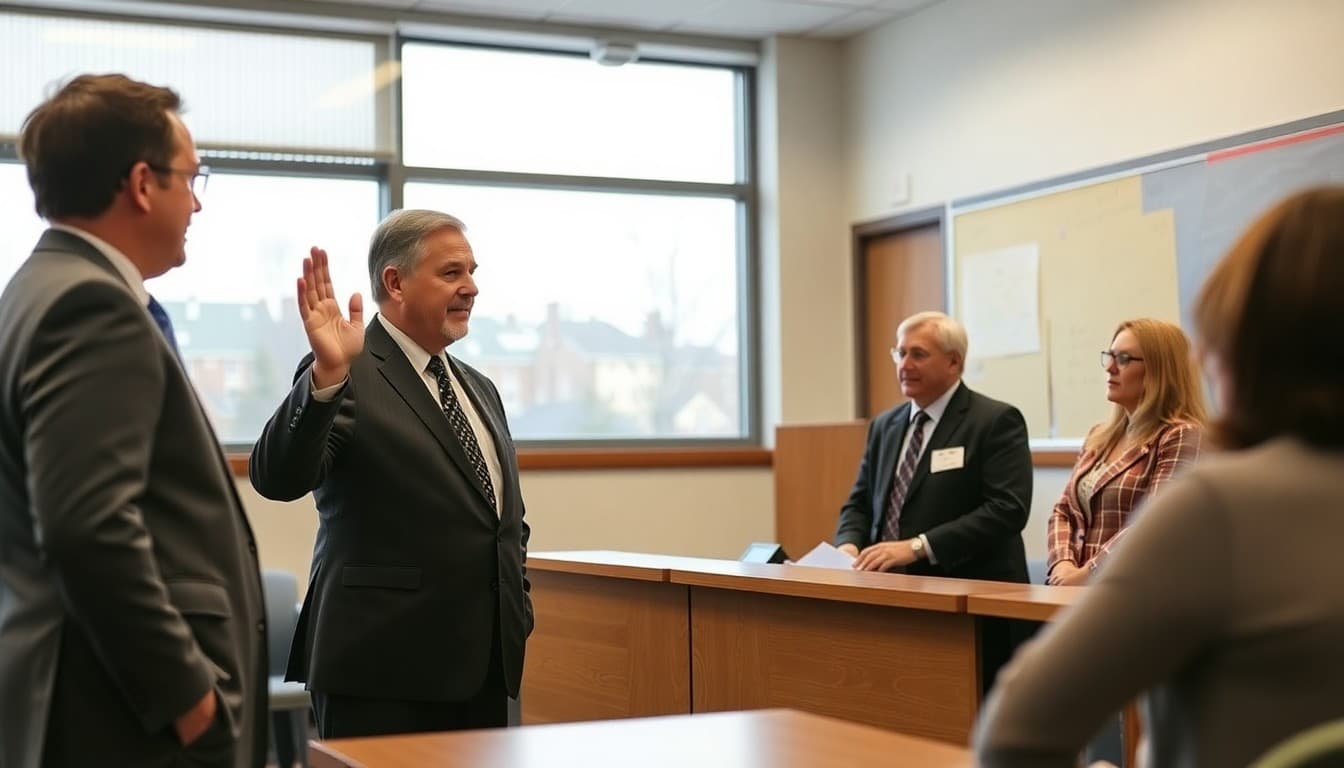
School Board Newsletter: New Board Officers Elected

The election of board officers sets the governance leadership for the year ahead. The president runs meetings, sets the meeting agenda in coordination with the superintendent, and represents the board in official capacities. When officers change, the community deserves to know who is now in those leadership roles and what they bring to the position.
State the vote results for each officer position
Open with the reorganization meeting date and the vote results for each officer position. "The board elected Marcus Williams as president in a 5-2 vote, Priya Chen as vice president unanimously, and James Torres as clerk unanimously." Include the full vote for each position so the community has a complete governance record.
Introduce each new officer
For each newly elected officer, provide a brief introduction: their name, how long they have served on the board, their professional background, and any prior board leadership experience. Families who do not know every board member well deserve an introduction to the people who will be leading governance for the next year.
Explain what each officer role involves
Describe the responsibilities of each officer role in plain language. The president chairs meetings, coordinates the agenda, represents the board externally, and typically has the most frequent contact with the superintendent. The vice president fills in for the president and often chairs specific committees. The clerk handles official records and certification. Many families do not know these distinctions.
Include a brief statement from the new president
A short statement from the new board president about their priorities for the year gives the community a direct sense of the governance direction ahead. Ask them to describe one or two things they are focused on and what kind of board they intend to lead.
Acknowledge outgoing officers
If the president, vice president, or clerk changed, briefly thank the outgoing officer for their service in the role. A transition moment is an opportunity to model the community norms the board wants to reinforce: genuine appreciation for public service, regardless of the outcome of a vote.
Note the full board composition
Close with a complete listing of the current board composition, noting which members are returning and which are newly elected or appointed. This gives families a reference for who currently serves and how to contact their representatives. Daystage gives district teams a professional newsletter platform for delivering governance transition announcements that build community familiarity with the people governing their public schools.
Get one newsletter idea every week.
Free. For teachers. No spam.
Frequently asked questions
What should a board officer election newsletter include?
The vote results for each officer position, brief introductions of the new officers and what they bring to their leadership roles, an explanation of what each officer does, and a statement of priorities from the new board president if available.
How often are school board officers elected?
In most districts, board officers are elected annually at a reorganization meeting, typically held in December, January, or at the first meeting of the new governance year following elections. Some districts elect officers for two-year terms.
What roles do board officers typically hold?
Most boards have a president or chair, a vice president or vice chair, and a clerk or secretary. The president runs board meetings, represents the board in official capacities, and typically has more frequent communication with the superintendent. The clerk handles official records and certification functions.
Should the newsletter acknowledge outgoing officers?
Yes. Members who served as officers in the prior year gave additional time and responsibility to their board service. A brief acknowledgment is appropriate regardless of whether they chose not to seek re-election to an officer position or were not re-elected.
How does Daystage support governance transition communications?
Daystage gives district communications teams a professional newsletter platform for delivering governance transition announcements with the consistent, professional format that reflects the board's commitment to transparent community communication.

Adi Ackerman
Author
Adi Ackerman is a former classroom teacher and curriculum writer with 8 years in K-8 schools. She writes about school communication, parent engagement, and what actually works in real classrooms.
More for School Board
Ready to send your first newsletter?
3 newsletters free. No credit card. First one ready in under 5 minutes.
Get started free