
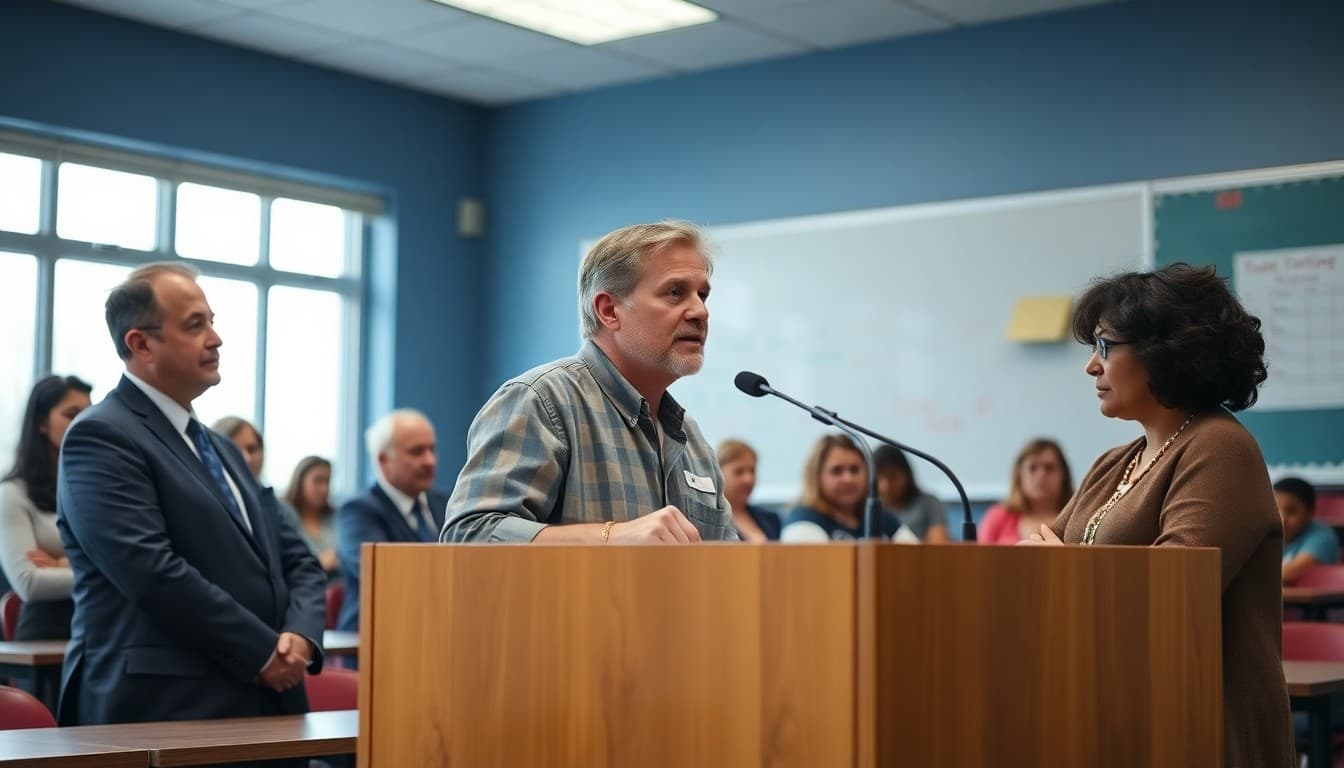
School Board Newsletter: How to Share Your Input at Board Meetings

Public comment at school board meetings is one of the most direct ways community members can influence district decisions. But many families who have opinions about curriculum, budget, policy, or school conditions do not know how to participate. A newsletter explaining the public comment process clearly is one of the most practical civic contributions a board can make.
Explain when public comment happens at board meetings
Most boards have at least one public comment period per meeting, and some have two: one for agenda items and one for general community comment. Describe when in the meeting public comment occurs, how long the entire public comment period runs, and whether speakers must arrive before a specific time to be recognized.
Describe the sign-up process
Tell community members exactly how to sign up to speak. This is often the step that most people do not know. Does the district have an online form? Does sign-up happen in person at the meeting? What is the deadline to sign up? Are there any restrictions on who can speak, such as district residency requirements? Step-by-step instructions in plain language remove the largest barrier to participation.
State the time limit for individual speakers
Most boards limit each speaker to two or three minutes. State the limit clearly and, if the board has a policy for managing time, describe it briefly. Community members who know they have two minutes will prepare differently and more effectively than those who are surprised by a cutoff.
Describe what happens during public comment
Set appropriate expectations. Board members typically listen to public comment without responding, asking questions, or debating the speaker. Explain why: the comment period is for the community to address the board, not for the board to debate in real time. Speakers can expect to be heard, even when the board cannot respond. Follow-up can happen through the superintendent's office or at future meetings.
Explain written comment options
Community members who cannot attend in person often have options for written participation. If the district accepts written comments before meetings that are read into the record, describe that process. If there is a contact form or email address, include it. Accessible participation options increase the range of voices the board hears.
Note virtual attendance options if available
If the district streams board meetings and accepts virtual public comment, provide the access information. Streaming links, meeting IDs, and any registration requirements for virtual speakers should be in the newsletter.
Invite the community to engage before and after meetings
Public comment is one engagement pathway, not the only one. Mention board member email addresses, scheduled community listening sessions, and advisory committee opportunities. Daystage gives district teams a professional newsletter platform for sending civic participation guides that make board governance feel accessible and worth engaging with.
Get one newsletter idea every week.
Free. For teachers. No spam.
Frequently asked questions
Why should the board send a newsletter about the public comment process?
Many community members want to speak at board meetings but do not know how. The process varies by district and often involves registration steps that are not obvious. A newsletter that explains the process clearly removes barriers to participation and produces better-informed community input.
What are the key steps families need to know about public comment?
When and how to sign up to speak, the time limit per speaker, whether speakers must address a specific agenda item or can raise any concern, how to submit written comments if they cannot attend in person, and how to attend meetings virtually if remote participation is available.
Should the newsletter explain what public comment is NOT?
Yes, briefly. Community members sometimes expect the board to respond to or debate during public comment. Explaining that board members typically listen without responding during public comment periods, and why, prevents disappointment and helps speakers prepare more effectively.
How should the newsletter address sensitive topics that come up in public comment?
Note that public comment is a formal proceeding governed by board policy, that speakers are expected to address the board respectfully, and that comments about individual employees are handled differently than policy-level input. This sets appropriate expectations without discouraging legitimate participation.
How does Daystage support community engagement communication?
Daystage gives district teams a professional newsletter platform for sending civic participation guides and board meeting announcements. A community that understands how to engage effectively participates more, and that participation produces better governance.

Adi Ackerman
Author
Adi Ackerman is a former classroom teacher and curriculum writer with 8 years in K-8 schools. She writes about school communication, parent engagement, and what actually works in real classrooms.
More for School Board
Ready to send your first newsletter?
3 newsletters free. No credit card. First one ready in under 5 minutes.
Get started free