

Back to School Newsletter for Title I School Families
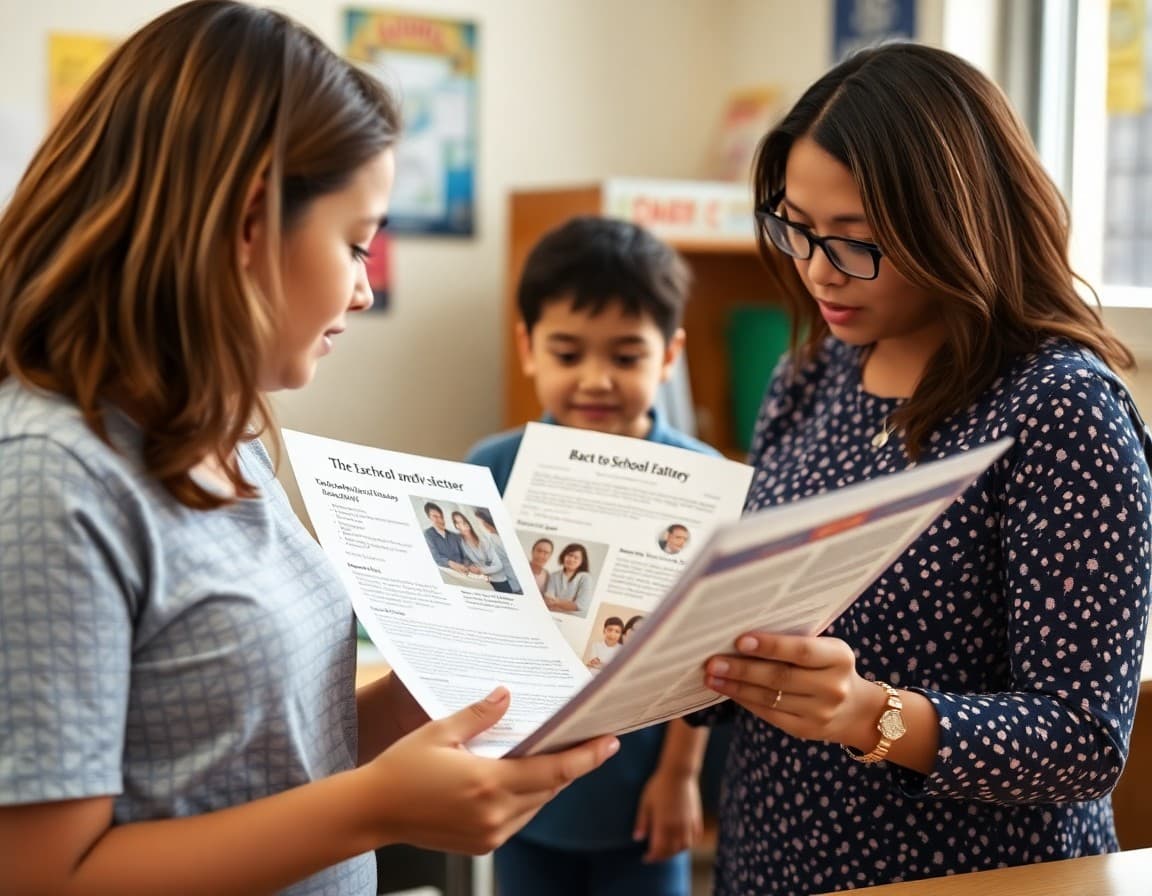
A Title I school back to school newsletter is not just a logistics document. It is an introduction to a set of resources, programs, and supports that exist specifically because of the school's federal designation. Families who know what is available can access it. Families who do not receive clear information often miss out on support they qualify for.
Start With What Families Need Most
Title I school families often face more practical barriers to a smooth school start than families in higher-income communities. Transportation challenges, food insecurity, work schedule constraints, and limited access to school supplies all affect how families experience the first week. A newsletter that leads with first-day logistics and key resources, before moving to curriculum and events, respects those realities.
First day date and time. Entry procedures. Bus route information if applicable. Free and reduced lunch program with application instructions. Supply assistance if the school offers it. Contact for questions. These six elements belong in the first section of a Title I school back to school newsletter.
Explaining What Title I Funding Provides
Federal Title I funding pays for specific resources that are worth naming. Reading and math specialists, extended learning programs, family engagement activities, before and after school care, and in some cases uniforms or supplies. Families who understand what Title I funds provide are better positioned to advocate for those resources and to access the ones that require sign-up or application.
A brief section that explains what Title I means and what it specifically provides at your school takes three to four sentences. "Our school receives additional federal support because we serve families with lower average incomes. This year, that support is paying for two reading specialists, a math tutoring program that starts in October, and monthly family learning workshops" is all you need.
A Template Excerpt for a Title I Back to School Newsletter
Here is an opening section from a Title I elementary school in Memphis:
"Welcome to Carver Elementary. School begins Tuesday, August 19 at 7:45 AM. Students in grades K through 3 enter through the Main Street entrance. Grades 4 through 5 enter through the gym doors on the side. All students qualify for free breakfast. Lunch is free for all students this year under the Community Eligibility Provision. If you need help with school supplies, visit the main office before August 18 and ask for the supply assistance program. Our Title I parent coordinator, Ms. Davis, is available every Thursday from 3:30 to 5:30 PM to answer questions about any of our programs and services."
Every sentence answers a question that a Title I school family is likely asking. The supply assistance is mentioned without stigma. The Title I coordinator is named with specific hours.
Framing Support Programs as Opportunities
Title I schools offer intervention programs, reading support, counseling services, and family assistance that some families are reluctant to access because of how they are framed. A newsletter that presents these programs as standard school resources rather than remedial services reduces the stigma that keeps some families from enrolling their children.
Instead of "Students who are struggling in reading will receive intervention support," write "All students in grades 1 through 4 will be assessed in the first week and matched with reading activities at their level. Students who need extra practice will work with our reading specialist in small groups." The second version sounds like something the school does for everyone, because it is a version of the truth that is also less stigmatizing.
Providing Contact Information That Is Actually Reachable
Title I school families often have had experiences with schools that were hard to reach. Long hold times on the main office phone, unanswered emails, and front desk staff who could not answer specific questions are all common complaints. A newsletter that names a specific contact person for each type of question, with a direct phone number or email, demonstrates that the school is set up to communicate rather than deflect.
Name the main office contact, the Title I parent coordinator if you have one, the transportation contact, and the nurse or health office contact. Give direct numbers rather than routing everything through the front desk.
Multilingual Families and Language Access
Many Title I schools serve communities where a significant percentage of families speak a language other than English at home. A back to school newsletter that is available only in English excludes these families from the first communication of the year. Work with district translation resources or bilingual staff to produce translated versions of the most critical sections. If a full translation is not possible, a translated summary with the key dates, the school address, and the main contact number is better than nothing.
Setting Up Communication for the Year
Tell families how they will receive communication throughout the year and what to do if they have questions. Some Title I school families do not have reliable email access and rely on paper communications sent home with students. Others prefer text messages. Know your community and offer the channels that work. A brief section that explains the school's communication methods and invites families to update their preferences reduces the number of families who fall out of the information loop later in the year.
Building Trust From Day One
Many Title I school families have had experiences with institutions that failed them. The first newsletter of the year is an opportunity to signal that this school is different: that it communicates clearly, that it sees families as partners, and that it has resources and plans rather than just intentions. The tone of that newsletter shapes whether families expect future communications to be worth opening.
Get one newsletter idea every week.
Free. For teachers. No spam.
Frequently asked questions
What should a Title I school back to school newsletter include that other schools might not?
Title I schools should prominently feature information about free and reduced lunch programs, before and after school care options if available, supply assistance, and the specific academic support resources the Title I funding provides, such as reading specialists, tutoring programs, and family engagement activities. These resources exist specifically for families at Title I schools, and the back to school newsletter is the right place to make sure every family knows about them.
How do I write a back to school newsletter that works for families with limited English proficiency?
Write at an 8th grade reading level or below, use short paragraphs, avoid jargon, and provide a translated version for your school's most common non-English languages. Even a partial translation of the most critical sections, including the first day logistics and contact information, is better than sending a newsletter that some families cannot read. Work with your district's language access coordinator or bilingual staff to produce translated versions.
When should a Title I school send the back to school newsletter?
Send it 7 to 10 days before the first day. Title I school families often need more lead time than higher-income families because they may need to arrange multiple logistics, including childcare, transportation, work schedule adjustments, and supply purchases. A second, shorter reminder 2 days before the first day is also helpful.
Should the back to school newsletter mention Title I status and what it means?
Yes. Many families do not know what Title I means, and some have negative associations with the designation. A brief, accurate explanation, 'Our school receives additional federal funding because we serve a community where many families have lower incomes. This funding pays for our reading specialists, family engagement activities, and extended learning time,' demystifies the status and frames it as a resource rather than a stigma.
Can I use Daystage to send back to school newsletters to Title I school families?
Yes. Daystage works well for Title I schools because it produces newsletters that display cleanly on mobile devices, which is how many lower-income families access digital communications. You can also download a print-ready version for families who need a hard copy or who do not have reliable internet access.

Adi Ackerman
Author
Adi Ackerman is a former classroom teacher and curriculum writer with 8 years in K-8 schools. She writes about school communication, parent engagement, and what actually works in real classrooms.
More for Rural & Title I
Ready to send your first newsletter?
3 newsletters free. No credit card. First one ready in under 5 minutes.
Get started free