

Annual Report Newsletter for Title I School Families
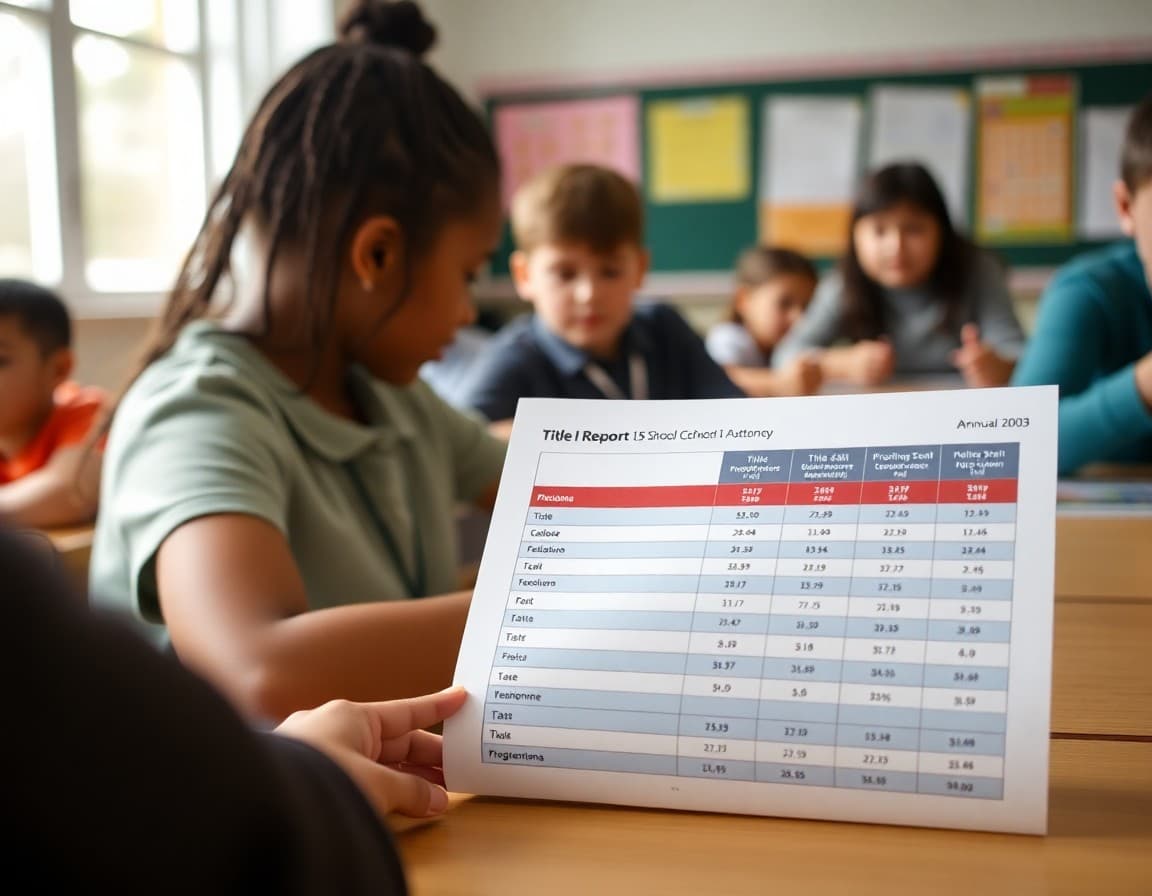
Title I school annual reports carry both a legal obligation and a community responsibility. Families who receive federal-program funding through their school's designation have a right to know how that funding was spent and what it produced. An annual report newsletter that takes this responsibility seriously is both compliant and credible.
The Legal Baseline and How to Go Beyond It
Federal requirements for Title I family communication around annual performance are real but often understood as a compliance exercise. Schools that do the minimum produce dense, jargon-heavy letters that families cannot interpret. Schools that go beyond the minimum use the same requirement as an opportunity to build genuine transparency with their community.
The difference between the two is tone and specificity. A legally compliant letter that lists proficiency rates without context tells families almost nothing. A newsletter that explains what proficiency means, how it compares to last year, and what the school plans to do in response to the data gives families information they can act on and advocacy they can carry into school board meetings and community conversations.
Explaining Title I Status and Program Outcomes
Many families at Title I schools have vague or inaccurate ideas about what Title I designation means. Some associate it with stigma. Others do not know what it means at all. The annual report is a natural place to explain Title I status clearly: what qualifies a school for the designation, how much funding the school receives, and specifically what that funding paid for this year.
Connect funding to outcomes. If Title I dollars paid for a reading specialist, report how many students worked with the specialist and what their average growth was. If funding supported a family engagement coordinator, report how many families were reached and through what activities. Numbers without programs are facts. Programs without numbers are claims. Both together are evidence.
A Template Excerpt for a Title I Annual Report Newsletter
Here is a section from a Title I school in Detroit's annual report newsletter:
"This year, our school received $287,000 in Title I federal funding. Here is how we spent it: two reading specialists ($112,000), an extended-day tutoring program three days per week ($74,000), a family engagement coordinator ($58,000), and technology and materials for intervention programs ($43,000). In reading, 61 percent of our 3rd graders met grade level, up from 54 percent last year. Students who participated in at least 20 tutoring sessions showed an average of 1.4 grade levels of growth. Math proficiency school-wide held at 58 percent, below our target of 65 percent. We are adding a daily math fluency block and a new intervention program starting in September."
The funding breakdown is specific. The outcomes are connected to programs. The gap is named with a response. This is what honest annual reporting looks like.
Presenting Assessment Data Without Losing Your Audience
State assessment data is the most confusing part of any school annual report for families who did not grow up in the American school system or who have not had recent exposure to how standardized testing works. A newsletter that presents proficiency rates without explaining what proficiency means leaves most readers with a number they cannot interpret.
Add a one-sentence definition: "Proficiency means a student is performing at grade level on the state test." Add a comparison: "The state average for 3rd grade reading proficiency is 63 percent. Our rate this year was 61 percent." Add context: "Last year our rate was 54 percent, so we improved by 7 percentage points." Three sentences turn a number into a story.
Reporting on Student Subgroup Performance
Federal law requires disaggregating assessment data by student subgroup, including students with disabilities, English language learners, and racial and ethnic groups. This disaggregation is often where the most important information lives. If one subgroup is being well-served by Title I programs and another is not, the annual report is the place to name that gap and the specific response the school is taking.
Be careful about how you frame subgroup data. Avoid language that implies certain groups of students are inherently less capable. Focus on the school's responsibility to provide effective instruction and appropriate support. "Our English language learner students showed strong growth in reading this year, averaging 1.6 grade levels. We are building on this by adding a second ELL instructional aide in grades 2 and 3" is the right frame.
Acknowledging ESSA Improvement Designations
If your school received a designation under ESSA for not meeting performance targets, the annual report is the appropriate place to name this. Families who hear about an improvement designation through unofficial channels before the school communicates about it lose trust that is hard to rebuild. A newsletter that explains the designation, what it means, what the school is required to do, and what families can expect to see change maintains the school's credibility even in a difficult moment.
Honoring Family and Community Contributions
Title I schools often operate with significant support from families, community organizations, and local partners. The annual report should recognize this support specifically. A family volunteer who logged 120 hours in the school library. A local church that donated coats for the winter clothing drive. A community organization that funded field trips. These contributions are part of the school's story and deserve recognition in the document that recaps the year.
Setting Goals That Families Can Track
Close the annual report with specific, measurable goals for the coming year. "We aim to bring 3rd grade reading proficiency to 68 percent by June, increase tutoring participation by 20 percent, and improve school-wide attendance to 93 percent." Goals that are named publicly create accountability and give families a basis for evaluating next year's report. That accountability is exactly what the annual report requirement is designed to produce.
Get one newsletter idea every week.
Free. For teachers. No spam.
Frequently asked questions
Are Title I schools required to share annual report information with families?
Yes. Under the Every Student Succeeds Act, Title I schools must notify families annually about the school's performance, including state assessment results, teacher qualifications, and information about the school's Title I status. An annual report newsletter is one effective way to meet this requirement while also providing context that helps families understand the data.
What specific data must a Title I school include in family communications?
Federal law requires sharing state assessment results disaggregated by student subgroup, information about whether the school met its state-defined goals, and teacher and paraprofessional qualification data. In practice, a newsletter that presents proficiency rates by grade level, notes which student groups showed the most growth, and explains what the school is doing with the data meets the spirit of the requirement while being readable by families.
How do I present data from a school that has been identified for improvement?
Name the identification directly and explain what it means in plain language. Being identified for improvement under ESSA means the school did not meet specific performance targets for certain student groups. Explain what targets were missed, what the school is required to do in response, and what families can expect to see change. Families deserve accurate information and a credible plan, not euphemisms that leave them more confused than informed.
How do I show what Title I funding actually accomplished this year?
Connect specific programs to specific outcomes. 'Our Title I funding this year paid for two reading specialists who worked with 84 students in grades 1 through 3. Average reading growth for those students was 1.3 grade levels over the school year, compared to 0.9 grade levels for students not in the program.' That is how you demonstrate value. Program names without outcomes are not evidence.
What tool makes it easiest to produce a Title I annual report newsletter?
Daystage is a strong option because it handles newsletter formatting, sending, and tracking in one place. For Title I schools that need to document their family engagement efforts for compliance reporting, Daystage's send records and open rate data provide useful documentation. You can also download a print version for families who need a hard copy.

Adi Ackerman
Author
Adi Ackerman is a former classroom teacher and curriculum writer with 8 years in K-8 schools. She writes about school communication, parent engagement, and what actually works in real classrooms.
More for Rural & Title I
Ready to send your first newsletter?
3 newsletters free. No credit card. First one ready in under 5 minutes.
Get started free