
Small School Newsletter Guide: Communication Strategies When Everyone Knows Everyone

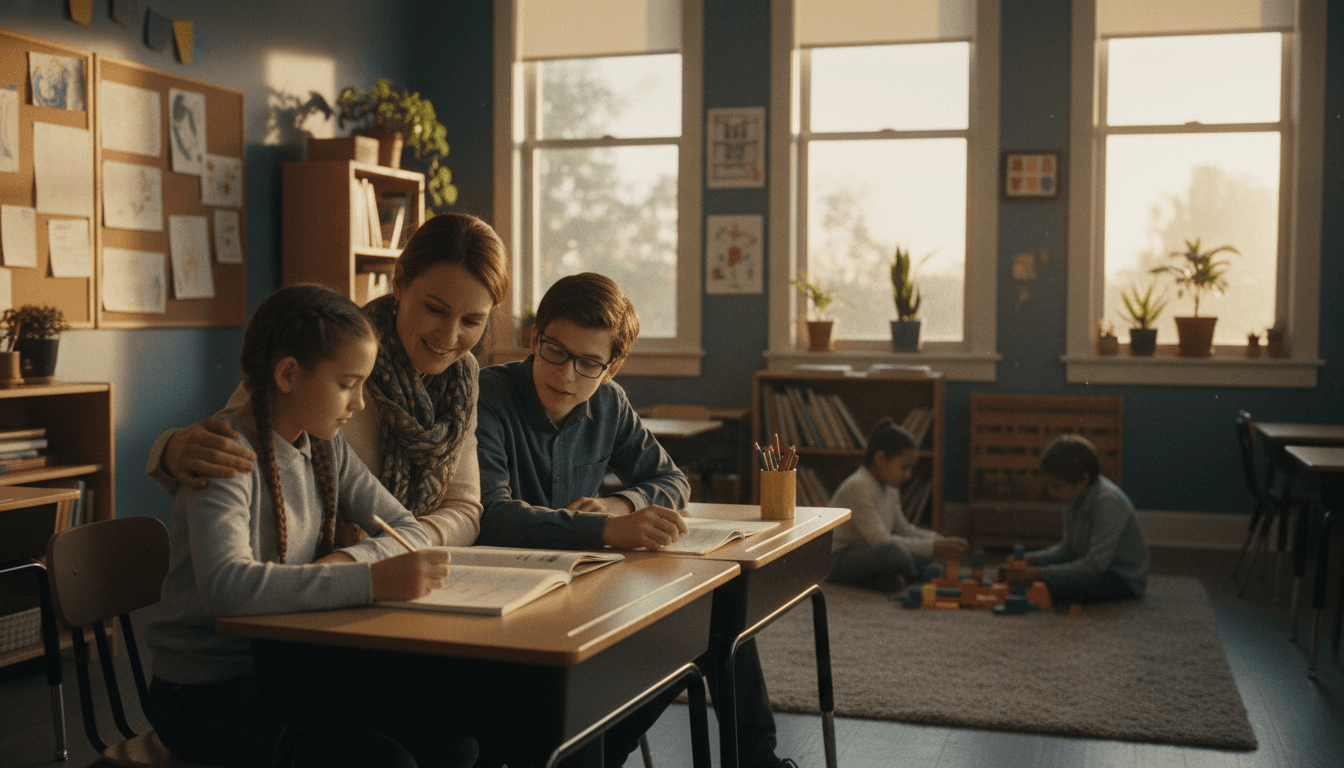
A school with 80 students is a fundamentally different communication environment than a school with 800. The principal knows every student's name. Teachers know siblings, parents, grandparents. The fourth grade class has 11 kids and you know exactly which three struggle with reading and which two are bored with the current math unit. This closeness is the small school's greatest asset, and most small school newsletters completely fail to use it.
The common mistake: small schools write newsletters that sound like they came from a large suburban school. Generic. Institutional. Full of "students are encouraged to..." and "families should be aware that..." The opportunity is to write a newsletter that could only come from your school, because the person writing it knows everyone it is going to.
Write like you are talking to people you know, because you are
In a large school, newsletter communication is necessarily somewhat impersonal -- you are writing to 600 families you have never met. In a small school, you are writing to 70 families, and you saw most of them at the basketball game last Friday. Write accordingly. Use specific examples from the actual week. Mention the specific science experiment that went unexpectedly well. Reference the snowstorm that disrupted Tuesday.
This specificity is what makes a small school newsletter worth reading. Parents who know the school intimately will immediately recognize authentic content versus boilerplate. Generic content signals that the newsletter is a checkbox, not a genuine communication. Specific content signals that you are paying attention.
You do not need multiple sections designed for a large audience
Large school newsletters have separate sections for each grade level, multiple sports teams, various clubs, and different departments. Small schools with multi-grade classrooms and one or two sports teams do not need this structure. A single flowing narrative -- three or four paragraphs about what happened this week, one section for upcoming dates, one brief note about any school-wide issues -- serves a small school better than a format designed for a school ten times the size.
Keep the format simple. Simple formats are easier to write consistently, and consistency over a full school year delivers more value than any individual newsletter issue.
Use the newsletter to coordinate the informal networks that already exist
Small school communities already have rich informal communication networks: the group text among parents who car pool, the conversations at church, the chatter on the sideline at Friday games. These networks move information fast, but they also move rumors and misunderstandings fast. Your newsletter can anchor those conversations with accurate information.
When something happens at school that is likely to generate conversation -- a teacher absence, a field trip that got cancelled, a policy change, a student achievement -- put the accurate version in the newsletter before the informal network fills in its own version. In small communities, the school's version of events and the community's version can diverge quickly. A timely newsletter keeps them aligned.
Navigate privacy carefully when everyone knows everyone
The same closeness that makes small school communication feel personal can make privacy mistakes more consequential. Mentioning a student by name in the newsletter -- even positively -- in a way that highlights a sensitive situation (a learning challenge, a family hardship, a behavioral issue) can be uncomfortable when every reader knows that student and their family personally.
Standard privacy practice: do not include personally identifiable information about students' academic performance, disciplinary situations, health, or family circumstances in the newsletter without explicit permission. In a large school, this rule feels abstract. In a small school with 80 students, it is a real risk. "One of our students recently..." is still too much when there are only 11 kids in the class.
Let multi-grade classrooms inform your newsletter structure
Many small rural schools operate multi-grade classrooms: a single teacher with 3rd and 4th graders together, or a K-2 combined class. The newsletter for these classrooms should acknowledge this structure rather than pretending it does not exist. Write about what different groups within the class are working on rather than referring to "the class" as a unit. "Our 3rd graders are starting their fractions unit while our 4th graders are finishing long division and moving into geometry."
This specificity reassures parents that their child's specific grade-level needs are being tracked, which is a genuine concern in multi-grade classrooms. It also demonstrates that you, the teacher, are managing the differentiated instruction that the multi-grade setting requires.
Share the things that only a small school can share
Small schools have learning experiences that large schools rarely offer: every student participates in the school play, not just the ones who auditioned. The 7th grader mentors the 2nd grader during reading. The entire school community comes to the one sporting event of the week. Field trips go to places where the group size is actually welcome.
Write about these things in your newsletter without apology and without framing the small school as a consolation prize. "This week, our entire school -- every student from kindergarten through 8th grade -- attended the county historical society together. The 6th graders served as tour guides for the kindergartners." That is a learning experience that a 600-student school cannot replicate. Name it for what it is.
Your newsletter is the school's public record
Small schools often lack the communications infrastructure that larger schools have: no dedicated communications coordinator, no social media manager, no PR budget. The newsletter is not just family communication -- it is the school's primary record of what happened this year. A year of newsletters, archived and searchable, documents the school's curriculum, achievements, community involvement, and culture.
Write with this in mind. The newsletter that a new family finds from two years ago is their first impression of the school. The newsletter that a school board member reads before a budget vote is their evidence of the school's vitality. Write something worth reading and worth keeping.
Get one newsletter idea every week.
Free. For teachers. No spam.
Frequently asked questions
When should a small rural school send its newsletter to maximize family engagement?
Biweekly is more sustainable than weekly for small schools with irregular schedules, weather disruptions, and no dedicated communications staff. Families who can count on a newsletter arriving the first Monday of every two weeks engage more consistently than families waiting on an unpredictable weekly send.
What should a small school newsletter include that a large school newsletter cannot?
Specific classroom details that could only come from a teacher who knows every child: the science experiment that went unexpectedly well, the student question that redirected the whole lesson, what each group in a multi-grade classroom is working on this week. Generic institutional language in a small school newsletter signals a checkbox, not genuine communication.
How can small rural schools keep newsletter production manageable with limited staff?
Simplify the format to three or four paragraphs about the week, one section for upcoming dates, and one brief school-wide note. Strip out any section structure borrowed from large suburban school templates. A simple format written consistently over a full year delivers more value than a complex format abandoned by November.
What privacy risks are unique to small school newsletters when everyone knows everyone?
In a school with 80 students, mentioning a sensitive situation, even vaguely, is more identifiable than in a school with 800. Phrases like 'one of our students recently' can identify the child in an 11-person class. Standard privacy rules about not publishing academic, disciplinary, health, or family information feel abstract at large schools but carry real consequences at small ones.
Are there newsletter tools built for the workflow of a small school with limited staff?
Daystage is designed for schools where one teacher or administrator is handling the newsletter alongside everything else. Templates, consistent formatting, and a simple send workflow reduce production time so a small school can maintain a reliable newsletter cadence without a dedicated communications coordinator.

Adi Ackerman
Author
Adi Ackerman is a former classroom teacher and curriculum writer with 8 years in K-8 schools. She writes about school communication, parent engagement, and what actually works in real classrooms.
More for Rural & Title I
Title I After-School Tutoring Newsletter: How Schools Communicate Tutoring Programs to Families
Rural & Title I · 5 min read
How Title I Schools Can Use the Newsletter to Address Summer Learning Loss
Rural & Title I · 5 min read
How Rural Schools Can Use the Newsletter to Build College Access for First-Generation Students
Rural & Title I · 5 min read
Ready to send your first newsletter?
3 newsletters free. No credit card. First one ready in under 5 minutes.
Get started free