
School Newsletter for Migrant Families: Inclusive Communication for Transient Communities
Schools that serve migrant agricultural communities deal with communication challenges that most newsletter guides do not address: families who enroll for six weeks, children who have attended three schools this year, parents who work dawn-to-dusk shifts during planting or harvest and cannot access a school email account, and a population where distrust of institutions -- built through years of precarity -- makes any official communication suspect before it is even read.
Building a newsletter strategy for migrant families requires rethinking some standard assumptions about how and when families engage with school communication.
Front-load the most critical information for short enrollments
When a migrant family enrolls their child, they may be in your school for 4 to 12 weeks. The newsletter cadence that works for a family enrolled for the full year does not serve a family who will be gone before winter break. For new migrant enrollments, have a condensed "welcome packet newsletter" ready to send on day one or two: who to contact, what the student's daily schedule looks like, what supplies or support the school provides, and how to communicate with the teacher.
Do not make migrant families wait for the next regularly scheduled newsletter to get the information they need to navigate the school. The window is short. Get them the information immediately.
Build your regular newsletter for mobile phone access
Migrant agricultural workers often do not have a fixed home internet connection. They are more likely to access the internet on a shared smartphone, sometimes with a prepaid plan that has limited data. A newsletter that is optimized for mobile reading -- short paragraphs, large enough text, no heavy image loads -- is more accessible for these families than a desktop-oriented design.
Also consider what happens if the email address a migrant family gives at enrollment is a shared family email, or an email they can only access occasionally. A phone number for text-based communication, alongside email, reaches more migrant families. Some schools in high-migrant-enrollment areas use SMS alerts for the most time-sensitive information and the newsletter for the fuller context.
Publish in Spanish as a baseline, not an accommodation
Many migrant agricultural families in the United States are Spanish-speaking, with significant representation from indigenous Mexican communities (Mixtec, Zapotec, Triqui) where Spanish may itself be a second language. The Migrant Education Program (MEP) under ESSA Title III explicitly requires that schools communicate with parents in a language they can understand.
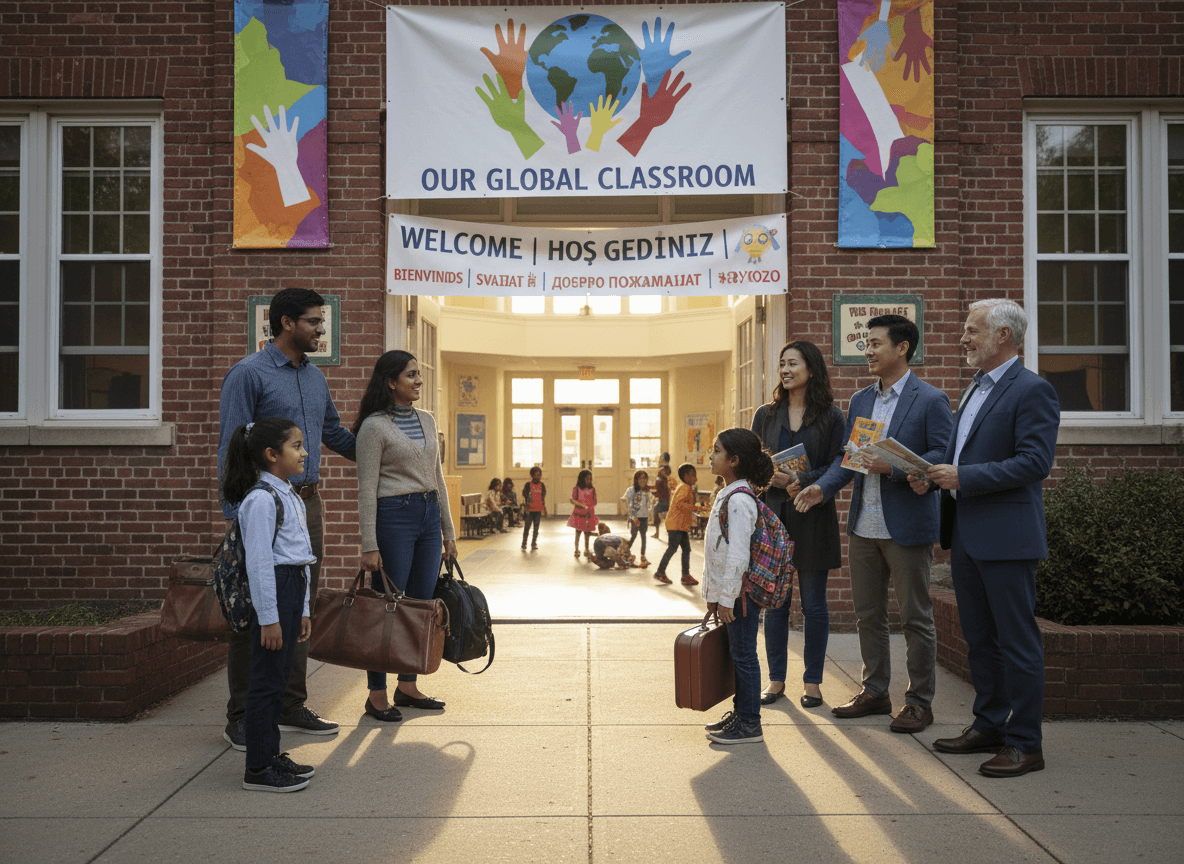
Treat Spanish translation of your newsletter as a baseline expectation rather than a special accommodation. When you introduce the Spanish version in your newsletter, do not frame it as a service for "Spanish-speaking families" -- frame it as a commitment to the whole school community. Families who are monolingual Spanish speakers should receive the Spanish version automatically, not have to request it.
For families who speak indigenous languages, connect with your district's MEP coordinator about interpreter resources. The newsletter itself may not be translatable to all languages, but the phone number for a human interpreter should be prominently listed.
Explain rights under the Migrant Education Program
Families enrolled in the Migrant Education Program have rights and access to services that many do not know about: priority enrollment, supplemental tutoring, health services referrals, and credit accrual support for secondary students who change schools during the year. Your newsletter is an appropriate channel to communicate these rights in plain language.
"If your child is enrolled in the Migrant Education Program, they are entitled to [specific services]. Contact [name, our MEP liaison] at [number] to learn more or to access these services." Many migrant families have been in systems that did not explain their rights clearly. A school newsletter that does is a meaningful gesture of respect.
Account for the harvest and planting calendar in your communication timing
Agricultural communities operate on seasonal rhythms that affect when parents can realistically engage with school communication. During harvest and planting seasons, many migrant agricultural workers are in the fields from before dawn to after dark. The newsletter that arrives on Thursday evening may not be read until Sunday. Sending to the whole list at midday on a weekday may miss a large portion of your agricultural families entirely.
Experiment with send times based on the agricultural calendar in your region. Sunday morning and Saturday afternoon often work better for agricultural families than midweek sends. Check your open rate analytics by day of week to confirm what works for your specific community.
Do not disappear when migrant families leave
When a migrant family moves on, schools often stop communicating with them entirely. But some schools in migrant-heavy communities maintain a follow list of families who have enrolled in previous years, sending occasional brief updates about the school and an invitation to re-enroll when they return to the area. This costs very little -- a name on a mailing list and one or two emails a year -- and builds continuity for families who return seasonally.
Some migrant families return to the same agricultural area year after year. A school that stays in touch, even minimally, is one they trust. A school they have to introduce themselves to every September, as if they were strangers, is harder to trust.
Normalize transience for the whole school community
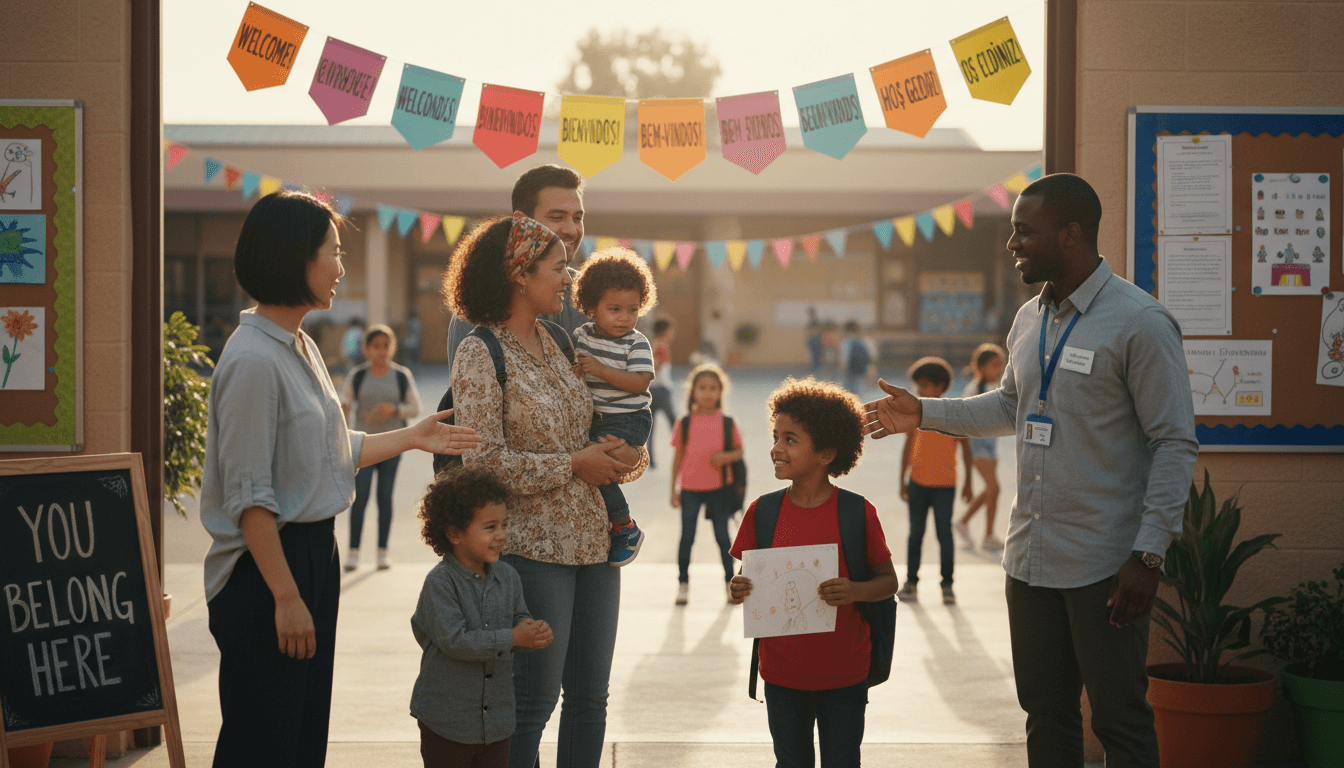
Migrant students sometimes feel marked as different in schools where most of the student body is stable. The newsletter is a place where the school signals its values. When you write about new students joining the class without marking them as "migrant" or "newcomers," when you celebrate the cultural knowledge migrant students bring, when you acknowledge the agricultural work that sustains the community as something that matters -- you are telling migrant families that their children belong here.
This is not a symbolic gesture. It affects whether families engage with school communication, whether students feel safe asking for help, and whether a child who moves through five schools in a year feels like they have a place at each one.
Get one newsletter idea every week.
Free. For teachers. No spam.
Frequently asked questions
When should schools communicate critical information to newly enrolled migrant families?
Send a condensed welcome newsletter on day one or two of enrollment, not at the next regular send date. A family enrolled for six to twelve weeks cannot wait for the monthly newsletter cycle to learn who to contact, what the daily schedule is, and what supplies the school provides.
What should a school newsletter include for migrant agricultural families with limited enrollment windows?
Include the teacher contact, daily schedule, available supplies and device loans, Migrant Education Program rights and services, and how to request Spanish-language or interpreter support. Bilingual content should be the baseline, not an on-request accommodation, because MEP requirements under ESSA Title III require communication in a language families can understand.
How can schools reach migrant families who work dawn-to-dusk agricultural shifts?
Test Saturday morning and Sunday afternoon send times against midweek sends and check open rates by day of week. Use SMS for the most time-sensitive information. Keep newsletters mobile-optimized with short paragraphs and no heavy image loads, since many migrant families access the internet on a shared prepaid smartphone.
What are the specific communication barriers migrant agricultural families face with school outreach?
Limited enrollment windows mean families miss the start-of-year information cycle entirely. Dawn-to-dusk work schedules during harvest make weekday communication inaccessible. Shared devices and prepaid data plans limit digital access. Distrust of institutions built through years of precarity means official communication is suspect before it is even opened.
Can a school newsletter platform support migrant family outreach across seasonal enrollment cycles?
Tools like Daystage support list segmentation and scheduled sends, which allows schools to maintain a follow list of families from prior seasons and send brief re-enrollment invitations without manual management. A school that stays in contact between seasons, even minimally, is one migrant families trust when they return.

Adi Ackerman
Author
Adi Ackerman is a former classroom teacher and curriculum writer with 8 years in K-8 schools. She writes about school communication, parent engagement, and what actually works in real classrooms.
More for Rural & Title I
Rural School Library Newsletter: How School Librarians Communicate Resources and Programs to Families
Rural & Title I · 5 min read
Rural School Transportation Newsletter: Communicating Bus Routes and Schedules to Families
Rural & Title I · 5 min read
Title I Parent Information Meeting Newsletter: How Schools Communicate Annual Meetings to Families
Rural & Title I · 5 min read
Ready to send your first newsletter?
3 newsletters free. No credit card. First one ready in under 5 minutes.
Get started free