

Free and Reduced Lunch Newsletter: Communicating Meal Programs Without Stigma
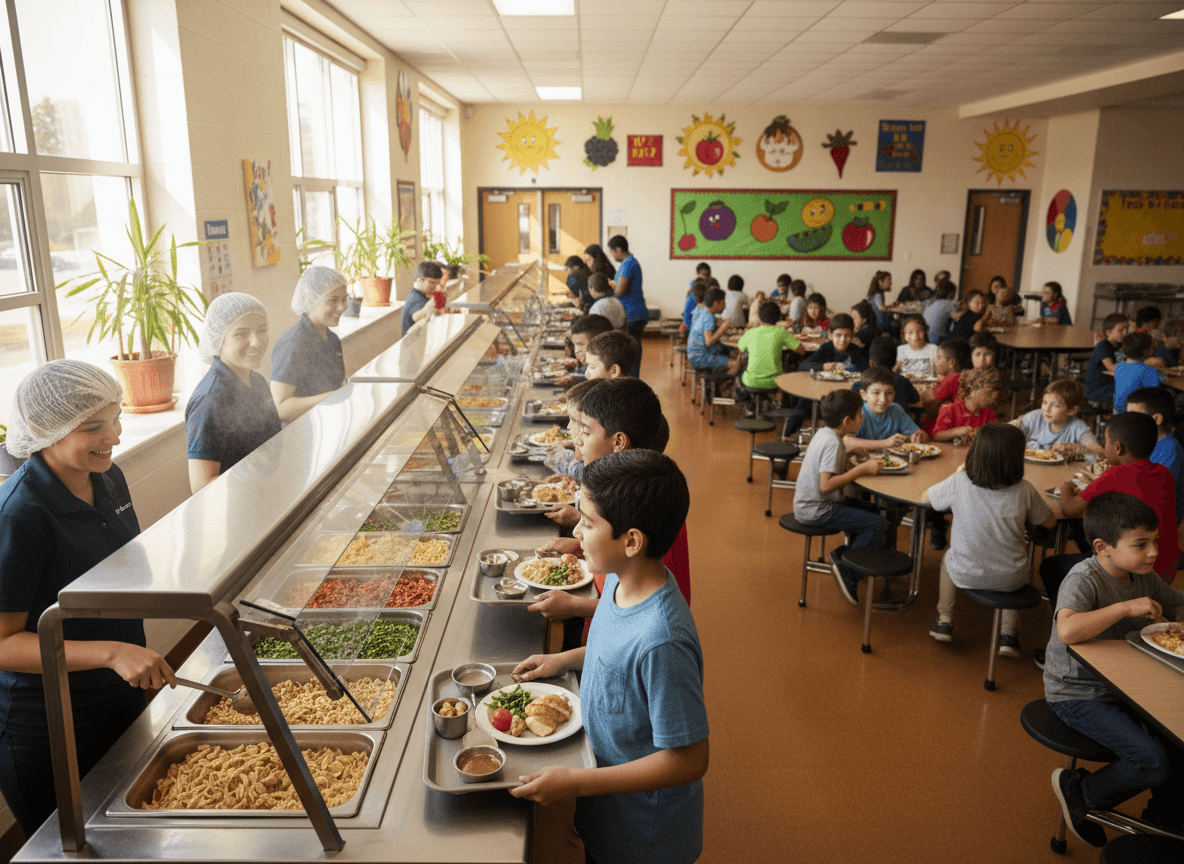
Free and reduced-price meal programs are among the most impactful benefits schools provide. In many Title I and rural schools, participation rates in the National School Lunch Program can mean the difference between a child who can concentrate in the afternoon and one who cannot. Yet schools routinely communicate about these programs in ways that accidentally reduce participation: dense eligibility forms, language that signals who the program is "for," and single-point communication at the start of the year that families miss.
Your newsletter is one of the most effective tools for normalizing meal program participation and getting eligible families to apply. Here is how to use it well.
Communicate eligibility early and in plain language
The annual free and reduced lunch eligibility notification often gets buried in a back-to-school packet with ten other forms. Families may not read it, may not understand the income thresholds, or may assume they do not qualify without checking. Use your first-of-year newsletter to summarize eligibility clearly: "If your household income is at or below [threshold] for a family of [size], your child may qualify for free or reduced-price meals this year. Apply at [location/link]. Income information is kept confidential."
Include the current USDA income thresholds in a simple table. Many families who qualify do not know they qualify because they have never seen the numbers. Seeing the actual threshold -- often higher than families expect -- prompts applications from families who assumed they would not be eligible.
Use neutral, universal framing, not targeted language
Language matters significantly in how families respond to meal program communication. Phrases like "for families who need assistance" or "low-income families may qualify" signal to the reader that this is a program for people in difficult circumstances, which can trigger avoidance in families who do not want to identify themselves that way -- even if they qualify and would benefit.
Neutral framing works better. "All families are encouraged to apply for meal benefits each year. Eligibility is based on household size and income." This language invites everyone to check rather than pre-sorting families into "needy" and "not needy" buckets. In schools with universal meal programs, frame the communication around access and participation rather than assistance.
Send reminders throughout the year, not just in August
Family financial situations change. A family that did not qualify in September may qualify in January after a layoff, a divorce, or a reduction in hours. A family that was eligible but did not apply may find it less daunting to apply after seeing the information multiple times in a trusted channel.
Include a brief reminder in your newsletter at least three times across the school year: at the start, at the midyear mark, and around spring. Keep it short: two or three sentences with the application link and a contact name. Families who need it will notice it each time it appears.
Address what happens to meal accounts and balances
One of the most anxiety-producing aspects of school meals for lower-income families is the meal account system. What happens when the account runs low? Will their child be given an alternate meal in front of peers? Will they be turned away? Will they receive a printed notice in their backpack that other children might see?
Your newsletter can preemptively address this. Explain your school's policy clearly and compassionately: "No student will go without a meal. If an account runs low, we will contact the family privately. If you are concerned about your account balance, contact [name] at [email/phone] and we will help you resolve it confidentially." This reassurance removes one of the barriers that prevents families from enrolling in the first place.
Explain how participation data benefits the school
In many states, free and reduced lunch participation data is used to calculate Title I funding, allocate federal resources, and determine Community Eligibility Provision (CEP) eligibility. Schools that have high participation rates in meal programs may qualify for universal free meals for all students, eliminating the application process entirely.
Sharing this information with families reframes participation as a community benefit, not just a personal one. "When families who qualify apply for meal benefits, our school may qualify for programs that provide free meals to every student. Applying, if you are eligible, helps everyone." This framing works particularly well in tight-knit rural communities where families respond to collective benefit arguments.
Include the cafeteria menu and make it feel welcoming
Beyond the eligibility communication, your newsletter is a natural place for the monthly or weekly cafeteria menu. Sharing the menu normalizes what is being served and gives families information to prompt conversations with their children about lunch. It also signals that you view the cafeteria experience as part of the school day worth communicating about, not just an administrative necessity.
If your cafeteria serves culturally diverse foods, mention it. If there is a student favorite on the menu this week, note it. These small details make the cafeteria feel like a place students look forward to rather than a stigma-laden service for kids who cannot bring their own lunch.
What to avoid
A few patterns that undermine meal program communication in school newsletters: listing "free/reduced lunch families" as a separate group in any context, making meal application forms available only at school pick-up events that working parents cannot attend, and using the meal program as an implicit explanation for school achievement gaps in ways that students might read and internalize.
Keep the meal program communication matter-of-fact, logistically focused, and woven into regular newsletter content rather than treated as a separate, marked category of information. The families who need it will find it. The families who do not need it will ignore it. That is the goal.
Get one newsletter idea every week.
Free. For teachers. No spam.
Frequently asked questions
When should Title I and rural schools communicate free and reduced lunch eligibility to families?
Include eligibility information in the first newsletter of the year with the USDA income thresholds shown in a simple table. Follow up briefly at the midyear mark and again in spring, because family financial situations change and a family that did not qualify in September may qualify in January.
What should a school meal program newsletter include for families in high-poverty communities?
Include current income eligibility thresholds in plain language, a clear explanation of the confidential application process, your school's exact policy on what happens when an account runs low, and a note on how high participation rates can qualify the school for universal free meals for all students. That last point reframes applying as a community benefit.
How can rural Title I schools communicate meal program information without stigmatizing families?
Use neutral, universal framing: 'All families are encouraged to apply each year' rather than 'families who need assistance.' Embed the meal program reminder in regular newsletter content rather than as a separate marked notice. Avoid any language that groups students by meal status in any other context.
What are the biggest barriers to free and reduced lunch participation in rural schools?
Many eligible families do not apply because they assume they earn too much without ever checking the thresholds, which are often higher than expected. Others avoid it to prevent their child from being identified in a small, close-knit school where everyone knows everyone. Unclear policies about what happens when accounts run low also discourage enrollment.
Can a newsletter tool help schools increase free and reduced lunch enrollment?
A consistent newsletter cadence helps significantly because repeated, low-pressure exposure is what moves hesitant families to apply. Schools using Daystage can schedule the eligibility reminder to appear at set points in the year automatically, so the message reaches families three times without requiring the office to remember to send it each time.

Adi Ackerman
Author
Adi Ackerman is a former classroom teacher and curriculum writer with 8 years in K-8 schools. She writes about school communication, parent engagement, and what actually works in real classrooms.
More for Rural & Title I
How Rural Schools Can Use the Newsletter to Communicate During Disasters and Emergencies
Rural & Title I · 5 min read
Rural School Newsletter Guide: Communication Strategies for Small and Remote Schools
Rural & Title I · 7 min read
Title I After-School Tutoring Newsletter: How Schools Communicate Tutoring Programs to Families
Rural & Title I · 5 min read
Ready to send your first newsletter?
3 newsletters free. No credit card. First one ready in under 5 minutes.
Get started free