School Community Partnership Newsletter: Building Local Support Through Communication
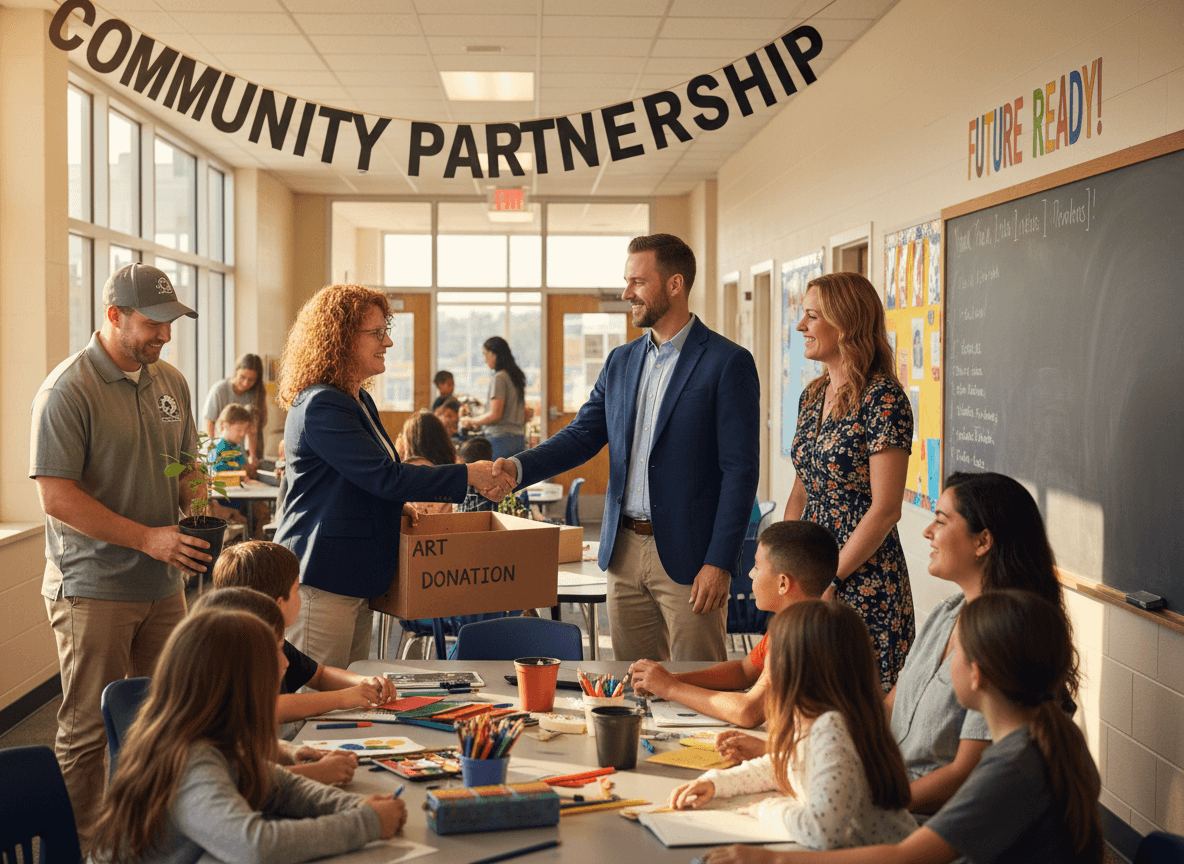
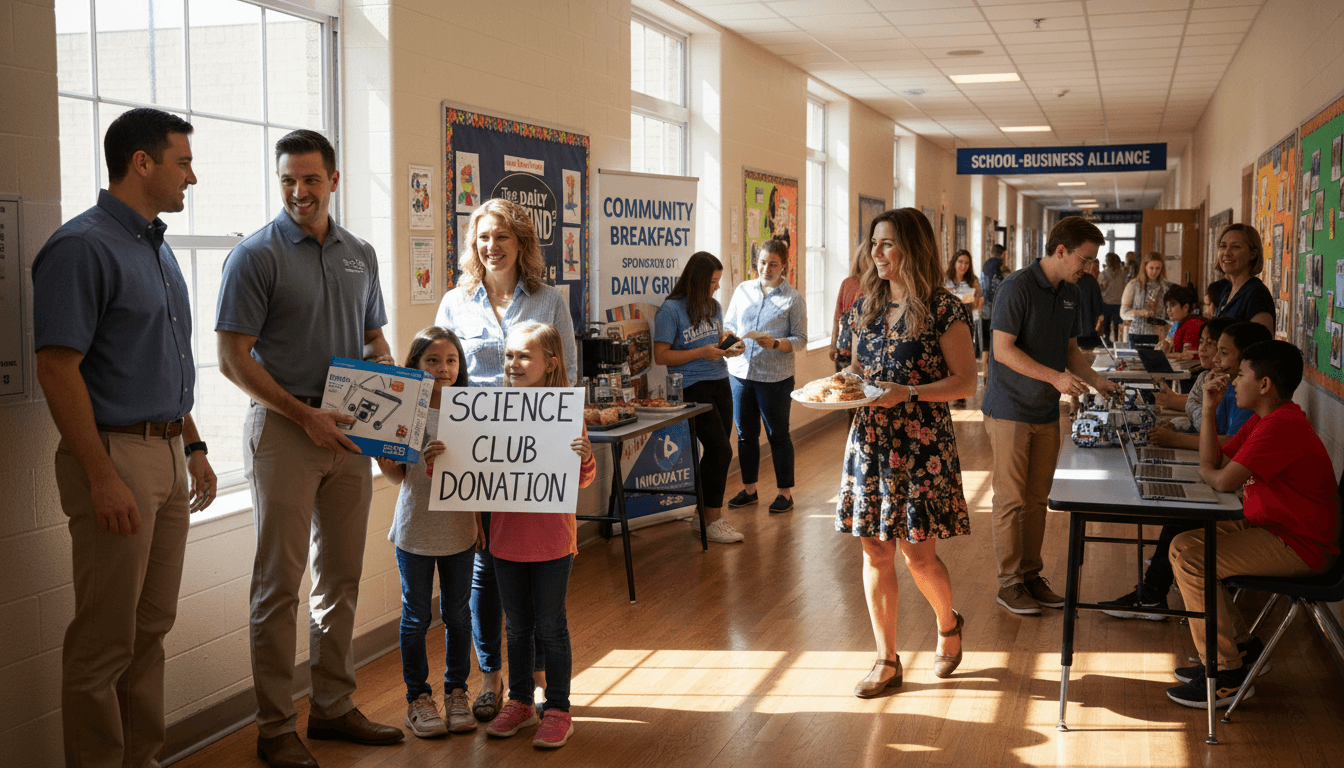
Rural and Title I schools that thrive in tight budgets almost always have one thing in common: visible, named community partnerships that go beyond a one-time donation check. Local businesses sponsor field trips. The farm two miles from the school donates produce for a garden program. A retired teacher runs a free tutoring session on Thursdays. The credit union offers financial literacy presentations to seniors.
Your newsletter is the most consistent channel for building these partnerships, making them visible, and signaling to the community that the school is an active partner rather than a separate institution that takes its kids and goes home at 3 PM.
Name your partners explicitly and regularly
Local businesses and organizations that support schools rarely ask for recognition. But recognition is what sustains the relationship. A business owner who sponsors a field trip and is mentioned by name in the school newsletter, which goes to 250 families who are potential customers, receives something real in return for their contribution. More importantly, being named publicly signals that the school takes the partnership seriously.
Create a "Community Partners" section in your newsletter that appears at least monthly. List the specific contribution: "Thank you to Green Valley Farm for donating pumpkins for our 3rd grade science unit this week." Not just a logo, not just a name. A specific action. This tells other businesses what kind of support is possible and shows families the concrete ways the community invests in the school.
Use the newsletter to recruit new partners strategically
Most community partnerships in rural schools start with a personal conversation, not a formal pitch. But the newsletter can prime those conversations. Include a standing brief note that signals openness to partnership: "Our school welcomes local businesses and organizations who want to support student learning. If you have an idea for how to get involved, contact [name] at [email]."
When you have a specific need -- a set of books for the classroom library, a guest speaker with expertise in agriculture or skilled trades, snacks for after-school tutoring -- state it specifically. "We are looking for a local business that might be able to sponsor snacks for our Tuesday tutoring program, which serves 20 students each week." Specific asks get responses. General "we welcome your support" language does not.
Show the impact of community investment on students
The fastest way to deepen a community partnership is to show the partner what their support produced. If a local hardware store donated materials for a building project, publish a photo of the finished birdhouses and name the store. If a local veterinarian came in for a career day, write two sentences in the newsletter about what students learned and quote one question a student asked.
This closes the loop for partners who often wonder if their contribution mattered. A business owner who sees their name next to a specific student outcome is far more likely to contribute again than one who made a donation and heard nothing afterward. The newsletter is the most scalable way to close that loop.
Connect academic content to local employers and industries
Rural school community partnerships work best when they are connected to the actual economy of the area. A school in an agricultural region can develop partnerships with farming operations that connect to science curriculum. A school near a manufacturing plant can bring in engineers who work on problems students are studying. A school in a timber-dependent area can work with the local forestry service on environmental science units.
Communicating about these connections in your newsletter does something important: it signals to families that the school sees and values the industries that sustain their community. This is particularly important in rural areas where families sometimes feel that schools push children toward college tracks that require leaving the community rather than preparing them to participate in it.
Communicate about community events that involve the school
Rural school community partnerships often go both ways. The school participates in the county fair. Students perform at the town's holiday parade. The school gym is used for community voting. Communicate about these events in your newsletter from the school's perspective: what students are preparing, what families can expect, what it means for the school to be part of the community's public life.
This kind of communication builds something that is hard to quantify but easy to see in schools that have it: a sense that the school belongs to the community and the community belongs to the school. In budget conversations and bond votes, schools with that feeling get more support.
Acknowledge when the community shows up for the school
Beyond formal partnerships, communities often show up for schools in informal ways: parents who volunteer their truck to move equipment, a neighbor who clears snow from the parking lot, a local church that organizes a school supply drive. Name these contributions in your newsletter when they happen. "Thank you to the families who stayed late last Friday to help set up our book fair. We counted 14 volunteers and completed setup in under two hours."
Public acknowledgment of community generosity creates a cycle: people who are thanked publicly tend to give again, and people who see neighbors being thanked start looking for their own opportunity to contribute. In rural communities where social reciprocity is a strong norm, this effect is amplified.
Be honest about what the school needs
The final piece of community partnership communication that many schools avoid: being direct about need. Title I and rural schools often operate with significant resource gaps that families and community members are aware of but rarely hear the school acknowledge directly. A newsletter that says "We received 12 of the 30 dictionaries we need for our 4th grade classroom. If you know a business or organization that might donate the remaining 18, please share this request." is more effective than one that quietly adds a wish list to the PTA website.
Families who understand the school's real constraints are more forgiving when things fall short and more motivated to help close the gap. Honesty about need, communicated with specificity and without complaint, builds the kind of community trust that turns into sustained partnership.
Ready to send your first newsletter?
40 newsletters per school year, free. No credit card. First one ready in under 5 minutes.
Get started free