
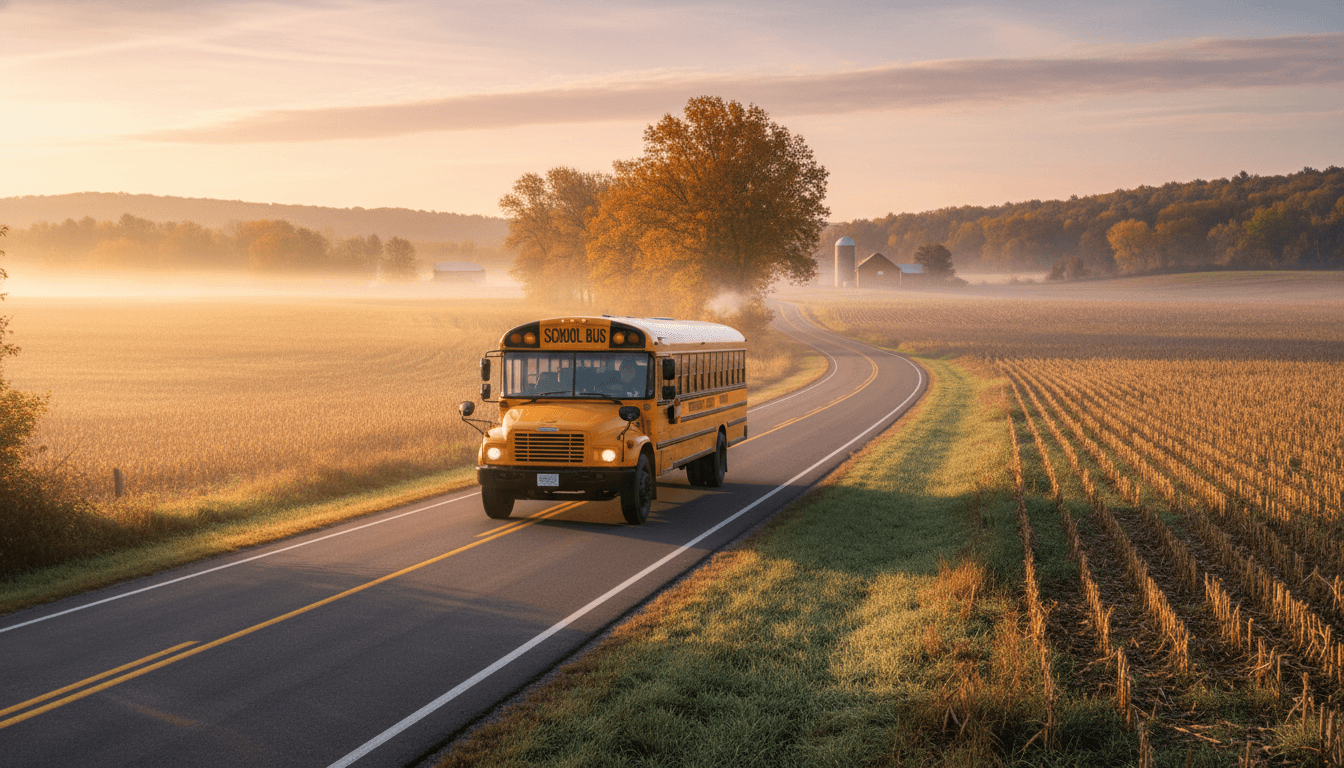
Rural School Transportation Newsletter: Communicating Bus Routes and Schedules to Families
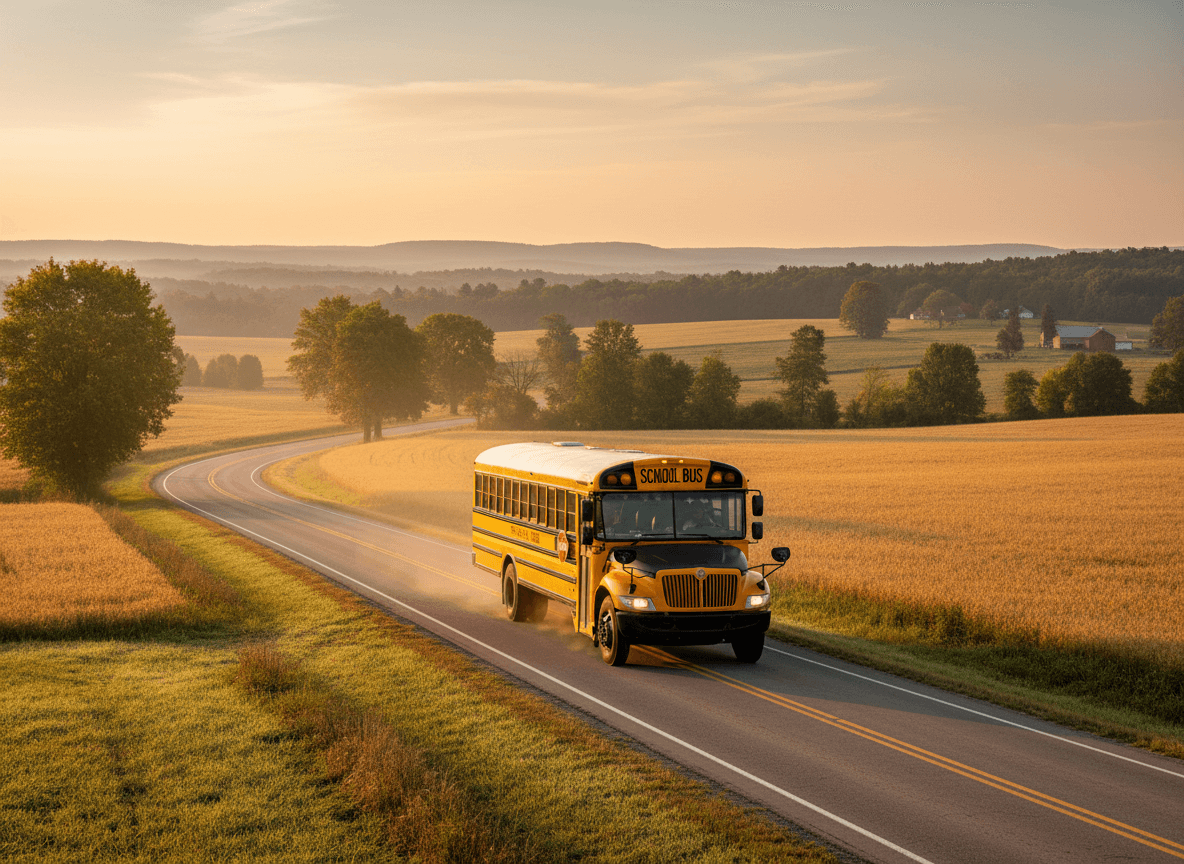
Transportation logistics are high-stakes in rural school communities. A suburban family whose bus is late has a minor inconvenience. A rural family 25 miles from school whose bus does not show up, or whose child misses the bus because the schedule changed, has a real problem with no easy backup. Rural school transportation communication needs to be proactive, specific, and structured into every newsletter.
Make the bus schedule a permanent newsletter section
At the start of the year and whenever routes change, include the full bus schedule in your newsletter as a dedicated section. List each route by number or name, the stops on that route, and the approximate pickup times. Parents who can see their specific stop in writing remember it better than parents who received a single handout in August that is now lost.
You do not need to reprint the full schedule every week. After the initial publication, keep a standing short section in the newsletter footer: "Bus Schedule: [Link to current schedule] or contact [name] at [number]." That standing footer means any family who needs the information knows exactly where to find it.
Announce route and schedule changes before they happen
Route changes and schedule adjustments are most disruptive when they arrive without warning. If your district is adding a stop, changing a pickup time by 15 minutes, or temporarily rerouting due to a road closure, the newsletter is the right place to announce this the week before it takes effect. Not the day before. Not the morning of.
Be specific in the announcement: "Starting Monday, November 4, Route 7 will pick up at Elm Road 10 minutes earlier, at 7:05 AM instead of 7:15 AM. This change is permanent for the rest of the school year." Vague language like "bus times may change soon" causes more anxiety than the change itself. Give families the specific number, time, and effective date.
Communicate snow day and delay procedures clearly and early
In rural areas with significant winter weather, the protocols for snow days, two-hour delays, and early dismissals need to be communicated at the start of the year and repeated before winter arrives. Families need to know: How will they be notified? How early? What is the procedure if there is a 2-hour delay and a family cannot arrange late drop-off care?
Use the newsletter in October to run through the specific steps: "When there is a snow day or delay, we send an email by 5:30 AM and post to [local radio station] and [district website]. For a 2-hour delay, buses run on the same routes but 2 hours later. If your family cannot accommodate a 2-hour delay, contact [name] at [number] to arrange an alternative." This level of specificity prevents panic calls on the first winter weather day.
Address what to do when a child misses the bus
Rural schools need a clear, communicated protocol for what happens when a child misses the bus and the family cannot get them to school. What is the attendance policy in this case? Is there any school transportation backup available? Are there families on the same route who might be able to help in an emergency?
Some rural schools create informal carpool registries where families who live near each other can connect. Your newsletter can facilitate this: "If you are interested in being part of a voluntary carpool list for families on Route 7, contact [name] and we will connect you with nearby families." This is not the school taking responsibility for carpool logistics -- it is the school serving as a connection point for the community.
Keep families informed about driver changes
Children who ride buses in rural areas often ride for 30-60 minutes each way. They form relationships with their drivers. When a driver changes unexpectedly, children notice and families worry. A brief newsletter note -- "Route 5 will have a substitute driver this week while Mr. Peters recovers. The substitute will carry the same route and schedule." -- manages expectations and prevents unnecessary alarm.
This kind of proactive communication signals that the school is paying attention and takes the bus ride seriously as part of the school day, not just a logistics afterthought.
After-school activity transportation deserves its own communication
Rural students who participate in after-school sports, clubs, or activities often depend on activity buses that run on different schedules from the regular bus. These schedules change more frequently, can be cancelled with short notice, and cause more confusion than the regular bus. Include activity bus schedules in the newsletter at the start of each activity season, and send updates whenever schedules change.
Also communicate the policy for what happens when an activity bus does not run: "If the activity bus is cancelled, families will be notified by [time] via [channel]. Students who cannot be picked up should report to the main office." Rural families plan their day around these pickup times. Last-minute changes with no communication plan create real hardship.
Transportation is safety communication, not logistics communication
The underlying reason rural school transportation communication matters more than many schools treat it is that getting it wrong creates safety risks. A child waiting at a bus stop in freezing temperatures because the time changed. A parent who does not know their child did not make it onto the bus. These are not newsletter content decisions -- they are safety decisions. Treat transportation updates with the same care you would give to an emergency communication. Timely, specific, and ahead of the event whenever possible.
Get one newsletter idea every week.
Free. For teachers. No spam.
Frequently asked questions
When should rural schools communicate bus route and schedule changes to families?
Announce any route or schedule change in the newsletter the week before it takes effect, not the day before. Snow day and delay procedures should be explained in October, before the first winter weather event. Post the full bus schedule at the start of the year and after any permanent change.
What should a rural school transportation newsletter include for families on long bus routes?
Include each route by number or name with stop names and approximate pickup times, the protocol for snow days and two-hour delays with specific notification channels and times, the policy for when a child misses the bus, and a standing footer with a link to the current schedule and a contact phone number.
How can rural schools communicate transportation updates to families without home internet?
Text or robocall alerts work for time-sensitive changes like same-day delays. For planned changes, send the information in the newsletter body rather than a link, and follow up with a paper note home through the student for families you know are not regularly checking email.
What are common failures in rural school transportation communication?
The most common failure is announcing route or time changes the day of rather than a week ahead. Second is vague language like 'bus times may change' without specific routes, times, and effective dates. Third is treating transportation logistics as secondary to academic communication, when a missed bus 25 miles from school is a genuine safety issue for rural families.
Can a school newsletter platform help manage transportation communication for rural families?
Yes. A tool like Daystage lets you schedule transportation update sends in advance, segment by route if needed, and track whether families opened the update before it takes effect, so you know whether to follow up with a phone call or paper notice.

Adi Ackerman
Author
Adi Ackerman is a former classroom teacher and curriculum writer with 8 years in K-8 schools. She writes about school communication, parent engagement, and what actually works in real classrooms.
More for Rural & Title I
Rural School Newsletter Guide: Communication Strategies for Small and Remote Schools
Rural & Title I · 7 min read
Title I After-School Tutoring Newsletter: How Schools Communicate Tutoring Programs to Families
Rural & Title I · 5 min read
How Title I Schools Can Use the Newsletter to Address Summer Learning Loss
Rural & Title I · 5 min read
Ready to send your first newsletter?
3 newsletters free. No credit card. First one ready in under 5 minutes.
Get started free