

Rural School Mental Health Newsletter: Communicating Limited Resources and Creative Solutions
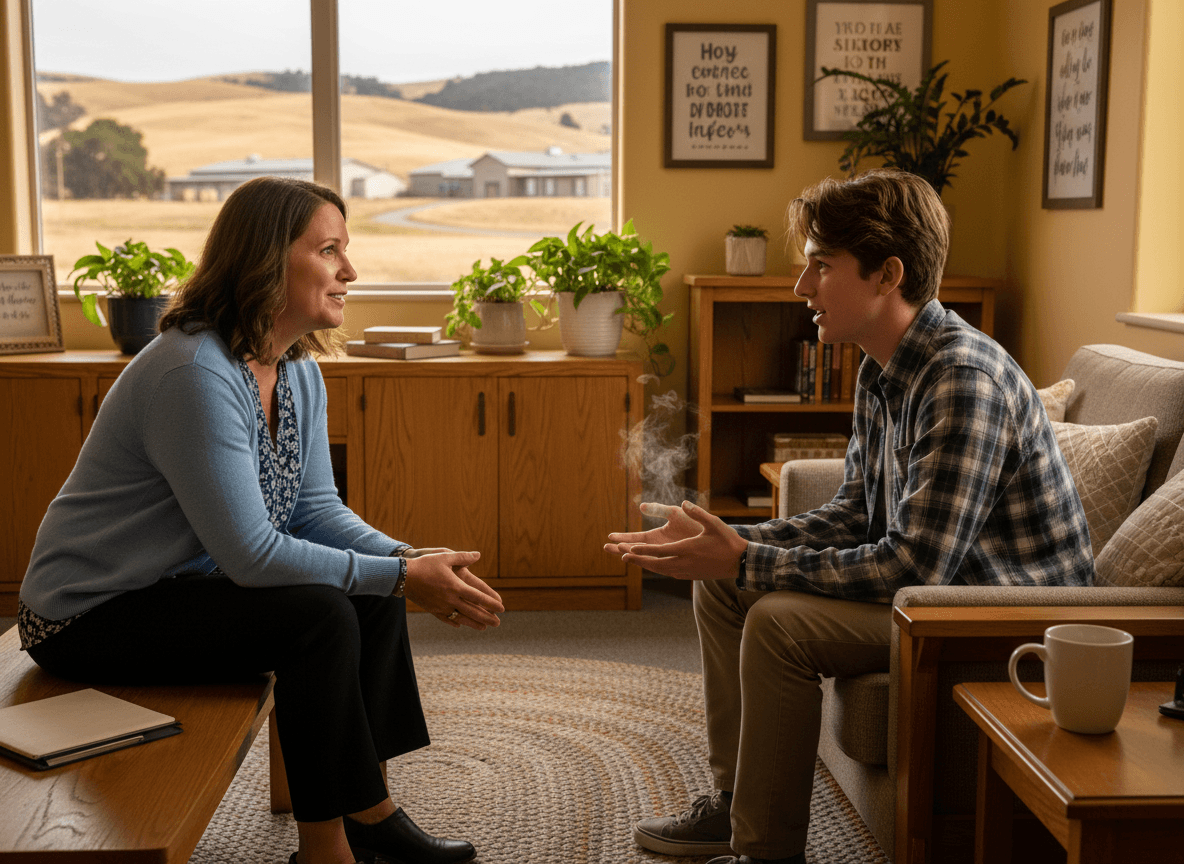
Rural schools face a mental health staffing crisis that is well documented and slow to change. The ratio of students to counselors in rural districts is often 500:1 or worse, far above the American School Counselor Association's recommended 250:1. Many rural schools share a counselor across two or three buildings, rely on contracted services that visit biweekly, or have no licensed mental health professional on site at all.
Your newsletter cannot solve the staffing shortage. But it can do several things that matter: normalize mental wellness conversations at home, communicate what resources actually exist, and reduce the stigma that prevents rural families from seeking help. These are not small contributions.
Be honest about what your school has and does not have
Rural families often do not know what mental health support is available at their child's school because schools are reluctant to advertise the gaps. The result is that families who need support do not know whether to call the school, and families who contact the school are sometimes frustrated to learn that the counselor is only there on Wednesdays.
A brief, honest description of your school's mental health resources removes this confusion. "Our school counselor, Ms. Rivera, is on-site Tuesdays and Thursdays. Students who need to meet with her can be referred by a teacher or can self-refer through [process]. For urgent situations, contact [name] at [number]." This kind of transparency is more respectful to families than silence that leaves them guessing.
Normalize mental wellness language in every newsletter, not just crisis moments
One pattern that makes mental health stigma worse in rural communities is that the only time it appears in school communication is during or after a crisis: a student death, a community tragedy, a lockdown. This associates mental health language with catastrophe rather than with everyday wellbeing.
Including a small wellness section in your regular newsletter -- two or three sentences -- normalizes the topic as part of school life. "This week we talked in class about strategies for managing test anxiety. Here is one strategy we practiced that students can use at home: [specific technique]." Over time, this regular exposure shifts the conversation in rural communities where mental health topics are often treated as private or shameful.
Share telehealth and virtual mental health resources explicitly
For rural families, the nearest therapist or pediatric mental health specialist may be 60-90 minutes away, which is effectively inaccessible for most working families. Telehealth mental health services have expanded significantly and many accept Medicaid, which covers a high proportion of students in Title I and rural schools.
Your newsletter is an appropriate place to share specific telehealth resources: "Families looking for mental health support can access [specific service] via video appointment. They accept Medicaid and most major insurance. Contact [number] or visit [website]." Include the Crisis Text Line (text HOME to 741741) and 988 Suicide and Crisis Lifeline in a standing footer that appears on every newsletter. These lines are free, 24/7, and do not require the family to navigate a referral process.
Connect student mental health to academic behavior families can observe
Rural families, particularly in communities with cultural norms around stoicism or self-reliance, may be more receptive to mental health information when it is framed in observable, practical terms rather than clinical language. Instead of writing about anxiety disorders, write about what anxiety looks like in a student at home: avoidance of homework, stomachaches on Sunday evenings before school, difficulty sleeping the night before a test.
"If your child is showing signs of stress around school -- complaining of stomachaches on school mornings, having trouble sleeping during busy academic weeks, or withdrawing from activities they used to enjoy -- these are worth paying attention to. Our counselor is available [schedule] to help you figure out next steps." This framing meets families where they are without requiring them to self-identify as dealing with a mental health issue.
Address rural-specific stressors that affect students
Student mental health in rural areas is shaped by pressures that are different from those in urban or suburban schools. Agricultural families may experience significant financial stress during drought years or commodity price collapses. Families in extraction economies (coal, timber, oil) experience boom-and-bust cycles that create instability. Substance use disorders have hit rural communities disproportionately, and many students are navigating family disruption related to opioid addiction.
You do not need to write about these topics directly in every newsletter. But once or twice a year, acknowledging the real pressures that families in your community face -- without being patronizing or diagnostic -- signals that the school sees and understands students' actual lives. "We know this has been a hard growing season for many families in our area. If your family is going through a difficult time, we want you to know that [specific support] is available, and your child's teachers are here to support them."
Build a resource list and update it annually
Create a simple mental health resource list for your school community and publish it in the newsletter at least once a year, ideally at the start of the year and again after winter break when depression rates peak. The list should include: your school counselor's contact and schedule, local mental health providers who accept Medicaid, telehealth options, the 988 crisis line, the Crisis Text Line, and any community organizations (churches, nonprofits, community health workers) that provide support.
Keep the list short and specific. A four-page resource guide is less useful than a half-page list of five things with phone numbers. Families in crisis are not in a position to do research. Make it easy.
Coordinate with your counselor on newsletter content
If your school has a counselor, even a part-time one, involve them in your newsletter planning at least once a month. Ask them what themes they are seeing with students, what they wish families understood, and what they want to communicate this month. A counselor-contributed paragraph in the newsletter carries more authority than the same information from the classroom teacher, and it signals to families that the school's mental health professional is a real, accessible person.
Even a brief bylined section -- "A note from Ms. Rivera, our school counselor" -- once a month builds the counselor's visibility and approachability in ways that matter when a family eventually needs to make contact.
Get one newsletter idea every week.
Free. For teachers. No spam.
Frequently asked questions
When should rural schools communicate about mental health resources to families?
Publish a mental health resource list at least twice a year: at the start of the school year and again after winter break, when depression rates are highest. Small wellness notes in every regular newsletter normalize the topic far more effectively than crisis-only communication.
What should a rural school mental health newsletter include for families with limited provider access?
Include your counselor's on-site schedule and how to reach them, telehealth services that accept Medicaid, the 988 crisis line and Crisis Text Line in a standing footer, and one practical observation about what student stress looks like at home. Specific contact details matter because rural families cannot easily navigate a referral chain.
How can rural schools reach families who avoid mental health topics due to cultural stigma?
Frame mental health information in observable, behavioral terms families can recognize at home, such as stomachaches on Sunday evenings or trouble sleeping before a test. Avoid clinical language. Pairing the information with a named, approachable counselor and a bylined newsletter section reduces avoidance.
What are common barriers to mental health engagement in rural Title I school communities?
The nearest therapist may be 60 to 90 minutes away, which is functionally inaccessible for working families. Cultural norms around stoicism and privacy reduce help-seeking. Schools often only mention mental health during crises, which reinforces stigma. Counselor shortage ratios of 500:1 mean families who do reach out may wait weeks.
Can a school newsletter realistically improve student mental health outcomes in rural communities?
It cannot replace a counselor, but it can do specific, measurable things: reduce stigma by normalizing wellness language, connect families to telehealth options they did not know existed, and build the counselor's visibility so families trust them before a crisis. Schools that use a tool like Daystage to send consistent weekly newsletters create a low-pressure, regular channel for this information rather than relying on families to seek it out.

Adi Ackerman
Author
Adi Ackerman is a former classroom teacher and curriculum writer with 8 years in K-8 schools. She writes about school communication, parent engagement, and what actually works in real classrooms.
More for Rural & Title I
How Rural Schools Can Use the Newsletter to Support Early Childhood Readiness
Rural & Title I · 5 min read
Rural School Senior Class Newsletter: How Small Schools Support Graduating Students Through Transitions
Rural & Title I · 5 min read
Title I Family Engagement Plan Newsletter: How Schools Communicate Their Family Partnership Strategy
Rural & Title I · 5 min read
Ready to send your first newsletter?
3 newsletters free. No credit card. First one ready in under 5 minutes.
Get started free