

Title I School Family Communication in Minnesota
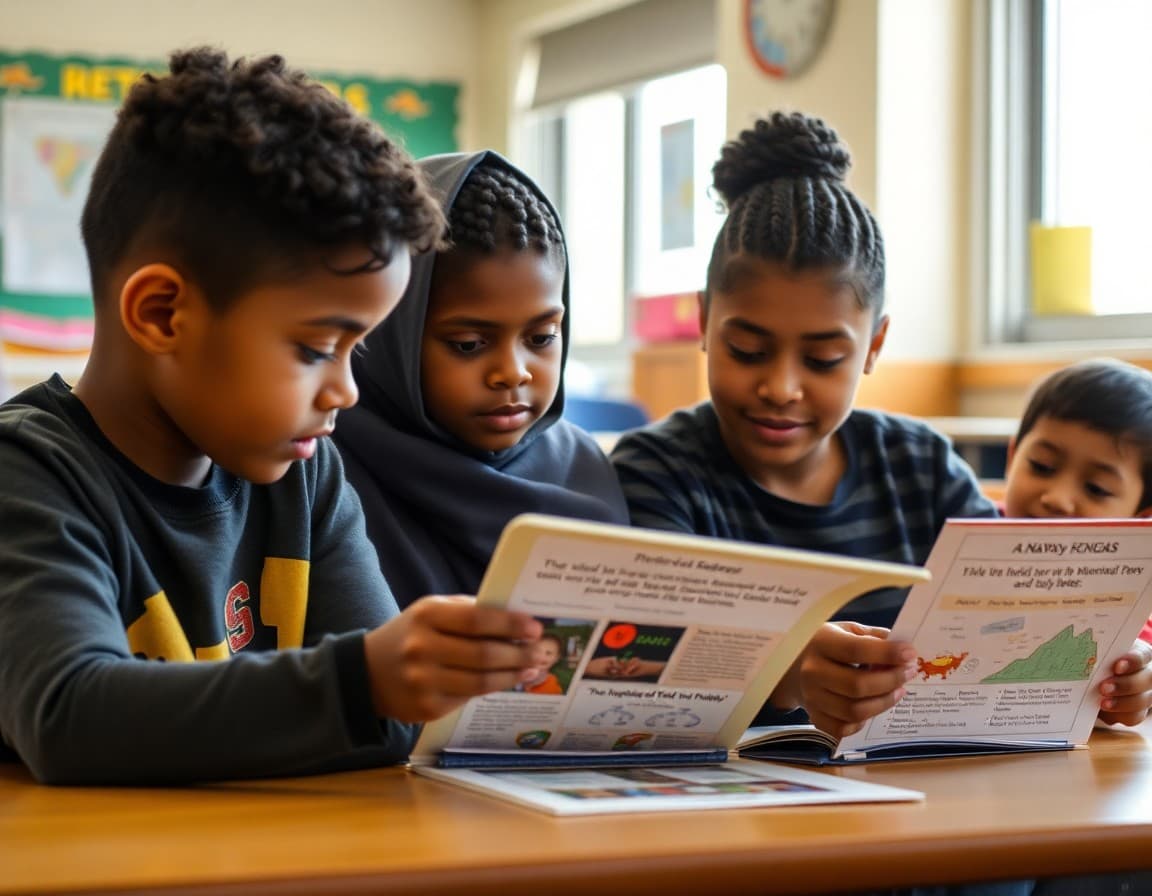
Minnesota has the largest Somali diaspora community in the United States, one of the largest Hmong communities in the world outside Southeast Asia, and significant concentrations of Native American families in reservation communities across the north of the state. Its Title I schools in Minneapolis and St. Paul are among the most linguistically diverse in the country. Understanding this complexity is the starting point for effective family communication.
Minnesota's Title I landscape
Minneapolis and St. Paul have Title I schools concentrated in neighborhoods like north Minneapolis, Phillips, and Powderhorn in Minneapolis, and Frogtown, the East Side, and the North End in St. Paul. These neighborhoods have seen significant demographic change over the past 30 years as immigrant and refugee communities established themselves alongside existing low-income Black and Indigenous communities.
Rural Minnesota has a different Title I profile: reservation schools on the Red Lake, Leech Lake, White Earth, and other Ojibwe reservations, small towns in the southwest and northwest of the state that have received refugee and immigrant populations in food processing industries, and declining rural communities in the northeast Iron Range.
ESSA requirements for Minnesota Title I schools
The Minnesota Department of Education administers Title I and monitors compliance. Required activities under ESSA Section 1116:
- Annual meeting for all parents explaining Title I status and parent rights
- Family Engagement Policy developed with parent input, distributed annually
- School-Parent Compact provided to every family, discussed at parent-teacher conferences
- Annual notification of the right to request teacher qualification information
- At least 1% of Title I funds reserved for family engagement activities
The Somali community in Minneapolis
The Twin Cities metro area has received Somali refugees since the early 1990s, and the community has grown to become one of the most established Somali diaspora communities in the world. The community is concentrated in the Cedar-Riverside neighborhood in Minneapolis and in parts of St. Paul, but has spread throughout the metro as families have achieved stability and moved to suburbs.
Somali cultural norms around gender roles and education shape how schools should approach family engagement. In many Somali families, fathers are the primary decision-makers about education, but mothers are more accessible during school hours. Schools that understand this dynamic can engage both parents effectively rather than reaching only the parent who shows up at meetings. Community organizations like the Brian Coyle Center and local mosques are trusted institutions for Somali community communication.
St. Paul's Hmong community
St. Paul's Hmong community has been established for over four decades. Many families have US-educated parents and grandparents who navigate American institutions with fluency. But there are also newly arrived Hmong families (particularly from Thailand, where some Hmong have lived in refugee camps), and maintaining Hmong language capacity in school communication respects the community's cultural identity even when families are fully bilingual.
Hmong community organizations in St. Paul, including the Hmong Cultural Center and the nonprofit network around the East Side community, are established partners for school outreach.
Ojibwe reservation schools in northern Minnesota
The Red Lake Nation, Leech Lake Band, and White Earth Nation operate schools on their reservations that receive Title I funding. These schools function within a tribal governance context and should be understood in that frame. Communication with families on these reservations should reflect Ojibwe cultural values and should work through tribal communication channels where possible.
Connectivity on reservations in northern Minnesota is improving but remains uneven. Some communities have good broadband through tribal or cooperative providers; others rely on mobile data. Print remains important as a backup communication channel.
Southwest Minnesota's new immigrant communities
Towns like Marshall, Worthington, and Willmar have received large numbers of immigrants and refugees working in food processing (turkey processing in Worthington, pork processing in Marshall). These communities speak Spanish and increasingly Somali, Sudanese Arabic, and other languages. Small rural Minnesota school districts have had to develop multilingual communication capacity quickly and with limited resources.
School-Parent Compact writing for Minnesota's diverse schools
For Somali families, having the compact available in Somali and reviewed by a community liaison rather than just translated mechanically makes a difference. For Hmong families, Hmong versions are appreciated even when families are bilingual. For rural southwestern Minnesota schools with Spanish-speaking families, Spanish translation is a baseline. Specific school commitments in plain language make the compact useful rather than ceremonial.
Consistent multilingual newsletters across Minnesota
From Minneapolis's Cedar-Riverside to St. Paul's Frogtown to Worthington's new immigrant community, a consistent multilingual newsletter is the foundation of ongoing family communication. Schools using Daystage send newsletters that arrive inline in email across all email providers, work on smartphones, and can include multiple language sections. Building that consistency is what makes Title I family engagement effective rather than a compliance exercise.
Get one newsletter idea every week.
Free. For teachers. No spam.
Frequently asked questions
What ESSA requirements apply to Minnesota Title I schools?
Minnesota Title I schools must hold an annual meeting for all parents explaining Title I status and parent rights, develop and distribute a Family Engagement Policy with parent input, provide every family a School-Parent Compact, reserve at least 1% of Title I funds for family engagement, and notify parents of their right to request teacher qualifications. The Minnesota Department of Education monitors Title I compliance through its compliance and assistance team.
Where are Title I schools concentrated in Minnesota?
Minnesota Title I schools are concentrated in Minneapolis and St. Paul (which have significant concentrations of Somali, Hmong, Latino, and Black families in low-income neighborhoods), rural reservation communities (Red Lake, Leech Lake, White Earth, and others), and smaller cities like St. Cloud, Faribault, and Marshall that have received significant refugee and immigrant populations. Minnesota has one of the largest Somali diaspora communities in the world outside Somalia.
How do Minneapolis schools communicate with Somali families?
Minneapolis and the Twin Cities metro area have the largest Somali community in the United States, with an estimated 50,000 to 100,000 Somali Americans in the region. Many arrived as refugees beginning in the early 1990s, and the community now spans multiple generations. Schools with significant Somali enrollment need Somali translation capacity, staff who understand Somali cultural norms around education and family roles, and relationships with community organizations like the Brian Coyle Community Center and Somali community mosques.
What is the Hmong community's relationship with St. Paul schools?
St. Paul has one of the largest Hmong communities in the country, with roots in the post-Vietnam War refugee resettlement of the late 1970s. Many Hmong families have been in St. Paul for 40-plus years, and the community spans several generations. Hmong American parents of school-age children today are often themselves US-educated. Communication needs differ between recently arrived Hmong families and established community members, but Hmong language capacity is still valued.
What newsletter tool works for Minnesota Title I schools?
Daystage is used by Minnesota schools to send multilingual newsletters to diverse families. For Minneapolis schools with Somali families, Daystage lets staff add Somali sections to English newsletters. The inline email delivery without extra click-throughs works well for families across the Twin Cities metro area using smartphones as their primary internet device.

Adi Ackerman
Author
Adi Ackerman is a former classroom teacher and curriculum writer with 8 years in K-8 schools. She writes about school communication, parent engagement, and what actually works in real classrooms.
More for Rural & Title I
Ready to send your first newsletter?
3 newsletters free. No credit card. First one ready in under 5 minutes.
Get started free