
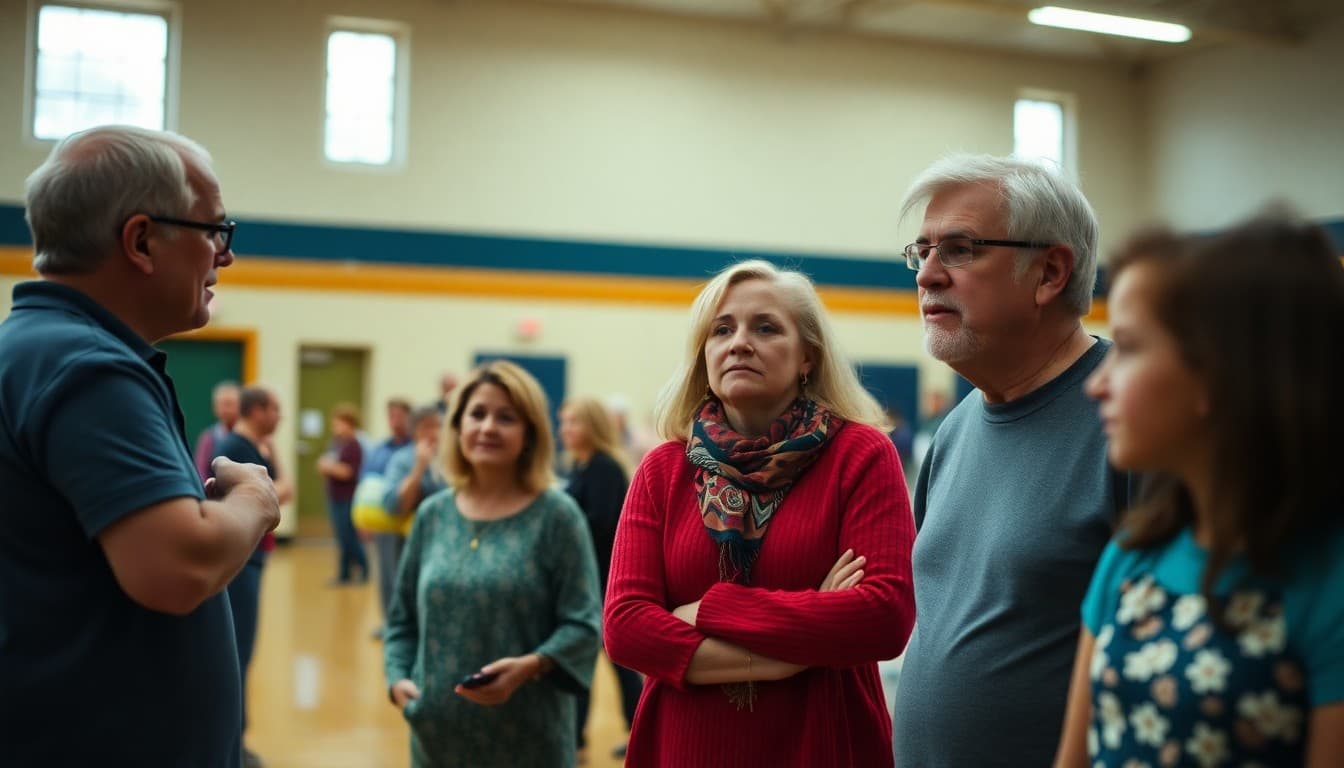
Title I School Family Communication in Kentucky

Eastern Kentucky has been in the national conversation about Appalachian poverty for decades. Counties like Owsley, Breathitt, Knott, and Leslie have child poverty rates that rival the poorest counties in Mississippi and Alabama. The schools in these communities are not just educational institutions. They are often the largest employer, the most reliable source of services, and a central community gathering place. Family communication in this context requires understanding the history, the geography, and the culture.
Kentucky's Title I landscape
Kentucky has over 60% of its public schools qualifying for Title I funding, which puts it among the highest in the country. Appalachian eastern Kentucky is the most visible concentration: 54 counties in the state's Appalachian region collectively have poverty rates far above the national average. The decline of coal mining, which was the primary employer in many of these counties for a century, has left communities with limited replacement economic activity.
Western Kentucky's former coal counties (Union, Hopkins, Webster, and surrounding areas) face similar dynamics. Louisville's urban schools, particularly in the West End and Smoketown neighborhoods, serve low-income families in a very different urban context but with some of the same challenges around multigenerational poverty.
ESSA requirements for Kentucky Title I schools
The Kentucky Department of Education administers Title I through its office of federal programs. Required activities under ESSA Section 1116:
- Annual meeting for all parents explaining Title I status, program content, and parent rights
- Family Engagement Policy developed with genuine parent input, distributed at the start of the year
- School-Parent Compact provided to every family, discussed at parent-teacher conferences
- Annual notification of the right to request teacher qualification information
- At least 1% of Title I funds reserved for family engagement activities
Kentucky DOE provides guidance and templates through its Title I program office. Schools in small Appalachian districts often have limited staff capacity for compliance documentation, and the state provides some centralized support.
Appalachian culture and family engagement
Understanding Appalachian culture is essential for effective family engagement in eastern Kentucky. Appalachian communities have strong values around self-reliance, family loyalty, and place attachment. Outsiders who arrive with programs and expertise but without genuine respect for the community's knowledge and strengths tend to fail.
Schools that hire staff from the local community, that acknowledge the strengths of Appalachian families rather than only their challenges, and that make family engagement feel like a genuine relationship rather than a compliance activity build trust that persists. A principal who grew up in Breathitt County and whose children attend the same school carries credibility that no external consultant can replicate.
Opioid epidemic impacts on family engagement
Eastern Kentucky was one of the earliest and hardest-hit regions in the opioid epidemic. Many schools have significant numbers of students living with grandparents or in kinship arrangements because parents are incarcerated, deceased, or unable to care for their children. Communication needs to account for this reality: the person responsible for the child may not be the parent listed in enrollment records.
Schools that have adapted their family communication to serve grandparents and kinship caregivers, including making sure these caregivers are on communication lists and receive all notices, build better relationships with the actual family structures that exist in their communities.
Connectivity challenges in hollow communities
Eastern Kentucky's geography of narrow creek valleys ("hollows" or "hollers") makes broadband infrastructure expensive to build. Many communities that are geographically close to a town center have no reliable internet access because running cable or fiber through the terrain is not economically viable for private providers.
State and federal investments are improving this, but the transition is slow. In the meantime, schools in these areas cannot assume digital-only communication. Printed newsletters sent home with students, text message alerts, and community posting points (libraries, churches, dollar stores, which are often community gathering places) remain essential.
School-Parent Compact writing for Appalachian families
The compact should be written in plain, concrete language without educational jargon. Appalachian families often respond well to language that emphasizes partnership and shared investment in the child rather than deficit-focused language about what the family needs to do better. School commitments should be specific and genuinely kept: the compact is more likely to be taken seriously if families see that the school follows through on its promises.
For families where a grandparent or kinship caregiver is the primary contact, make sure the compact reflects who is actually responsible for the child. This requires updating enrollment records accurately and actively.
Newsletters and consistent family communication in Kentucky
A consistent weekly newsletter is one of the most reliable tools for maintaining the school-family relationship in eastern Kentucky. Pairing a digital newsletter (Daystage works well for the inline email delivery that reduces load time on slow connections) with printed copies ensures all families are reached. For Louisville urban schools, digital delivery alone reaches most families effectively. The consistency is what matters: a newsletter that arrives reliably every Friday trains families to look for it and to trust that the school will communicate proactively.
Get one newsletter idea every week.
Free. For teachers. No spam.
Frequently asked questions
What ESSA requirements apply to Kentucky Title I schools?
Kentucky Title I schools must hold an annual meeting for all parents explaining Title I status and parent rights, develop and distribute a Family Engagement Policy with parent input, provide every family a School-Parent Compact, reserve at least 1% of Title I funds for family engagement, and notify parents of their right to request teacher qualifications. The Kentucky Department of Education monitors Title I compliance through its office of federal programs.
Where are Title I schools concentrated in Kentucky?
Kentucky has one of the highest concentrations of Title I schools in the country, with over 60% of public schools qualifying for funding. Appalachian eastern Kentucky (Breathitt, Owsley, Leslie, Knott, Pike, and surrounding counties) has some of the highest poverty rates in the United States. Owsley County has been repeatedly cited as one of the poorest counties in the country. Western Kentucky coal counties and Louisville's urban schools round out the state's Title I landscape.
How do Appalachian Kentucky schools approach family engagement?
Eastern Kentucky families have deep ties to community, church, and place. The school is often one of the largest employers in a small county and a central community institution. Family engagement in Appalachian Kentucky benefits from acknowledging this context: schools that are visible in the community, that employ local people, and that treat families as partners rather than problems see stronger engagement. Trust is built through consistency and respect, not through programs.
What role does technology play in Kentucky Title I communication?
Eastern Kentucky has some of the lowest broadband penetration rates in the country, despite being the focus of multiple federal and state broadband expansion efforts. The 2021 infrastructure bill has funded expansion projects, but the terrain makes rural broadband construction expensive and slow. Many families in Breathitt and Owsley counties rely on mobile data for internet access, with spotty coverage in hollow communities. Print newsletters remain essential alongside digital channels.
What newsletter tool works for Kentucky rural Title I schools?
Daystage is used by Kentucky schools to send consistent newsletters that reach families on mobile. For eastern Kentucky schools where families are using smartphones on limited data plans, the inline email delivery without extra click-throughs reduces data usage and load time. Schools can combine Daystage digital delivery with printed copies for families without reliable internet, covering all families in the school.

Adi Ackerman
Author
Adi Ackerman is a former classroom teacher and curriculum writer with 8 years in K-8 schools. She writes about school communication, parent engagement, and what actually works in real classrooms.
More for Rural & Title I
Ready to send your first newsletter?
3 newsletters free. No credit card. First one ready in under 5 minutes.
Get started free