
Reading Newsletter for ELL Readers: What to Include
Families of English language learners are doing the second hardest job in a classroom community: supporting reading at home in a language they may not own. Most teacher newsletters skip them or default to a translated PDF that nobody opens. A reading newsletter built with ELL families in mind, from the first line, changes who reads it and what they do after. Here is what to put in it.
Lead with the home language as an asset
Open with one paragraph parents need to hear in writing: "If you read to your child in your home language, you are building the reading skills that transfer into English. Vocabulary, story structure, and comprehension move across languages. The strongest thing you can do at home is read in the language you read best." That paragraph alone shifts hundreds of homes from not reading aloud at all (because the parent feels insecure in English) to reading aloud confidently in Spanish, Arabic, Mandarin, Portuguese, Vietnamese, whatever the home language is.
Teach the picture walk
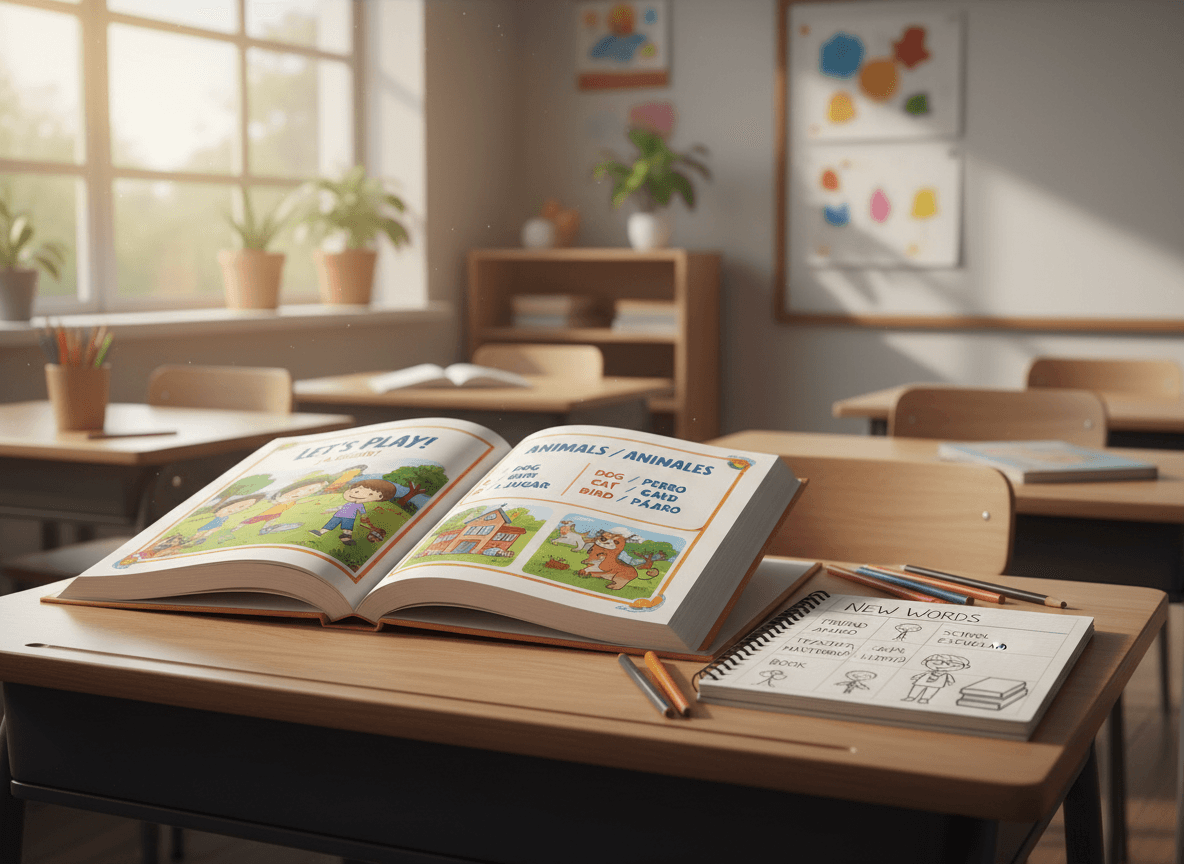
Picture walking is the single most useful home strategy for ELL readers. Explain it in three lines. "Before your child reads, look through the book's pictures together in order. Talk about what is happening. Predict what the book is about. Then read." Five minutes of picture walk before a 10-minute read doubles comprehension. Parents can do it in any language. The strategy travels.
Translate the assessment language
ELL families see test scores they cannot interpret. Use the newsletter to set context. "English reading scores in the first three years of English exposure measure language acquisition more than reading skill. A low score does not mean your child is behind in reading. It means they are building English. We expect those scores to climb as English grows." That paragraph keeps parents in the work instead of sending them spiraling.
One concrete example
A second grade student in my class last year, Spanish-dominant, scored in the lowest band on the fall English screening. Her father was about to ask for after-school tutoring. I sent the home-language-as-an-asset paragraph in the next newsletter. He started reading to her in Spanish four nights a week. By spring her English screening was in the middle band. The intervention was a parent reading in his own language. Nothing else changed.
Include short English texts with picture support
Once a cycle, list three short, picture-heavy English books that an ELL student can carry. "Bear About Town (simple text, strong pictures). National Geographic Kids early readers (nonfiction, photos). Elephant and Piggie by Mo Willems (very short, dialogue-only, builds expression)." One sentence each. Parents do not need a curated list. They need three names they can find at the school library this week.
Same structure, two languages
Decide on a structure and keep it. English on top, home language version below. Same five sections in the same order every cycle. Parents learn the rhythm and start reading on autopilot, in whichever language they read best. The fastest way to lose ELL families is to send a beautiful English newsletter one week and a translated PDF the next.
How Daystage helps with the ELL reading newsletter
Daystage holds the bilingual structure so you write the newsletter once in English, paste a translated version underneath, and send a single email that serves every family on your list. No portal, no app, no PDF download. The whole thing reads cleanly on a phone, which is the device most ELL families read on.
Get one newsletter idea every week.
Free. For teachers. No spam.
Frequently asked questions
Should parents of ELL students read to their child in English or in the home language?
Home language, every time, if that is the stronger language. Reading aloud in the home language builds vocabulary, story structure, and comprehension that transfer to English reading. A parent who reads beautifully in Spanish and stumbles in English should read in Spanish. Tell families this in writing. Most assume the opposite, and the result is less reading at home, not more.
What is a picture walk and why does it matter for ELL readers?
A picture walk is what it sounds like: before reading a book, the child looks through the pictures in order and predicts what is happening. For ELL readers, this builds the story scaffold before the language load hits. Five minutes of picture walking before a read can double comprehension. Parents can do it. They just need the words for what they are doing.
Can grade-level reading scores be misleading for ELL students?
Yes, in both directions. A new arrival can read fluently in the home language and score low on an English assessment, which is not a reading problem but a language-acquisition window. An advanced bilingual student can score at grade level on English tests and still be a year ahead in true reading skill. Tell parents that scores are one input, not the full picture, especially in the first three years of English.
What should home reading look like for an ELL student?
Twenty minutes a day, in any language. Half can be a parent reading aloud in the home language. Half can be the child reading a short English book with picture support. Audiobooks in English (the kind with print along to follow) work especially well. The goal is exposure, not perfection. Parents need to hear that out loud.
How can I send newsletters in two languages without doubling my workload?
Use Daystage. Write the newsletter once in English. Run the body through a translation tool, paste the translated version below the English, and send a single email with both. Parents see whichever one they need. The format stays consistent. The send is one click. No separate channel, no app for parents to install, no portal to log into.

Adi Ackerman
Author
Adi Ackerman is a former classroom teacher and curriculum writer with 8 years in K-8 schools. She writes about school communication, parent engagement, and what actually works in real classrooms.
More for Reading Newsletter
Ready to send your first newsletter?
3 newsletters free. No credit card. First one ready in under 5 minutes.
Get started free