

Reading Newsletter Explaining Book Clubs: A Parent-Friendly Template
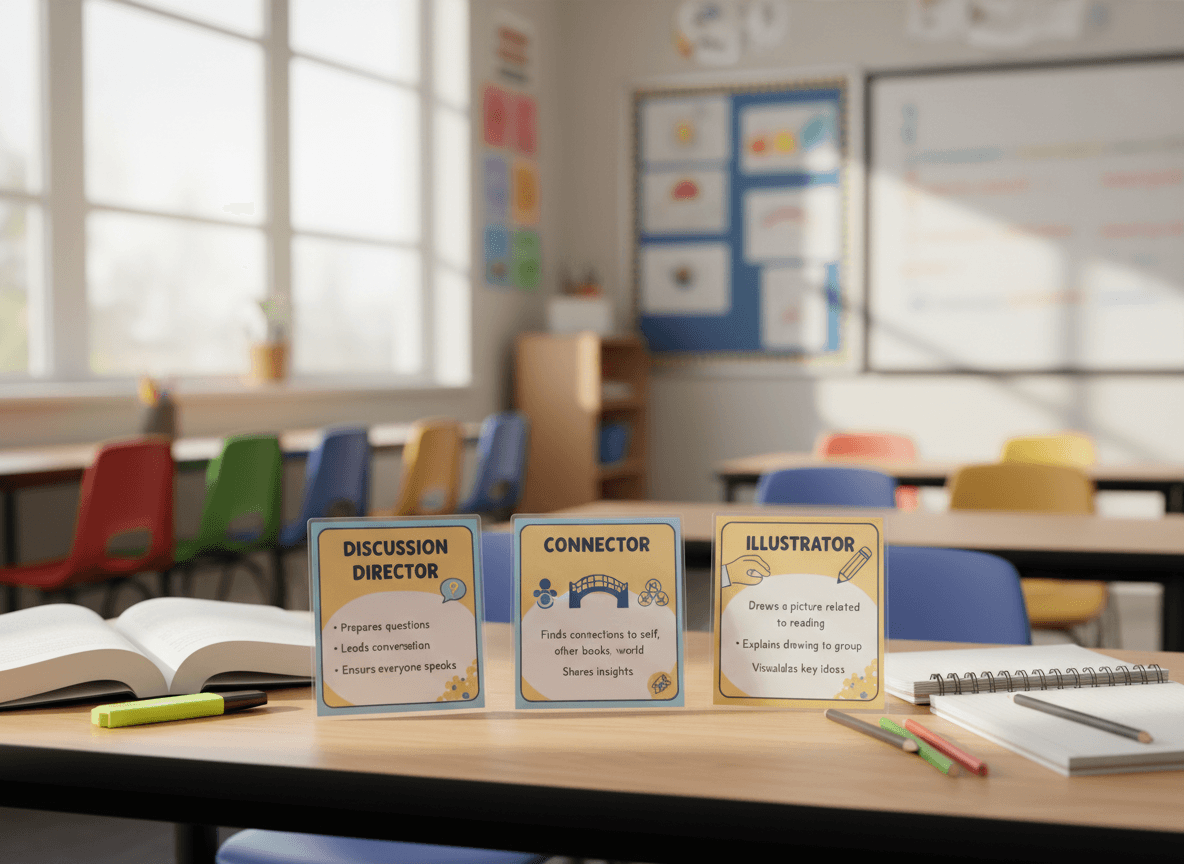
Book clubs are the part of the reading block kids talk about at home. They mention a friend's idea, a question they argued about, a scene they could not believe the author wrote. Parents catch fragments and have no idea what is going on. A short, focused newsletter explaining how book clubs work in your classroom turns those fragments into conversations. Here is the structure and the language to use.
Define a book club in one paragraph
"A book club is a small group of three to five students reading the same book and meeting twice a week to talk about it. Each student has a role for the meeting. Roles rotate. The teacher sits in on the conversation but does not run it. The kids run it." Five sentences. Parents now have a working picture.
Name the roles, one line each
Discussion director writes the questions the group will discuss.
Connector finds links between the book and life, other books, or the world.
Illustrator draws a scene or a symbol from the reading and explains the choice.
Word wizard tracks new or interesting vocabulary and brings it to the group.
Roles rotate every meeting so every student tries every role across a book. Parents recognize the role their child mentioned and the puzzle clicks together.
Why book clubs change shy readers
This is the section parents will quote back at conferences. "A book club has three to five people, not 25. The social cost of speaking is much lower. And the roles give shy readers a structured entry point. A student who never raises a hand in whole-class discussion will read the question they wrote on their discussion director card. By the second book of the year, most no longer need the card. That is one of the reasons I keep book clubs in the schedule every year."
What this cycle's book club is reading
Name the books. "This cycle, the fourth grade book clubs are reading three titles, with kids self-selecting groups: Fish in a Tree, Wonder, and The One and Only Ivan. Each group meets twice a week for four weeks. We finish with a short shared writing piece about a theme from their book."
What parents can do at home
One question, not a list. "If your child mentions their book at dinner, ask 'what is happening in your book right now?' That is the whole home practice. You do not need to read the book. You do not need to test them on chapter facts. One open question, asked once, after they bring it up. That is plenty."
A short example
"A fourth grader in a Wonder book club volunteered as discussion director two weeks ago. She is the kind of student who rarely speaks in whole-class discussion. She wrote three questions, read the first one out loud, and ran a 15-minute group conversation without my help. She came up to me after and said it was the best part of her day. That moment is the case for book clubs in two sentences."
What book clubs are not
Head off the common misread. "Book clubs are not pleasure reading. Students are still learning. They are tracking themes, questioning the author, building vocabulary, and writing about what they read. The work is real. It just happens in conversation with their peers, which is where a lot of real reading work happens for adults too."
How Daystage helps with the book club newsletter
Daystage holds this kind of topic newsletter as a reusable template. Write the book club explainer once, swap the book titles each cycle, send to every family in one click. No PDF, no portal. The structure stays identical, which is what makes parents start opening these on autopilot by the second send of the year.
Get one newsletter idea every week.
Free. For teachers. No spam.
Frequently asked questions
What is the difference between a book club and a literature circle?
Almost nothing. Literature circle is the more formal academic name and usually implies assigned roles. Book club is the friendlier name and often runs more loosely. In an elementary classroom, the two words refer to the same basic structure: a small group of students reading the same book and meeting to talk about it. Use whichever name fits your classroom culture. Be consistent in the newsletter.
What are the most common book club roles?
Four roles cover most classrooms. Discussion director writes the questions for the group. Connector finds links between the book and the real world, other books, or their own life. Illustrator draws a scene or a symbol from the reading. Word wizard tracks new or interesting vocabulary. Roles rotate every meeting so every student tries every role across a book.
Why do book clubs help shy readers in particular?
Two reasons. The group is small, usually three to five students, so the social cost of speaking is much lower than in whole-class discussion. And the roles give shy readers a structured way in. A student who would never raise a hand to share an opinion will read the question they wrote on their discussion director card. By December, most of them no longer need the card.
Should parents read the book at home alongside their child?
Optional, not expected. If a parent wants to read along, that is wonderful and adds dinner-table conversation. If not, the book club still works. The role of the home is not to test the child on the chapters, it is to ask one open question after a reading session: 'what is happening in your book right now?' That is enough.
What is the easiest way to send a book club newsletter?
Save a four-section template you can reuse for every book club cycle. Daystage holds the structure, lets you swap the book title and the role focus each time, and sends a clean email to every family. The same template carries you through three or four book club cycles a year without rewriting.

Adi Ackerman
Author
Adi Ackerman is a former classroom teacher and curriculum writer with 8 years in K-8 schools. She writes about school communication, parent engagement, and what actually works in real classrooms.
More for Reading Newsletter
Ready to send your first newsletter?
3 newsletters free. No credit card. First one ready in under 5 minutes.
Get started free