
Librarian Newsletter to Classroom Teachers: A Working Template
The librarian newsletter to classroom teachers is one of the most underused tools in a school. Done well, it turns the library from a place teachers visit twice a year into a working partner in every unit. Done poorly, it reads like a flyer and gets archived unopened. Here is the structure that actually gets teachers walking down the hall with a list in hand.
Lead with new arrivals, with cover images
Three to five new titles, cover images included. Skip the long blurbs. One sentence per book. "Brand new: The First Cat in Space Ate Pizza, a graphic novel that will be checked out twice a day by every fourth grader you have." Cover images do the heavy lifting. A wall of titles in plain text scrolls past unread.
Themed bins built around current units
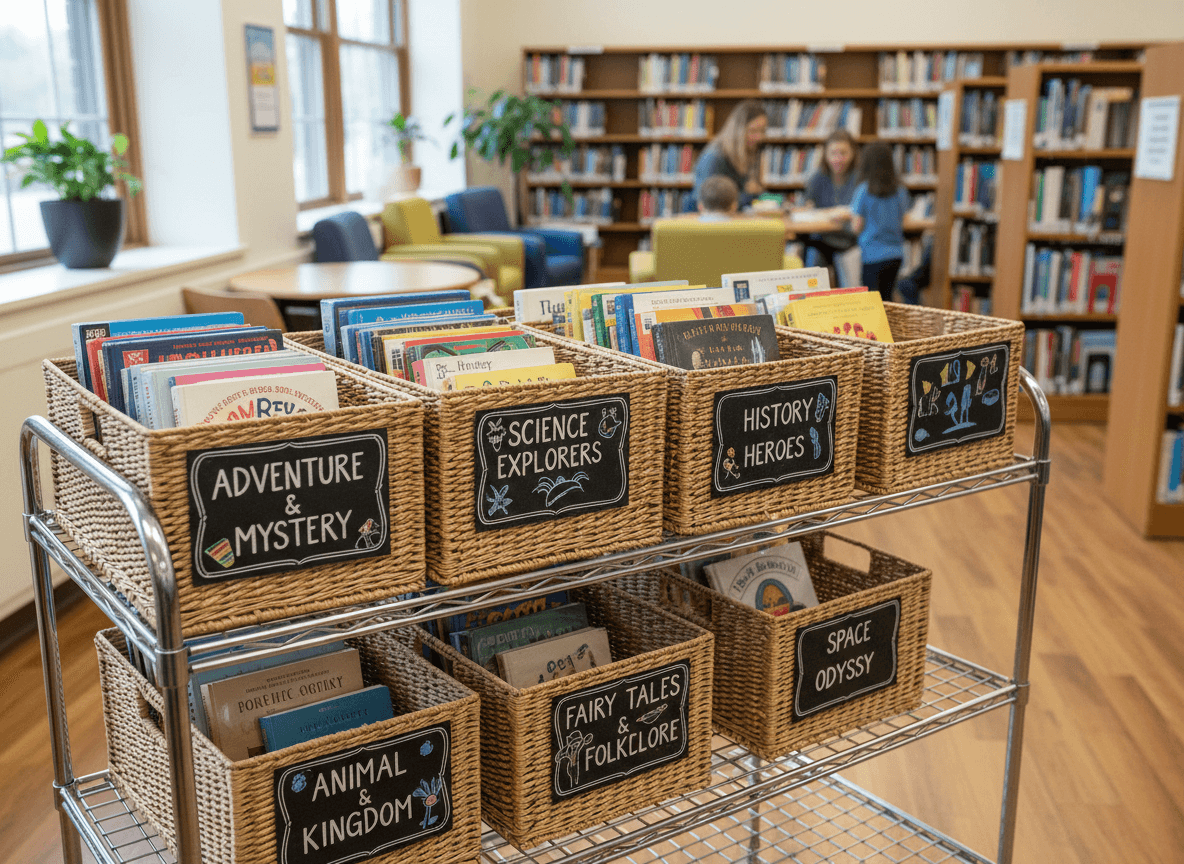
Talk to grade-level leads at the start of every cycle. Find out what each grade is teaching for the next two weeks. Build one themed bin per grade level. Name it for the unit, not the theme. "Bin for third grade biography writing in October: 12 short biographies of athletes, scientists, and artists, all under 60 pages. Available on the cart by the door starting Monday." Specificity is what makes these move.
One lesson tie-in suggestion per cycle
Pick one classroom title from the current cycle and suggest a tight connection. "For the fifth grade unit on the Civil Rights movement, Long Walk to Water pairs cleanly with The Watsons Go to Birmingham. Both available on the green shelf this week." This is the section that lifts the newsletter from inventory list to instructional resource.
The standing push-in offer
Every newsletter, the same line, slightly updated. "I have 30 minutes free on Tuesdays and Thursdays this month. Reply with a unit topic and I will come read a picture book that ties to it." This is the single most valuable line in the whole newsletter. A written standing offer gets used. A verbal one gets lost.
A short working excerpt
"Hi all. Quick library update.
New this week: The First Cat in Space Ate Pizza (graphic novel, will not stay on the shelf), We Are Still Here (Indigenous voices, fourth and fifth grade), and Mexikid (memoir, sixth grade ready). Covers in the photos.
Themed bins on the cart by the door this cycle:
- Third grade biography writing: 12 short biographies, all under 60 pages.
- Fifth grade Civil Rights unit: pair The Watsons Go to Birmingham with Long Walk to Water, both on the green shelf.
Push-in offer: I have 30 minutes free on Tuesdays and Thursdays this month. Reply with a unit topic and I will come read a picture book that fits."
What to cut
A long welcome paragraph. Every new arrival, including the ones that will not move. Battle of the Books logistics that already went out in another email. The summer reading list in October. Keep the newsletter to what teachers can act on this week.
How Daystage helps with the librarian newsletter to teachers
Daystage holds the four-section template, formats the cover images cleanly, and sends to the full faculty list in one click. No portal, no PDF. The structure stays identical every cycle so teachers know where to scan. The push-in offer line lives in the template and gets updated once a month. The whole send takes about 20 minutes every two weeks.
Get one newsletter idea every week.
Free. For teachers. No spam.
Frequently asked questions
Who reads a librarian's newsletter, really?
Classroom teachers who already like books, plus the occasional curious specials teacher. That is your real audience. Write to them. Stop trying to convert the holdouts who never come to the library, that work happens in person. The newsletter exists to make your strongest collaborators more effective, not to recruit new ones.
How often should the librarian newsletter go out?
Every two weeks during the school year. Weekly competes with everything else in a teacher's inbox. Monthly misses the new arrivals window. Two weeks aligns with most unit cycles and gives teachers time to pull a book before they need it.
Should the librarian push in to classrooms?
Yes, and the newsletter is where you offer it. 'I have 30 minutes free on Tuesdays and Thursdays this month. If you want me to come read a picture book that ties to your unit, reply with a topic.' A standing offer in writing gets used. The same offer made in the hallway gets forgotten by recess.
How do I make themed bins actually move?
Tie them to what teachers are already teaching. A theme bin labeled 'fall' will sit. A theme bin labeled 'biographies for fourth grade narrative writing in October' will be checked out by Tuesday. Talk to the grade-level leads, listen for the unit, then build the bin around that unit and name it that way in the newsletter.
What is the easiest way to send it?
A clean, formatted email with cover images of new arrivals, a checkout link or a where-to-find-me line, and your push-in offer. Daystage was built for this kind of internal staff send, no portal, no PDF. The template stays the same, you swap titles and bin themes every two weeks, and the full faculty gets it in one click.

Adi Ackerman
Author
Adi Ackerman is a former classroom teacher and curriculum writer with 8 years in K-8 schools. She writes about school communication, parent engagement, and what actually works in real classrooms.
More for Reading Newsletter
Ready to send your first newsletter?
3 newsletters free. No credit card. First one ready in under 5 minutes.
Get started free