
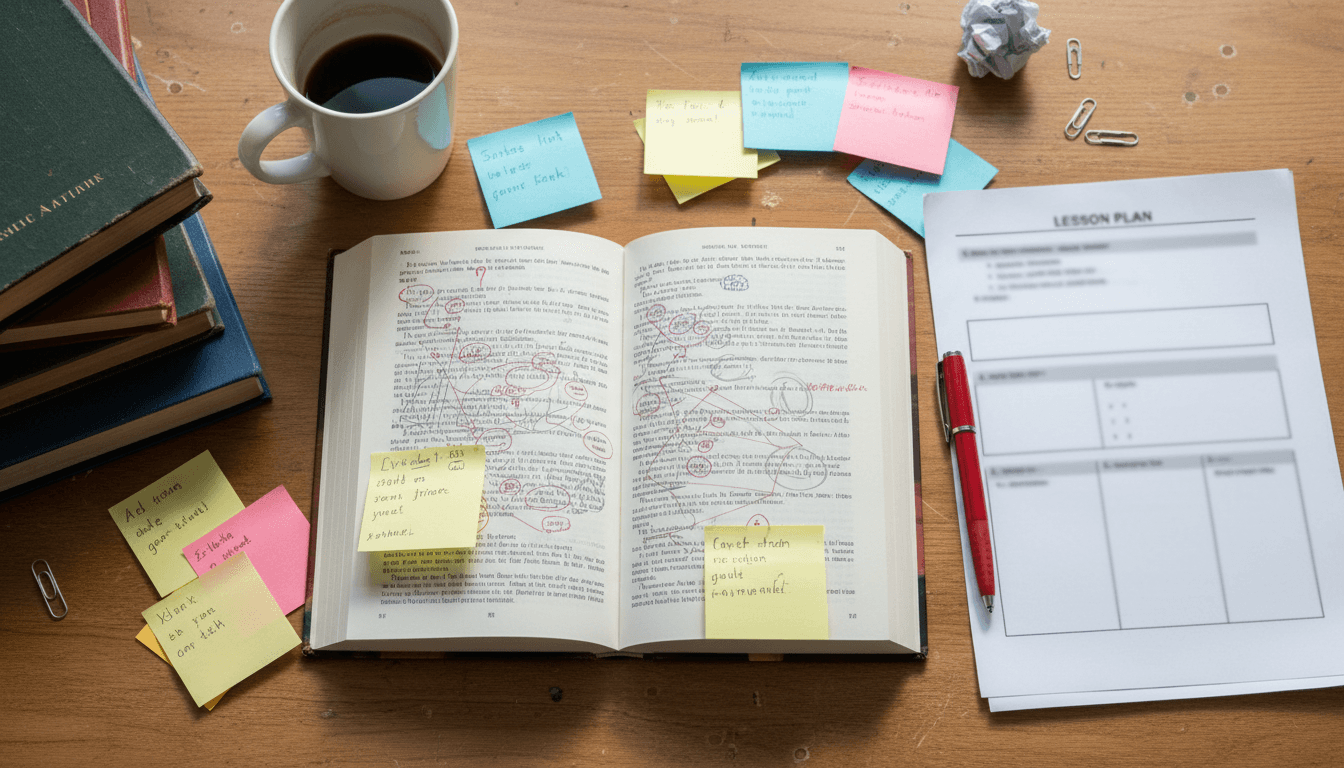
High School ELA Newsletter: A Template With Examples
High school ELA parents are not the parents of elementary students. They are not asking what fluency means. They are asking whether their teenager is engaged, whether they are reading the actual book, and whether they can survive the next essay. A high school ELA newsletter has to answer those questions calmly, predictably, and in under 400 words.
Lead with the text, in plain English
"This cycle we are reading Act 2 of Romeo and Juliet. Modern translation on the right page, original on the left. Students are annotating for metaphor and word choice." Two sentences, parents are oriented.
Answer the SparkNotes question once
At the start of every full-class novel, include this paragraph. "Students are expected to read the assigned chapters. Class discussion and writing depend on it. SparkNotes is not a substitute for the reading. After they read, it is fine as a check. Before they read, it is not." Direct, no judgment, the question disappears.
Translate the analytical move of the cycle
Pick one move per cycle. Close reading for word choice. Tracking a motif. Analyzing tone. Comparing translations. Name it in one sentence and tie it to the text. "This cycle we are tracking the motif of light and dark in Romeo and Juliet. Students mark every reference and pattern."
One home ask
"At home this week, ask your teenager which scene from Act 2 hit hardest, and why." That is it. Real conversation, no homework, no surveillance.
A working two-week template
"Hello families. This cycle we are reading Act 2 of Romeo and Juliet, modern translation alongside the original. Students are annotating for the motif of light and dark. Yes, students are expected to read the actual scenes. SparkNotes is fine as a check after reading, not before. At home this week, ask: which scene from Act 2 hit hardest, and why? Heads up: in-class essay on Act 2 next Thursday. Students will plan in class. No at-home writing required."
Keep the structure tight
Five sections. Text. Analytical move. Real-talk paragraph (SparkNotes, translation, Shakespeare, etc.). Home question. Heads-up. Same order. Same length. High school parents especially read on phones between work and dinner.
How Daystage helps with high school ELA newsletters
Daystage holds the template, sends a clean email to every family on the roster, and formats it for a phone screen. No portal, no PDF, no app. The cycle takes ten minutes. The parents who opened in September are still opening in May, and the question of whether their kid is engaged stops being a mystery.
Get one newsletter idea every week.
Free. For teachers. No spam.
Frequently asked questions
Do high school parents actually read newsletters?
Yes, but only if the newsletter is short, predictable, and tied to something they can ask their teenager about. High school parents are anxious about engagement. A newsletter that tells them this is what your child is reading and here is one question to ask gives them a way in that does not feel like surveillance.
Do they really need to read every word of the assigned book?
Yes, in most ELA classes. The newsletter should answer this directly when it comes up. 'In this class, students are expected to read the assigned chapters. We do close reading and analysis that depends on it. SparkNotes is not a substitute. It is also not a crime to consult it after reading.' Calm, direct, parent-tested.
How do I write about Shakespeare without scaring parents?
Tell them what their student is doing in class. 'We are reading Act 2 of Romeo and Juliet aloud, modern translation alongside the original. Students annotate for word choice and metaphor. The film adaptation will be used to ground the language.' Specific, real, no Bardolatry.
How do I explain works in translation in a high school ELA newsletter?
In one paragraph. 'We are reading Night by Elie Wiesel, translated from French. We will discuss the choices a translator makes and how that shapes what we read.' Parents who never thought about translation now have the language to ask about it at dinner.
What tool works for a high school ELA newsletter?
Email, clean, formatted, no portal. Daystage was built for teacher-to-parent updates. Save the template once, swap the text and the question each cycle, send to the whole roster in one click.

Adi Ackerman
Author
Adi Ackerman is a former classroom teacher and curriculum writer with 8 years in K-8 schools. She writes about school communication, parent engagement, and what actually works in real classrooms.
More for Reading Newsletter
Ready to send your first newsletter?
3 newsletters free. No credit card. First one ready in under 5 minutes.
Get started free