

Principal Newsletter: Summer Reading List and Program Announcement
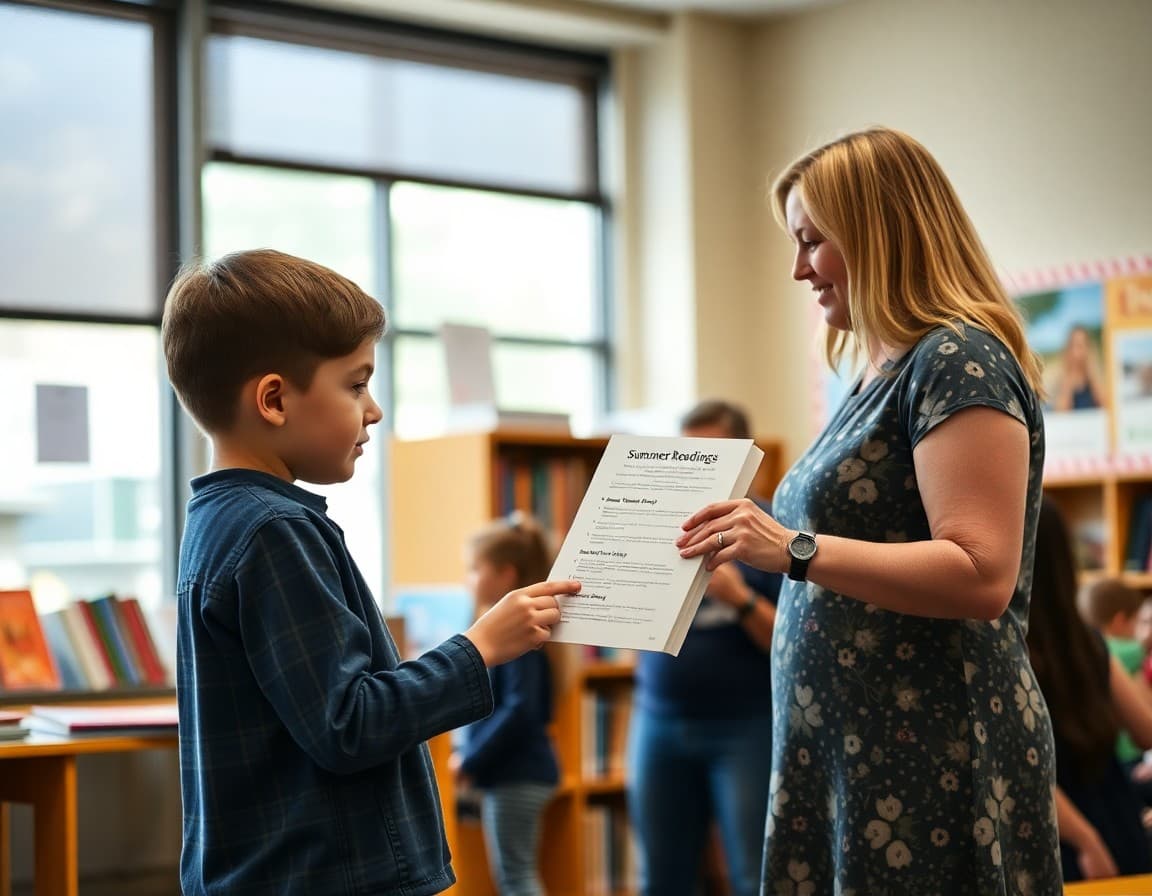
The summer reading newsletter is one of the most consequential communications you send all year. Students who read over the summer arrive in September ready to build on what they learned in the spring. Students who do not often spend the first month of school recouping losses. Your newsletter is the nudge that makes the difference for the families on the fence.
What the list needs to include
Grade-level recommendations, a range of genres, books available at the local library or public library app, and a reading goal in minutes or books. Keep each grade level list to five to eight books so families do not feel overwhelmed. One completed book is better than a 20-book list that gets tossed in a drawer.
The summer slide in one paragraph
Students who do not read over the summer typically lose one to two months of reading progress. Students who read four to six books typically arrive in September at or above their spring level. That is a measurable difference and it is worth stating plainly in your newsletter. Families who understand the stakes are more motivated to make reading happen.
Making access equitable
Include library card registration information in your newsletter if families do not already have cards. Include the public library's summer reading program dates. Include any free ebook platforms the school district or public library provides. Access matters. A list of books families cannot get to is not a reading program.
Connecting summer reading to the fall
Tell families what teachers will do with summer reading in September. A brief sharing circle, a book talk, a summer reading reflection form. When students know their summer reading will matter in September, they are more likely to actually read and to engage thoughtfully with the books they choose.
Recognizing summer readers in the fall
In your first September newsletter, acknowledge students who completed the summer reading. Even an informal mention of total books reported builds a culture where summer reading is a school value, not just an optional activity.
Summer programming beyond the list
Include information about summer school, enrichment camps, and library programs in the same newsletter as the reading list. Families who are thinking about summer learning want all their options in one place. A newsletter that covers reading and programming together is more useful than two separate communications.
Get one newsletter idea every week.
Free. For teachers. No spam.
Frequently asked questions
When should a principal send the summer reading newsletter?
Two weeks before school ends is the sweet spot. Earlier than that and families lose the list. Later than that and school has already ended. Include the list in the newsletter itself so families do not need to visit a separate website to find it.
How do you make a summer reading list that families actually use?
Grade-specific lists with titles that are actually available at the local library or on most ebook platforms. Include a range of genres and reading levels within each grade band. Families are more likely to use a list that feels achievable for their child, not aspirational for a different child.
Should summer reading be required or optional?
That is a school culture decision. If it is required, say so clearly in your newsletter with the specific expectation. If it is optional, frame it as an investment in preventing the summer slide. Families who understand the learning cost of unread summers are more motivated to make reading happen regardless of whether it is required.
What is the summer slide and should a principal explain it?
The summer slide refers to the learning loss that occurs when students do not read during summer months. Research shows that students who read even four to six books over the summer arrive in the fall at or above their spring reading level. A brief explanation of this research in your newsletter is enough to motivate many families.
How can Daystage help principals communicate summer programs to families?
Daystage makes it easy to send a comprehensive end-of-year newsletter that includes the summer reading list, summer school enrollment information, and school supply lists in one organized email. Families who receive one well-organized newsletter are more likely to act on the information than families who receive five separate communications over two weeks.

Adi Ackerman
Author
Adi Ackerman is a former classroom teacher and curriculum writer with 8 years in K-8 schools. She writes about school communication, parent engagement, and what actually works in real classrooms.
More for Principals
Ready to send your first newsletter?
3 newsletters free. No credit card. First one ready in under 5 minutes.
Get started free