

Communicating School-Wide Expectations to Families in Your Newsletter
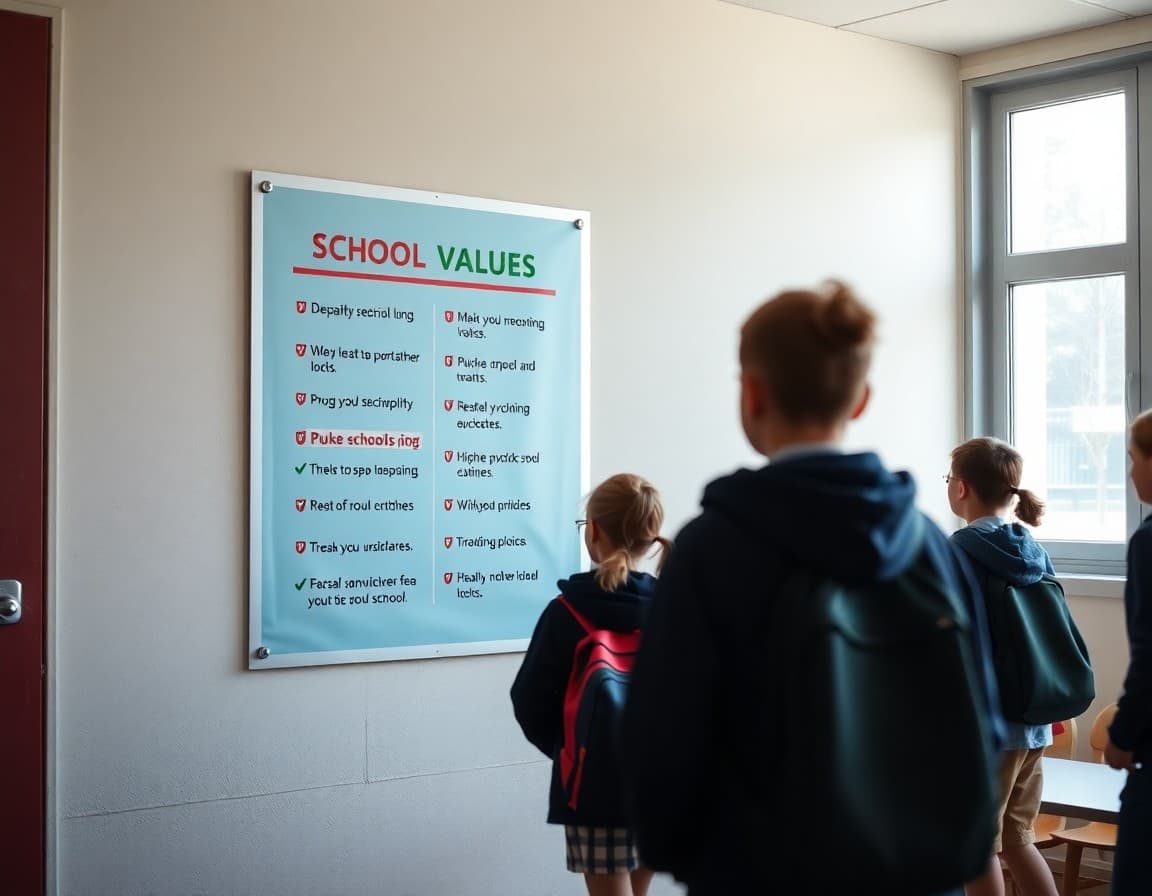
School-wide expectations only work when the adults in a student's life know what they are. Teachers know them because they were trained on them. But families, who are often the most important adult influence in a student's behavior, only know what the school communicates. The principal newsletter is the most reliable channel you have.
Why expectations newsletters matter more than policy documents
Every school sends home a student handbook. Almost no family reads it. It is long, legalistic, and passive. Families sign the acknowledgment form and move on.
A principal newsletter that communicates two or three key expectations in plain language, explains why they exist, and tells families how to reinforce them at home reaches families in a way the handbook never will. The goal is not to replace the handbook. It is to make two or three expectations real, understood, and actionable.
Choose the expectations worth emphasizing
Do not try to communicate every expectation in one newsletter. Choose the two or three that:
- Are new or newly revised this year
- Are most commonly misunderstood or violated
- Are most important for family reinforcement at home
If your school uses a PBIS framework with three to five core values, the newsletter is an excellent place to introduce those values in family- friendly language and show what they look like in practice.
Translate school language into family language
School-wide expectations are often written in education-system language. 'Students will demonstrate respectful and responsible behavior in all school settings.' That sentence means nothing to a family trying to prepare their child for the first day of school.
Translate it: 'At our school, being respectful means listening when your teacher or a classmate is speaking, using words to resolve disagreements, and following staff direction the first time it is given. Being responsible means bringing your materials, completing your work, and taking ownership when you make a mistake.'
Concrete language that families can use in a conversation with their child is the goal.
Tell families what they can do at home
The most useful section of any expectations newsletter is the one that gives families something actionable. Two or three specific things families can do to reinforce the expectations at home:
- Ask your child at dinner: 'How did you show respect for someone today?'
- When your child complains about a school rule, start with 'What do you think the rule is trying to accomplish?' before jumping to the complaint.
- Praise specifically when you see the expectation practiced at home: 'I noticed you listened to your brother without interrupting. That is exactly the kind of respect your school is practicing.'
Address the 'what happens if' question
Families inevitably want to know what happens when a student does not meet expectations. Describe your consequence sequence briefly. Not the full discipline matrix, but a general description: first reminder, then a conversation, then parent contact. Families who know the sequence in advance are less likely to react with surprise or defensiveness when it is applied.
Revisit expectations at key moments in the year
The start-of-year newsletter is not enough. A brief expectations check-in after winter break, when behavioral incidents tend to spike, reinforces the message. A follow-up newsletter that celebrates a month of strong school-wide behavior communicates that the expectations are real and recognized. Daystage makes it easy to maintain this kind of consistent, seasonal communication from one platform without rebuilding your newsletter format from scratch each time.
Get one newsletter idea every week.
Free. For teachers. No spam.
Frequently asked questions
When should I send a school-wide expectations newsletter?
At the start of every school year, after any significant policy change, and following any school-wide incident that signals expectations need reinforcement. The start-of-year version is the most important because it sets the frame for the entire year and gives families a shared language for conversations at home.
What is the difference between a rule list and a school expectations newsletter?
A rule list tells families what students cannot do. An expectations newsletter tells families what students are expected to do, why it matters, and how families can reinforce those expectations at home. The framing shifts from compliance to character. Families respond much better to the latter, and it builds a stronger partnership for managing the few students who consistently push against the expectations.
How specific should I be about behavioral expectations in the newsletter?
Specific enough that a family can have a real conversation at home. Instead of 'students are expected to be respectful,' describe what respectful behavior looks like in your school: speaking courteously to staff, listening when others are talking, following direction the first time. Families who can picture the behavior can reinforce it.
Should I address academic expectations in the same newsletter as behavioral ones?
Yes, but keep them clearly organized. A start-of-year expectations newsletter can cover both in separate sections. Academic expectations (homework completion, participation norms, academic integrity policy) and behavioral expectations (hallway conduct, phone policy, cafeteria behavior) are both important, and combining them in one well-organized newsletter is more efficient than sending multiple.
What tool helps principals send newsletters efficiently?
Daystage is well suited for structured newsletters with multiple clear sections. You can organize behavioral and academic expectations into distinct, easy-to-navigate sections and send the full newsletter in a format families can reference throughout the year.

Adi Ackerman
Author
Adi Ackerman is a former classroom teacher and curriculum writer with 8 years in K-8 schools. She writes about school communication, parent engagement, and what actually works in real classrooms.
More for Principals
Ready to send your first newsletter?
3 newsletters free. No credit card. First one ready in under 5 minutes.
Get started free