

How to Communicate School Safety to Families Through Your Newsletter
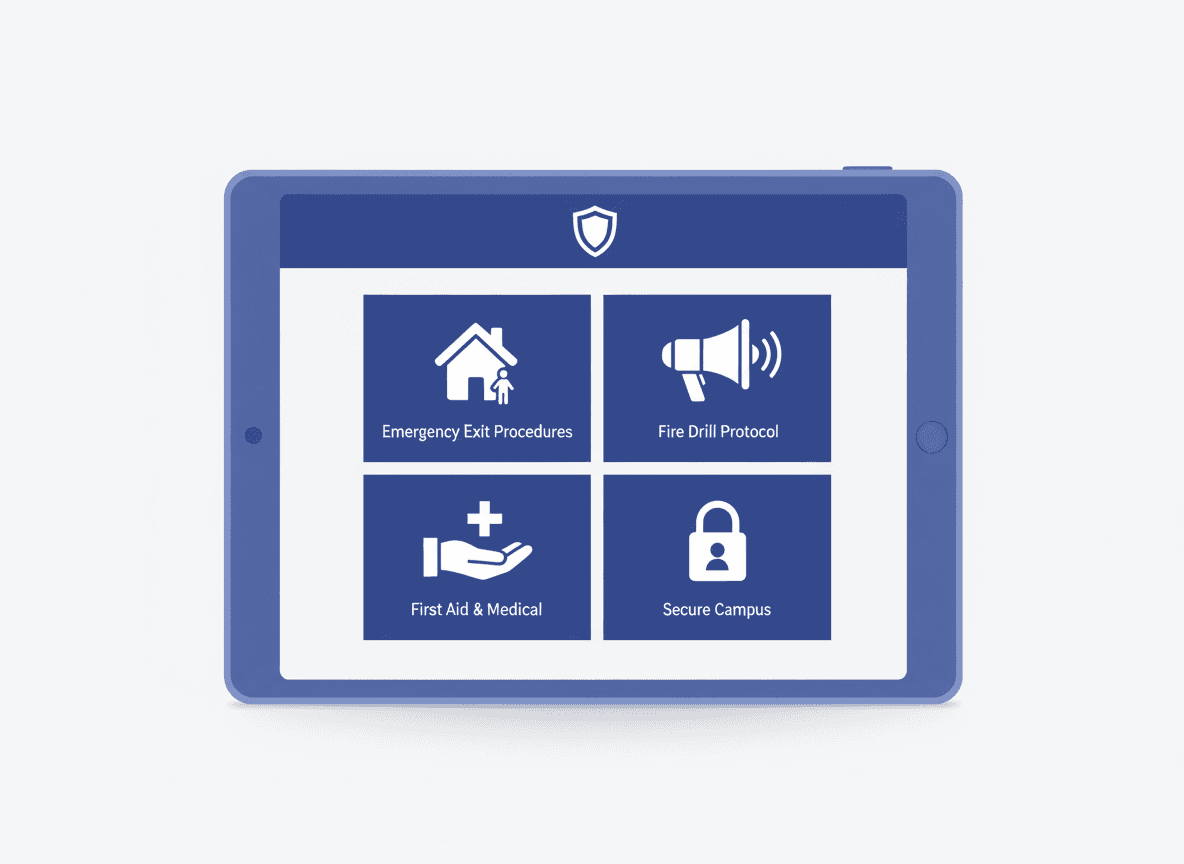
School safety is one of the most charged topics in family communication. Principals who handle it well build lasting trust. Principals who communicate poorly about safety, whether by saying too little, too much, or the wrong things, damage that trust in ways that are hard to repair.
This guide covers how to address school safety through your newsletter: proactive safety communication, how to write about a safety incident without creating panic, and how to discuss drills and procedures in ways that reassure rather than alarm.
Proactive safety communication vs. reactive safety communication
The biggest mistake in school safety communication is waiting until something happens before talking to families about safety. By then, families are already worried. The information you share competes with rumors and social media. And the fact that they are only hearing from you now implies that the school has something to hide.
Proactive safety communication means making school safety a regular, normalized topic in your newsletter before any incident occurs. When families understand your safety protocols, your visitor procedures, and your drill schedule before a drill happens, the drill itself feels reassuring rather than alarming.
A simple proactive safety section in your September newsletter might include:
- How your visitor check-in process works and why it matters
- The three types of drills students practice and what each one involves
- How to reach the school if there is a concern about a student's safety
- What the school does when it receives a threat report and how you communicate with families
Writing about safety drills in your newsletter
Safety drills make some families anxious, especially parents of younger students who worry about how their children will respond. A brief newsletter section before a drill date removes most of that anxiety.
What to include before a drill:
- The date and approximate time of the drill
- What type of drill it is (lockdown, fire, shelter-in-place)
- What you tell students before the drill so they are not surprised
- What the drill looks like from a student's perspective
- A brief note on how you will follow up if any student is anxious after the drill
After the drill, a one-paragraph update in the next newsletter closes the loop. "We practiced our fire drill on Tuesday. All students evacuated in under three minutes. Teachers reviewed the procedure with their classes, and our counselors were available for any students who had questions or concerns." This kind of follow-up signals competence and care.
How to communicate about a safety incident
When a safety incident occurs at school, principals face two competing pressures: the need to communicate quickly and the need to communicate accurately. These often conflict because the full picture rarely emerges in the first hour.
The framework that works:
- Send an initial alert the same day. Even if you do not have all the facts, send a brief message that acknowledges the incident occurred, confirms students are safe, and states when you will provide more information.
- Follow up with a full account within 24 hours. What happened, what actions you took, what support is available for students, and what steps you are taking to prevent recurrence.
- Address it in your next regular newsletter. A brief section that closes the loop for families who missed the alerts and gives a calm, final account of what happened and where things stand.
Tone matters as much as content in safety incident communication. Calm, clear, and factual. Not minimizing. Not inflaming. If you are rattled, write a draft, wait 20 minutes, and read it again before you send.
The topics families most want addressed in school safety communication
Based on what families most frequently ask about in school safety contexts, the topics that belong in your regular newsletter rotation:
- Mental health resources for students and how families can refer a student for support
- How the school handles bullying reports and what the follow-up process looks like
- What your visitor and volunteer screening process involves
- How you communicate with families during a lockdown or shelter-in-place situation
- What to do if a family member has a safety concern and needs to reach someone immediately
What not to do in school safety communication
A few consistent mistakes that erode family trust in school safety communication:
- Saying nothing because you are not sure what you can legally disclose. Work with your district legal counsel to understand what you can share, then share everything within that limit. Silence reads as hiding something.
- Using administrative language that families cannot parse. "We followed protocol" tells families nothing. "We locked all exterior doors, moved students to interior classrooms, and notified law enforcement within five minutes" tells them something real.
- Waiting until the issue is fully resolved before communicating. Families want to know you are handling it while it is happening, not after everything is settled.
- Sending safety communication as a PDF attachment. In a safety situation, attachment-based communication requires an extra step that delays access and reduces open rates. Send safety communication as inline email. Families need to read it immediately.
Daystage delivers your newsletter as formatted inline email that parents see the moment they open their inbox. In a safety situation, that immediacy matters. No link to click, no PDF to download. The information is right there.
Get one newsletter idea every week.
Free. For teachers. No spam.
Frequently asked questions
When should a principal communicate about school safety in the newsletter?
Start in September with a proactive safety section before any incident occurs. Families who understand your safety protocols, visitor procedures, and drill schedule before a drill happens find the drill reassuring rather than alarming. Also send a pre-drill notice before each scheduled drill and a brief follow-up note in the next issue after the drill completes.
What should a principal include in a school safety newsletter?
Proactive safety content covers how your visitor check-in process works, the three types of drills students practice, how to reach the school about a safety concern, and what happens when the school receives a threat report. Before each drill, include the date, drill type, what you tell students beforehand, what the drill looks like from a student's perspective, and how you handle post-drill anxiety.
How should a principal communicate about a safety incident without creating panic?
Send an initial alert the same day that acknowledges the incident, confirms students are safe, and states when more information will follow. Follow up with a full account within 24 hours covering what happened, what actions were taken, and what support is available. Then close the loop in your next regular newsletter. The tone throughout should be calm, clear, and factual, never minimizing but never inflaming.
What mistakes should principals avoid in school safety communication?
Three mistakes consistently erode trust: saying nothing because you are uncertain what you can legally share, using administrative language like 'we followed protocol' that gives families nothing specific, and waiting until a situation is fully resolved before communicating. Families want to know you are handling it while it is happening, not after everything is settled and the anxiety has already spread.
What tool helps principals send safety communication that families can access immediately?
Daystage delivers your newsletter as formatted inline email that parents see the moment they open their inbox. In a safety situation, that immediacy matters. No link to click, no PDF to download. The information is right there, which is exactly what you need when families are already worried and every extra step reduces how many of them actually read your message.

Adi Ackerman
Author
Adi Ackerman is a former classroom teacher and curriculum writer with 8 years in K-8 schools. She writes about school communication, parent engagement, and what actually works in real classrooms.
More for Principals
Ready to send your first newsletter?
3 newsletters free. No credit card. First one ready in under 5 minutes.
Get started free