
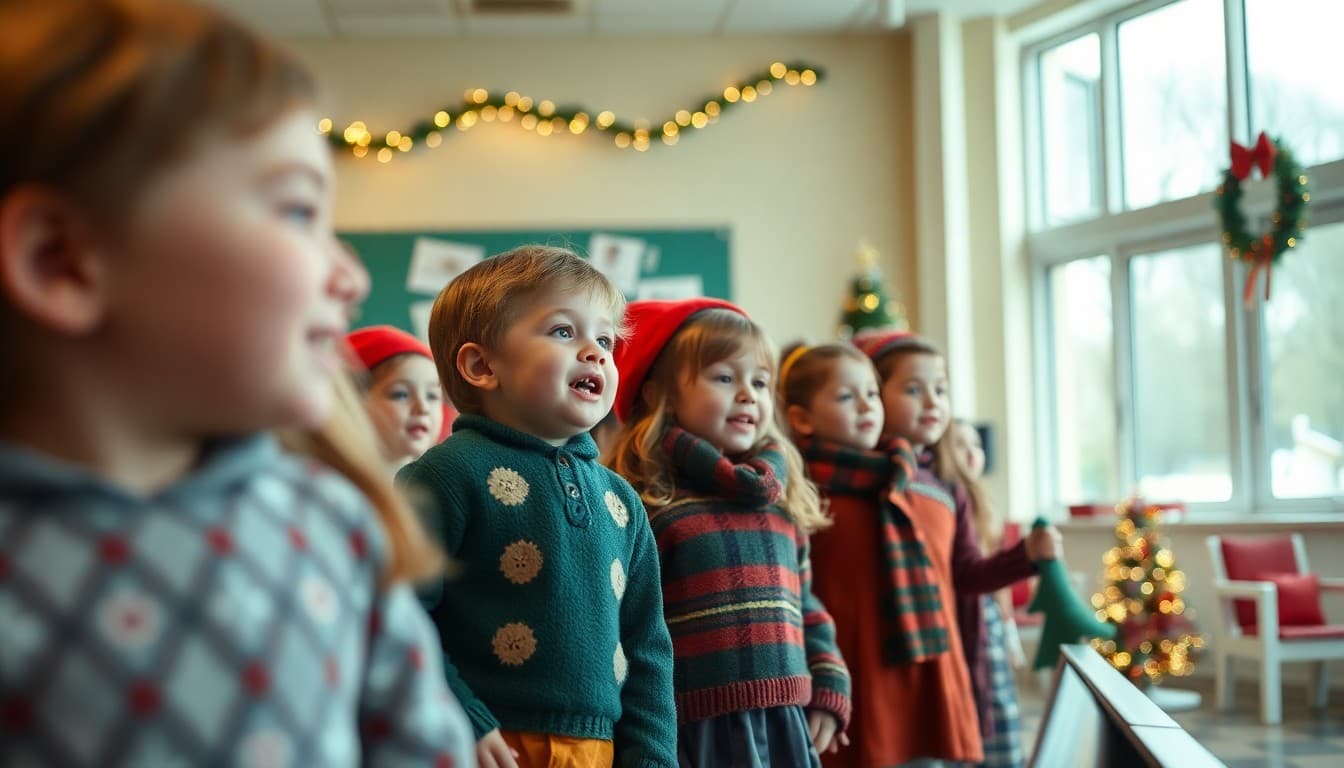
Holiday Performance Newsletter: How Principals Get Families to Show Up

Holiday performances are among the most anticipated school events of the year, and among the most poorly communicated. Families who want to attend find out too late to arrange their schedules. Families who did not know what their child was working on for six weeks arrive with no context. And principals who do not honor the work students put into the performance miss an opportunity to build community and trust. The newsletter does all of this.
The announcement newsletter: three to four weeks out
The first announcement should arrive three to four weeks before the performance. This newsletter has three jobs:
- Give families enough time to arrange schedules. Performances in December conflict with family travel, work holiday parties, and shorter daylight hours. More lead time means better attendance.
- Build anticipation by describing what the performance will include. A sentence about the songs, the theme, or the grade-level focus gives families something to look forward to specifically.
- Acknowledge the work students are already doing. 'Your children have been rehearsing for six weeks. They are ready and they are excited.' That sentence communicates to every family that their child is invested in this event.
What the announcement newsletter must include
- Date, start time, and expected end time
- Location (be specific: Main Street Auditorium, not just 'the school')
- Arrival time for students (if different from audience)
- Whether tickets or RSVPs are required
- Seating capacity and whether it is first-come-first-seated
- Photography and video policy
- Parking guidance
The reminder newsletter: one week out
A brief reminder one week before the event catches the families who did not absorb the first announcement. Keep it short: date, time, location, and one line about student preparation. Do not repeat the full announcement. Just the key logistics plus the 'your child has been working hard on this' line that motivates attendance.
Inclusion and language
December performances in public schools should acknowledge the range of traditions your school community celebrates. If the program includes a variety of seasonal music and cultural content, say so. Families from traditions that are often absent from holiday programming feel the difference when they are included.
Language matters too: 'winter performance,' 'December concert,' and 'seasonal celebration' are inclusive. 'Christmas show' is not, unless your school explicitly serves a religious community.
The post-performance newsletter
A brief follow-up newsletter after the event, with a photo if available and a specific thank-you to the music and arts teachers who led the preparation, closes the loop. Families who attended appreciate the recap. Families who could not attend appreciate knowing it went well.
Daystage handles event communication sequences cleanly: the announcement, the reminder, and the follow-up can all be prepared and scheduled in a single session before the event season begins.
Get one newsletter idea every week.
Free. For teachers. No spam.
Frequently asked questions
How far in advance should I announce a school holiday performance?
Three to four weeks for the initial announcement. Many families need to arrange work schedules, childcare for other children, and transportation. An announcement two weeks out is often too late for families with complex scheduling. Follow up with a reminder one week before and a logistics note two days before the event.
What logistics does a performance newsletter need to include?
Date, start and end time, location within the building (auditorium, gymnasium, cafeteria), any ticketing or RSVP requirement, parking guidance, arrival time for students versus arrival time for audience, and whether photos and video are allowed. Families who do not have this information show up late, create disruption, or do not come at all.
How do I acknowledge the work students and teachers put into the performance?
Be specific in the newsletter about the preparation that went into it: how many weeks of rehearsal, which teachers were involved, what the students learned through the process. This framing honors the effort and motivates families to prioritize attending. A performance described as the product of eight weeks of work carries more weight than 'join us for our holiday show.'
How do I handle inclusion in a holiday performance newsletter?
Use language that acknowledges the diversity of winter celebrations in your community. 'Winter celebration' or 'December performances' are more inclusive than framing everything around a single religious tradition. If your performance includes a range of cultural and seasonal themes, name that explicitly. Families from underrepresented traditions appreciate being acknowledged.
What tool helps principals send newsletters efficiently?
Daystage makes event-specific newsletters easy to format with clear sections for logistics, student preparation context, and reminders. Families receive the full information in their inbox without needing to navigate elsewhere.

Adi Ackerman
Author
Adi Ackerman is a former classroom teacher and curriculum writer with 8 years in K-8 schools. She writes about school communication, parent engagement, and what actually works in real classrooms.
More for Principals
Ready to send your first newsletter?
3 newsletters free. No credit card. First one ready in under 5 minutes.
Get started free