

Principal Newsletter: FFA Chapter Announcements and Agricultural Education
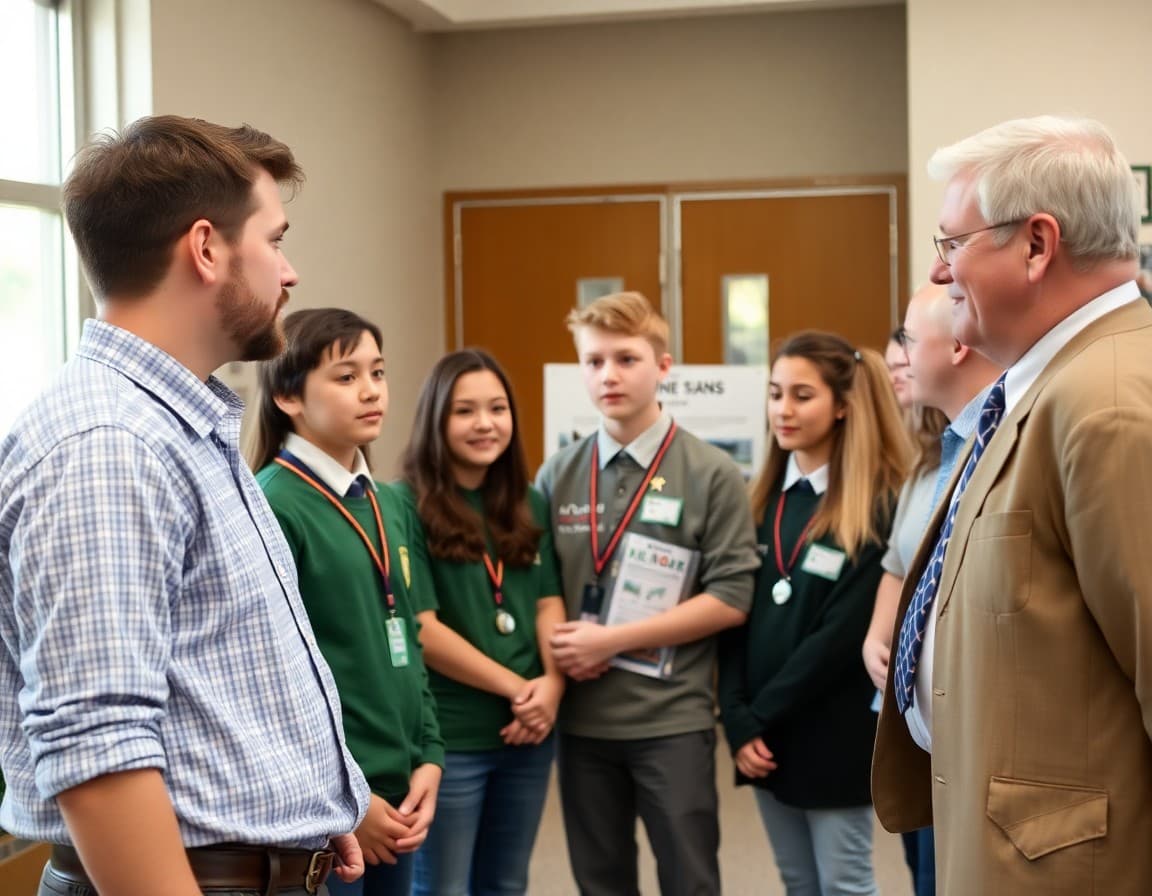
FFA is one of the most misunderstood programs in high schools that offer it. Families who grew up away from agriculture often have no frame of reference for what FFA involves or why it matters. Your newsletter is the clearest explanation of a program that teaches more cross-disciplinary skills than most electives offered.
Explaining FFA to families who are new to it
FFA stands for Future Farmers of America, though the organization dropped the full name because its programs now extend well beyond farming. The organization serves students interested in food science, environmental science, agricultural business, animal science, and natural resource management. Your newsletter can introduce FFA with this broader framing so families understand the full scope.
What students do in FFA
FFA members complete a Supervised Agricultural Experience, or SAE, which is a hands-on project in an agricultural area of their choice: raising an animal, running a small business, conducting research, or working in an agricultural internship. They also participate in competitions including livestock judging, public speaking, career development events, and floriculture. Name these activities in your newsletter so families understand that FFA is active and experiential.
Competition achievements in the newsletter
FFA competitions are structured and recognized nationally. When chapter members place in district, state, or national competitions, name them in your newsletter with the specific event and placement. FFA competitive achievements deserve the same recognition as athletic letters.
Connecting FFA to career outcomes
Agricultural careers are among the most stable and fastest-growing employment sectors. Food science, environmental engineering, veterinary medicine, agribusiness, and sustainability consulting are all pathways with FFA foundations. A newsletter that names career destinations of FFA alumni builds the case for enrollment.
Chapter membership and enrollment
Your newsletter should explain how students join: enrollment in an agricultural education class is typically the pathway. Membership is open to any student enrolled in ag ed. The dues, the meeting schedule, and the chapter advisor contact should all be in the newsletter.
FFA community service
FFA chapters often lead community service projects: food drives, community garden maintenance, school beautification. Featuring these projects in your newsletter connects the FFA program to the broader school community and builds goodwill among families who may not be directly involved in agriculture.
Get one newsletter idea every week.
Free. For teachers. No spam.
Frequently asked questions
What should a principal include when announcing a school FFA chapter?
The chapter's focus, the advisor's name and background, how students join, what meetings look like, what competitions the chapter participates in, and what the agricultural education curriculum connects to. FFA is often unfamiliar to families who did not grow up in an agriculture-adjacent community.
How do you explain FFA to families who are not from agricultural backgrounds?
FFA is a national career and technical student organization that prepares students for careers in the food, fiber, and natural resources industries. It teaches leadership, public speaking, science, and business skills through hands-on agricultural education. Your newsletter can make this clear without assuming families already know what FFA stands for.
What FFA achievements should a principal recognize in the newsletter?
Chapter degree advancements, state and national competition placements, proficiency award winners, public speaking competition results, and scholarship recipients. FFA achievements follow a recognized national structure and deserve the same newsletter recognition as athletic or academic honors.
How does FFA connect to academic curriculum?
Agricultural education covers biology, chemistry, earth science, economics, and environmental science. Students who enroll in FFA are simultaneously learning science and business in a project-based context. Your newsletter should make this connection explicit to families who might otherwise see agriculture as vocational rather than academic.
How can Daystage help principals build FFA visibility in the school community?
Daystage makes it easy to include FFA project photos and competition results in the newsletter. Principals who consistently feature FFA students alongside athletes and academic scholars communicate that agricultural education is a respected pathway at the school. That visibility attracts more students to the program.

Adi Ackerman
Author
Adi Ackerman is a former classroom teacher and curriculum writer with 8 years in K-8 schools. She writes about school communication, parent engagement, and what actually works in real classrooms.
More for Principals
Ready to send your first newsletter?
3 newsletters free. No credit card. First one ready in under 5 minutes.
Get started free