

Family Science Night Newsletter: Turning Curiosity Into Attendance
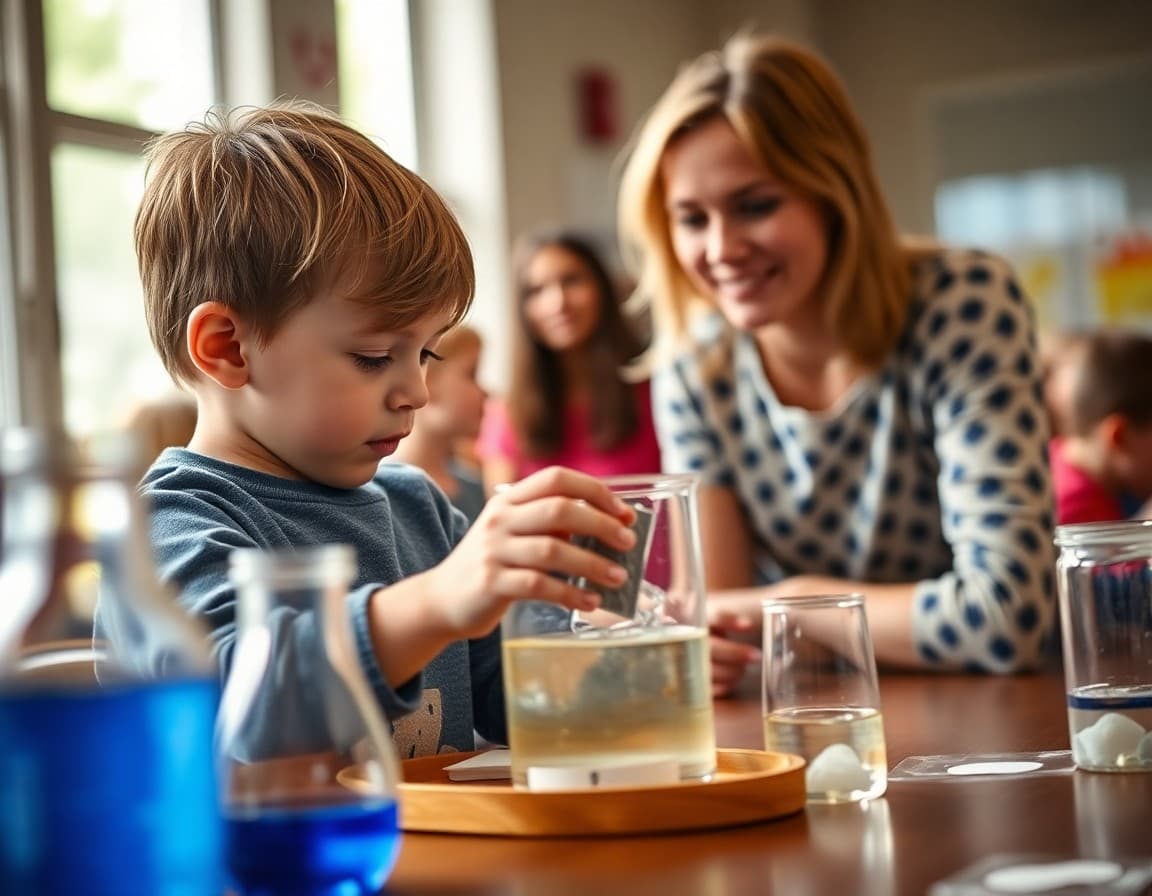
Family science nights have a natural advantage over other school events: curiosity is universal. A well-written newsletter taps into that curiosity specifically enough that families arrive genuinely looking forward to what they are going to see and do. The specificity is what makes the difference.
Lead with what students will actually experience
The most compelling science night announcement describes specific activities, not general science excitement. Compare:
Generic:'Join us for a fun evening of hands-on science activities for families of all ages!'
Specific:'At science night, students will build a working electromagnet with materials from the hardware store, mix polymers to create a substance that acts like both a liquid and a solid, and look through a compound microscope at samples from our school garden. These are experiments students can replicate at home for about $5.'
The second version creates anticipation. The first creates no mental picture.
Make it clear this is for families, not just for students
Many families assume school events are for students and that they are there only as supervisors. Science night is different. Explicitly invite families into the activity:
'Science night is designed for parents and students to do the experiments together. There is nothing to observe. Everything is hands-on, and adults are expected to participate alongside their children. You might be surprised how much you enjoy it.'
Connect to what students are currently learning
Science nights that extend the current curriculum rather than standing alone feel more meaningful to both students and families: 'Our sixth graders are currently studying matter and its properties. The polymer station is a direct extension of what they have been working on in class. Students who attend will show up the next day with first-hand experience that most classes do not get.'
Include the logistics families need
- Date, time, and location
- Whether students should bring anything (typically no, but clarify)
- Whether refreshments are available
- Childcare or sibling arrangements
- Parking and entrance
The post-event newsletter: close the loop
After science night, send a brief follow-up newsletter that includes:
- How many families attended
- One or two photos with student permission (these consistently generate the most engagement of any newsletter section)
- Instructions for one simple experiment families can do at home with common household materials
The post-event newsletter extends the value of the event to families who could not attend and documents it for families who did. Daystage handles photos and formatted content cleanly, making the post-event send one of the most satisfying newsletters to produce.
Get one newsletter idea every week.
Free. For teachers. No spam.
Frequently asked questions
What makes a science night newsletter compelling enough to drive attendance?
Specific descriptions of what students will do. 'Students will build a working circuit, create a non-Newtonian fluid, and observe live specimens from the science department's microscope collection.' That sentence creates a more vivid picture than 'a night of exciting science experiments.' Curiosity about specific activities is what gets families off the couch.
How do I make science night appealing to families who do not consider themselves science people?
Frame the evening around the experience of watching their child discover something, not around science as an academic subject. 'There is something about the moment a child figures out why the baking soda reaction works that you cannot replicate anywhere else. Come see your student's face when it clicks.' That framing speaks to every parent, not just the ones who liked science class.
Should the science night newsletter mention STEM career connections?
Briefly, and only for middle and high school families where the connection is developmentally relevant. For elementary families, the joy of discovery is a more compelling draw than career connections. Keep the career mention to one sentence if you include it.
How do I include families with limited English in a science night newsletter?
Science night is one of the most accessible school events for multilingual families because the activities are hands-on and language-independent. Name that explicitly in the newsletter: 'Science night is a hands-on event where the activities speak for themselves. All families are welcome regardless of English proficiency.'
What tool helps principals send newsletters efficiently?
Daystage handles the announcement, reminder, and post-event follow-up for science night as a consistent communication sequence. The post-event newsletter with photos and activity descriptions is often the best-received communication of the night.

Adi Ackerman
Author
Adi Ackerman is a former classroom teacher and curriculum writer with 8 years in K-8 schools. She writes about school communication, parent engagement, and what actually works in real classrooms.
More for Principals
Ready to send your first newsletter?
3 newsletters free. No credit card. First one ready in under 5 minutes.
Get started free