
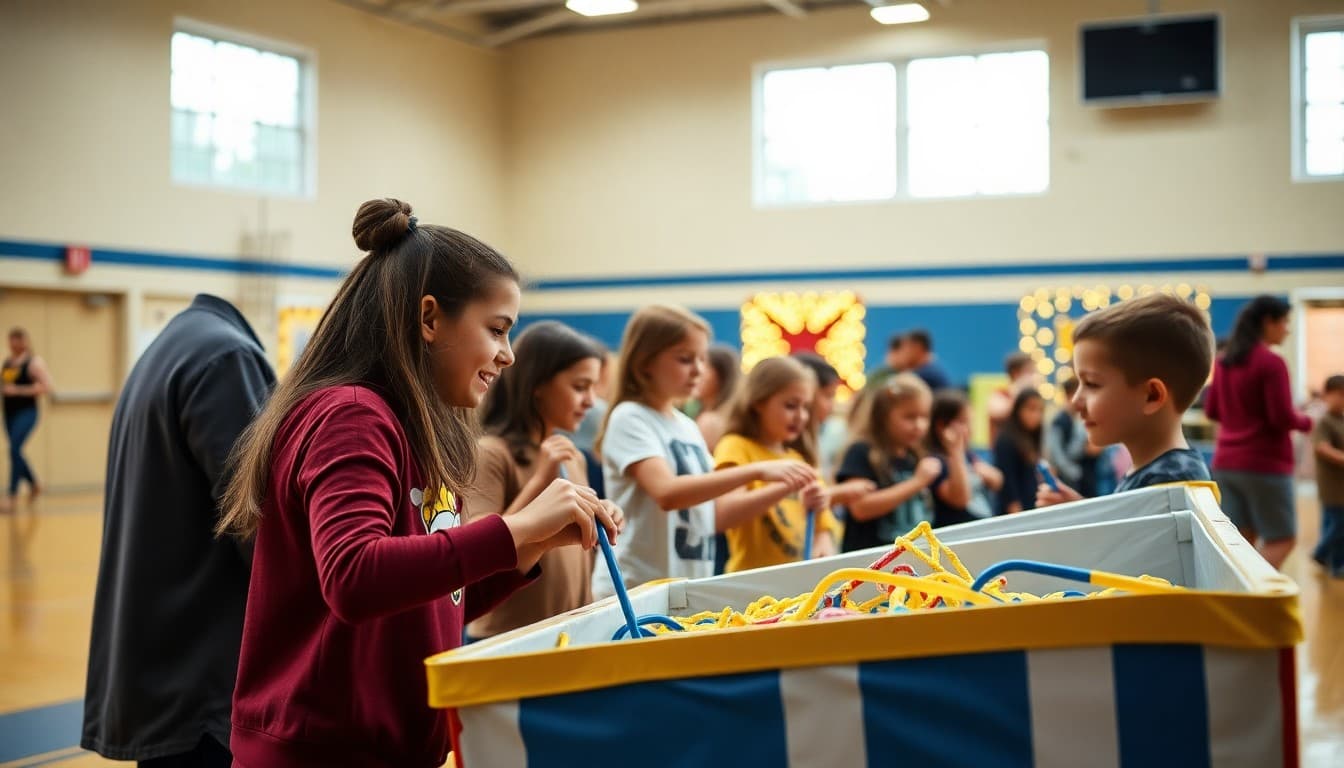
Principal Newsletter: Family Fun Night Announcement and Logistics

Family fun nights are often the highest-attendance school events of the year because they are explicitly not about academic performance. Every family can show up and feel welcome. The newsletters that work best are the ones that communicate the low-stakes nature of the evening while making it feel like something worth showing up for.
What your announcement needs to cover
Date, time, location, activities, food, cost. All five in the first paragraph. Parents who have to hunt through your newsletter for the time and date are less likely to show up. Put the logistics first.
If certain items require tickets or pre-registration, say so clearly. Nothing frustrates families more than arriving to an event and discovering they needed something they were not told about.
Student and family roles in the event
Family fun nights are better when families are not just audience. In your newsletter, name the student groups running activities, the parent volunteer sign-up, and any family-led stations. When families see themselves as contributors, not just attendees, they show up more reliably and have a better experience.
Addressing accessibility
Your newsletter should state whether the event is wheelchair accessible, whether there are activities suitable for children of different ages, and whether younger siblings are welcome. Families with complex logistics need to know these details before they can commit to coming.
Weather and backup plans
If the event is outdoors or weather-dependent, your newsletter should state the rain plan. Families who know the backup plan are more likely to show up regardless of the weather forecast.
Post-event recap
Send a same-week newsletter with photos and attendance numbers. A simple 'over 300 families came out last Friday' communicates community vitality. Families who attended feel part of something. Families who missed it mark their calendars for next year.
Using the event to build volunteer relationships
Family fun night is an easy first volunteer experience. Your newsletter can use it as a recruitment gateway: families who volunteer at a low-stakes event like a game booth often become the parents who help with more involved school activities later in the year.
Get one newsletter idea every week.
Free. For teachers. No spam.
Frequently asked questions
What should a principal include in a family fun night announcement?
The date, time, location, what activities will be available, whether there is a cost, and what food will be served. If specific student groups are organizing activities, name them. The more concrete the description, the more families will plan to attend.
How do you increase attendance at family fun nights?
Name what students will do, not just that there will be fun. Students will run the carnival booths. Third grade is running the cake walk. The chess club is hosting a tournament table. Families are more likely to come when they know their child has a specific role.
How far in advance should a principal announce family fun night?
Four weeks minimum, with a reminder one week before. Four weeks gives families time to put it on the calendar. One week is not enough for families with complex schedules to rearrange. A two-email sequence is the standard.
What is the right size and scope for a school family fun night?
That depends on your staff capacity and community. A simple game night that fills the gymnasium with 200 families is more valuable than an ambitious carnival that exhausts your teachers and leaves them dreading next year. Start small, do it well, and scale over time.
How can Daystage help principals run better family engagement events?
Daystage lets principals embed event registration directly in the newsletter. Knowing how many families plan to attend helps you prepare the right amount of food, staff the right number of volunteers, and set up the right number of activity stations. Guesswork is the enemy of a well-run event.

Adi Ackerman
Author
Adi Ackerman is a former classroom teacher and curriculum writer with 8 years in K-8 schools. She writes about school communication, parent engagement, and what actually works in real classrooms.
More for Principals
Ready to send your first newsletter?
3 newsletters free. No credit card. First one ready in under 5 minutes.
Get started free