

Principal Newsletter: Reporting ESL Program Outcomes to Families
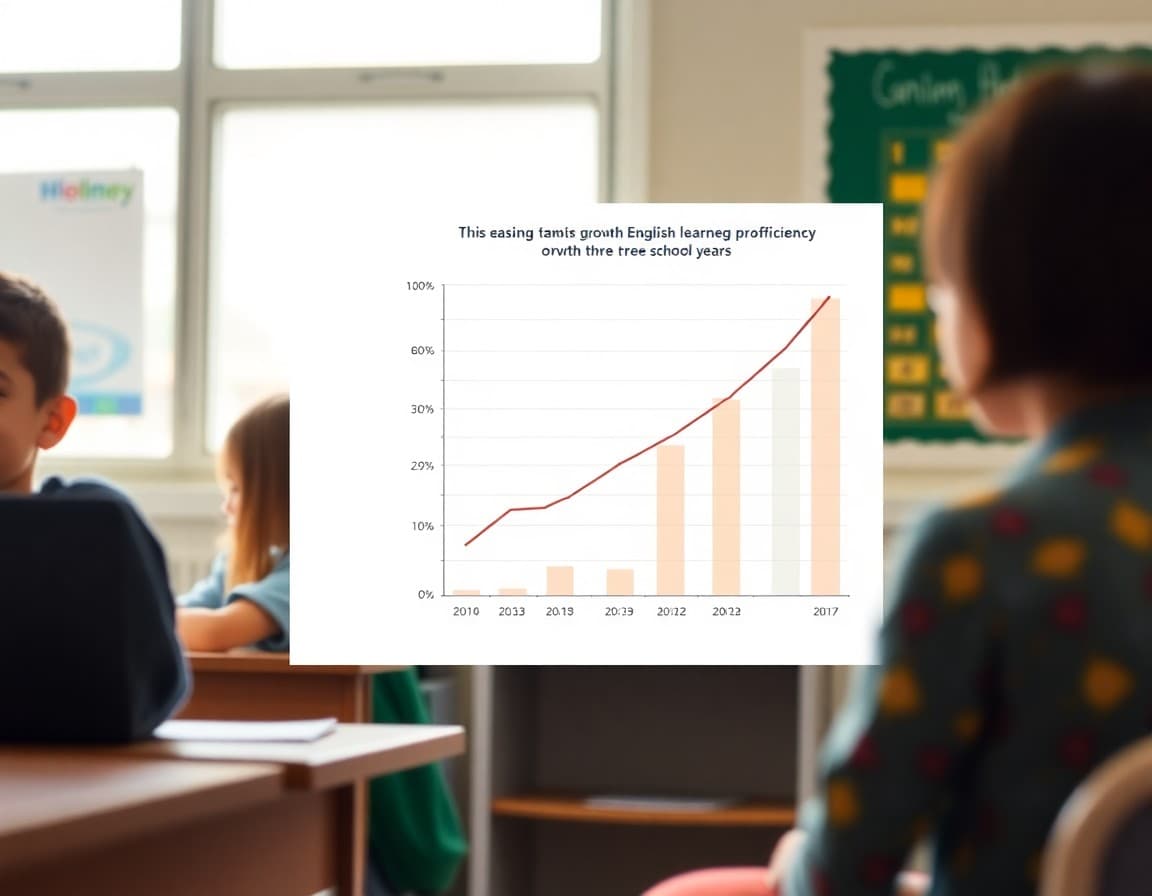
ESL program outcomes newsletters serve a purpose beyond reporting numbers. They signal to multilingual families that their students are visible, their progress is being tracked, and the school is accountable for the results. Done well, this newsletter builds trust. Done poorly or not at all, it leaves an important community of families without information they need and deserve.
Report the Scope of the Program
Start by telling families how many English learners your school currently serves and how that has changed over the last few years. A growing ELL population requires growing capacity. A declining population may indicate reclassification success. Give families the context to interpret the program data.
Explain the Language Assessment Results
Name the assessment your state uses and explain what the proficiency levels mean in plain terms. For WIDA states: Level 1 is Entering, Level 2 is Emerging, and so on. Describe what a student at each level can typically do in classroom communication. Then share how your students performed: percentage at each level, percentage who met growth targets, and comparison to prior year data.
Families who can connect a score to a description of observable language behavior understand their child's progress in a way that raw numbers alone do not communicate.
Share Reclassification Data
Reclassification, or the process by which a student exits ESL services after reaching English proficiency, is one of the clearest indicators of program success. Report how many students were reclassified this year. Name what the criteria are for reclassification. If your school's reclassification rates are above the district or state average, say so. If they are below, say that too and describe what is being done to accelerate progress.
Connect ELL Student Progress to Academic Achievement
Language proficiency and academic performance are related but not identical. Share data on how your ELL students are performing on grade-level academic assessments in reading and math. If there are gaps between ELL students and the overall student population, name them and describe the instructional response. Families of English learners deserve to know whether the ESL program is accelerating their child's academic progress, not just their language development.
Celebrate Specific Program Milestones
If a specific cohort made extraordinary progress, a new ELL student is no longer receiving intensive services after two years, or the program added a new course or support structure, name it. Specific celebrations give families something to be proud of and reinforce that the program is active and improving.
Describe Next Steps
Close the newsletter with what you are working on next: curriculum changes, staffing additions, parent engagement events specific to ELL families, or changes to the assessment or reclassification process. Families who understand the direction of the program can participate more meaningfully in shaping it.
Get one newsletter idea every week.
Free. For teachers. No spam.
Frequently asked questions
What outcomes data should the newsletter include for an ESL program?
Include the number of English learners currently served, language proficiency assessment results from the state assessment (such as WIDA ACCESS), reclassification rates showing how many students exited ESL services this year after reaching proficiency, academic achievement of ELL students on grade-level assessments, and any trends over multiple years. Growth over time is more meaningful than a single data point.
How do I report ESL outcomes to families in a way they can understand?
Avoid assessment names without explanation. Instead of just reporting WIDA scores, explain what a proficiency level means in practical terms: 'A student at Level 4 can participate in classroom discussions on familiar topics with minimal support.' Families who can connect a score to observable behavior understand what the data means for their child.
Should the newsletter go to all families or just ESL families?
Sending to all families builds community-wide understanding and support for English learners as a valued part of the school. Families of non-ELL students who see program outcomes data develop more informed perspectives about multilingual education. A separate, more detailed version can go specifically to ELL families with information about individual-level processes.
How do I communicate honestly if ESL outcomes are not where I want them to be?
Report the data, name the gap, and describe the specific response. Families of English learners have often been kept in the dark about program performance until a problem surfaces in a high-stakes moment. Proactive honesty, paired with a concrete plan, builds trust rather than eroding it.
What tool helps principals send newsletters efficiently?
Daystage is built for school newsletters and supports multilingual families. You can structure data-rich newsletters with clear sections and send targeted or school-wide versions from the same platform.

Adi Ackerman
Author
Adi Ackerman is a former classroom teacher and curriculum writer with 8 years in K-8 schools. She writes about school communication, parent engagement, and what actually works in real classrooms.
More for Principals
Ready to send your first newsletter?
3 newsletters free. No credit card. First one ready in under 5 minutes.
Get started free