

Principal Newsletter: Early Dismissal Schedule and Family Logistics Guide
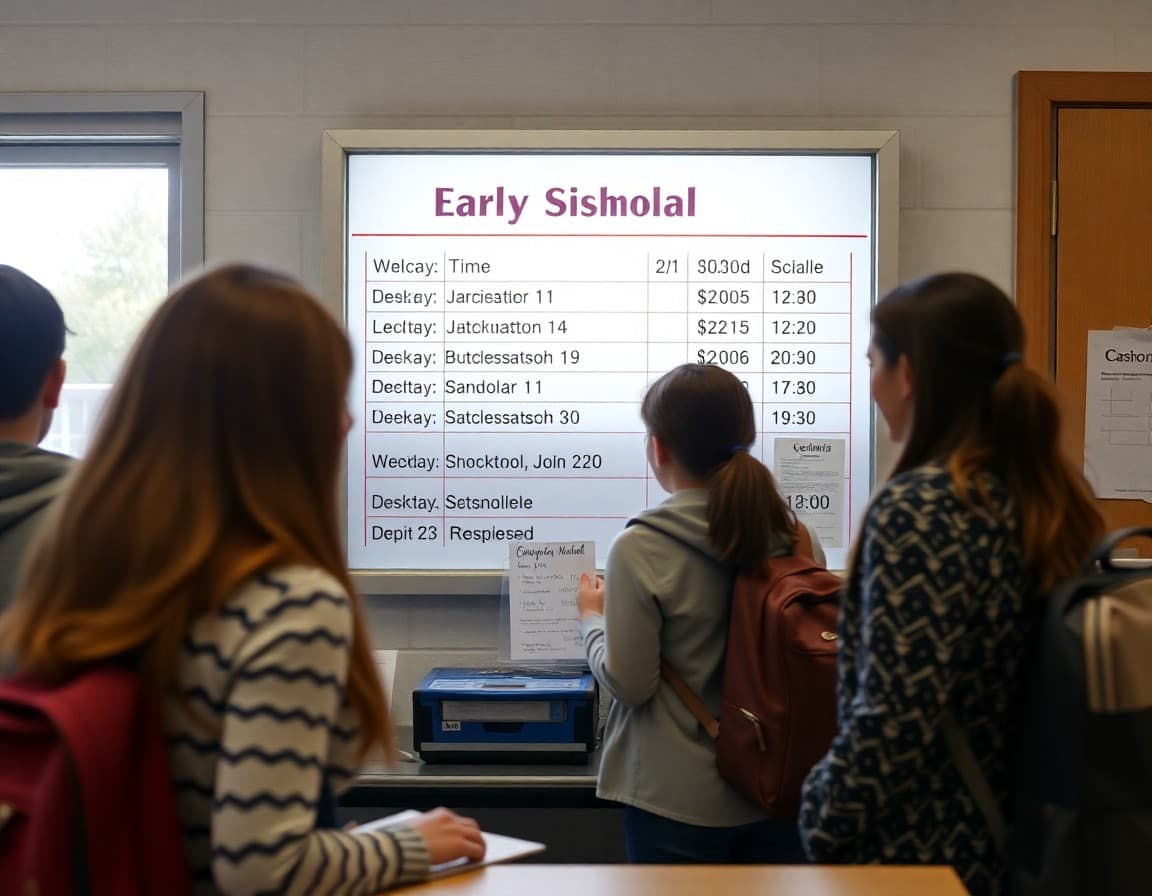
Early dismissal newsletters are primarily a logistics service to families. The better the information, the fewer families who are caught off guard, the fewer calls the front office handles on early release days, and the more goodwill the school builds by treating families as people who need advance notice to manage their lives.
The Full Early Dismissal Schedule
Publish every date. Organize them in a table or list by month and date. For each date, name the dismissal time and whether it is a professional development day, a parent-teacher conference schedule, or another reason for early release. Families who can see the entire schedule at once can plan around all of it rather than being surprised each time a new early release date appears. Distribute this schedule at the start of the school year if the dates are known, and re-send it whenever dates are added or changed.
What the Modified Day Looks Like for Students
Tell families what instruction students will receive on early dismissal days. Do students complete a full morning of class before release? Do they attend an abbreviated version of each period? Is lunch served on early dismissal days, and if so, at what time? Students who eat at school need to know whether lunch is included. Students who walk home or take a bus need to know departure times. The modified schedule for the school day is as important to families as the dismissal time itself.
After-Care Options
Name every supervised option available to families who cannot pick up a student at the early dismissal time. A school-based extended day program that continues until the regular dismissal time. A district-provided care option at a central location. A community partner like the YMCA or a local recreation center that accepts students on early release days. If no school-provided care exists, say so directly and give families the resources they need to find alternatives, such as a list of licensed childcare providers in the area. Families who learn about the absence of care on the morning of an early release day are rightfully frustrated. The newsletter prevents that.
Why Early Dismissal Days Exist
Give families a brief, honest explanation of what teachers and staff do with the professional development time. It does not need to be comprehensive. Two to three sentences naming the focus area is enough. Teachers are working together on new instructional strategies for literacy. Staff are reviewing mid-year student data to identify students who need additional support. The faculty is participating in training on the new mathematics curriculum the district adopted this year. Families who understand why the time exists are more accepting of the inconvenience than families who assume it is simply an administrative shortcut.
Transportation Changes
Name every transportation change that applies on early dismissal days. Bus routes on early dismissal days may run at different times or may not be available. Carpool families need to know the new pickup time. Walking students need to know whether supervision is available until the regular dismissal time if they are not able to be picked up early. Students in after-school activities that normally begin before the regular dismissal time need guidance on whether those activities operate on early release days. Each of these details prevents a family from discovering a problem on the day of dismissal.
A Contact for Questions or Conflicts
Give families a direct contact for situations where an early dismissal day creates a specific problem they cannot resolve on their own. A phone number for the main office. An email for the assistant principal who manages scheduling. A form for families who need to request an alternative arrangement. The families with the most difficult logistics are the ones least likely to have flexible childcare options, and a named contact signals that the school will help them problem-solve rather than leaving them to manage alone.
Using Daystage for Early Dismissal Communication
Daystage makes it easy to build an early dismissal newsletter with the full schedule, care options, transportation changes, and a brief note about professional learning. Send the annual schedule at the start of the year and automated reminders the week before each date.
Get one newsletter idea every week.
Free. For teachers. No spam.
Frequently asked questions
What should a principal newsletter about early dismissal days include?
Publish the full schedule of early dismissal dates for the year. Name the dismissal time for each date. Describe what students will do during shortened school days. Tell families what after-school care or extended day programs will operate. Explain the purpose of the professional development time briefly. Give families a contact for questions or schedule conflicts.
How much should a principal explain about what teachers do on professional development days?
Enough to make the time feel purposeful to families rather than arbitrary. A two-sentence description of the focus area, such as that teachers are working on instructional practices in mathematics or reviewing student data to plan differentiated instruction, gives families a reason for the early release that they can understand and respect. Families who know what professional learning is happening are more likely to accept the inconvenience.
What child care options should the newsletter address for early dismissal days?
Name whatever the school or district provides: extended day programs, a community partner, YMCA or similar programs. If no school-based care is available, acknowledge that explicitly and give families a recommended resource or community list if one exists. Families who discover on the day of early dismissal that no care is available are more frustrated than families who received advance notice and had time to make arrangements.
How far in advance should a principal publish the early dismissal schedule?
At the start of the school year if possible, so families can plan childcare and work schedules around all early release days at once. A mid-year schedule should be published as soon as dates are confirmed. Individual reminder newsletters a week before each early dismissal are also useful for families who do not have the full calendar in front of them.
What tool helps principals send newsletters efficiently?
Daystage makes it easy to build an early dismissal newsletter with the full schedule, care options, and a brief explanation of professional learning. Send the full schedule in September and set up reminder sends before each date.

Adi Ackerman
Author
Adi Ackerman is a former classroom teacher and curriculum writer with 8 years in K-8 schools. She writes about school communication, parent engagement, and what actually works in real classrooms.
More for Principals
Ready to send your first newsletter?
3 newsletters free. No credit card. First one ready in under 5 minutes.
Get started free