

How to Highlight Community Partnerships in Your School Newsletter
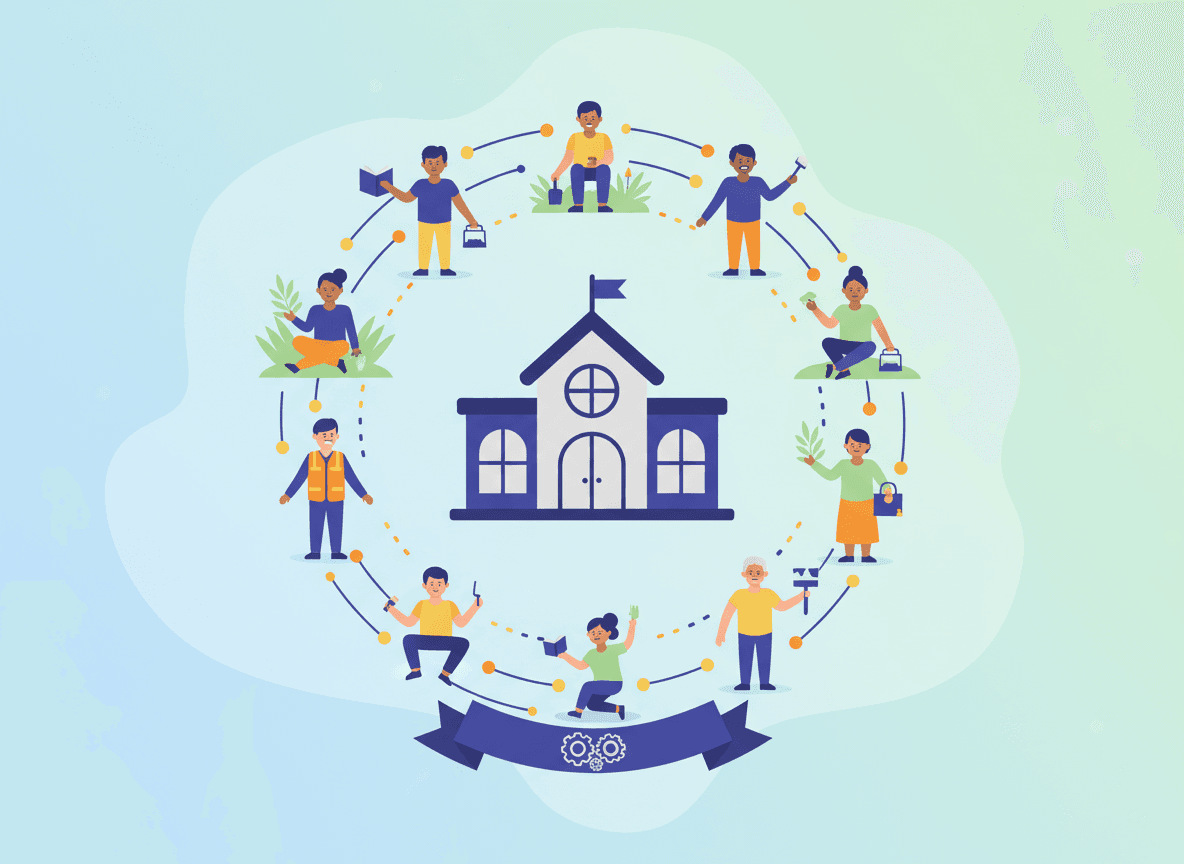
Community partnerships do real work in schools. A local business that sponsors the robotics team, a nonprofit that runs a reading program, a hospital system that provides health screenings, a university that sends tutors, a restaurant that donates food for teacher appreciation: these partnerships extend what a school can do for students and families beyond what the budget allows.
The newsletter is one of the best places to show families what those partnerships actually produce for their children. Done well, highlighting a community partner in the principal newsletter strengthens the relationship with the partner, demonstrates to families that the school is actively pursuing resources, and invites more community engagement. Done poorly, it reads like unpaid advertising and erodes trust.
The core question: what did this partnership actually do for students?
Every community partnership feature in a school newsletter should answer this question concretely: what did students actually experience or gain because of this partnership?
"We are grateful to ABC Hardware for their ongoing support of our school" is the version that reads like a press release. Families skim it and move on. "Thanks to a materials donation from ABC Hardware, twenty-four fifth graders spent six weeks building working catapults in Mrs. Kim's engineering elective" is the version that families read twice and mention to their kids at dinner.
The difference is specificity. Specificity tells families that the partnership produced something real. It also tells the partner that the school noticed and valued what they contributed, which makes them more likely to invest again.
Types of community partnerships worth featuring
Not every partnership needs newsletter coverage, and not every mention needs the same amount of space. Here is a useful framework:
- Program partnerships. A nonprofit or business that runs an ongoing program at your school: a tutoring program, a mentorship series, an arts residency, a career exploration initiative. These deserve a full paragraph or short spotlight because they have ongoing visible impact on students.
- Event sponsors or donors. Local businesses that contribute to a specific event or provide a one-time donation. A two to three sentence acknowledgment with a specific description of what their contribution made possible is appropriate.
- Service partnerships. Organizations that provide services to families: dental screenings, mental health resources, food pantry connections, clothing drives. These deserve featured coverage because families may not know the resource exists and some may directly benefit from knowing about it.
- Volunteer partnerships. A company whose employees come in to read with students, help with a project, or serve as guest speakers. Name the company and describe what the experience looked like for students.
How to write a community partnership spotlight
A partnership spotlight in a principal newsletter works best when it follows a simple structure: name the partner, describe what they provided, describe what students experienced as a result, and if appropriate, note how families can engage with or support the partner.
Keep it to three to five sentences. If the partnership is significant enough to warrant more, consider a separate section or a standalone newsletter focused on community connections. But for the standard monthly or biweekly newsletter, a concise spotlight embedded in the broader content is more readable than a long feature.
Get a quote from a student when possible. Even one sentence from a student who participated in the program or event is more powerful than anything you can write about the experience. "I never thought I would want to be an engineer, but the Apex Tech mentorship made me think maybe I could be" does the work of three administrative paragraphs.
Avoiding the advertorial trap
The risk with featuring community partners in a school newsletter is that it starts to feel like a business directory or a list of thank-you notes that families did not ask to receive. Here is how to avoid that:
Do not feature every partner in every newsletter. Feature partners when there is something specific to report. If the library foundation funded new books that arrived this week, mention it now. If the YMCA runs a program that starts in January, feature it in December. The timing should be connected to something real, not a rotation schedule.
Be selective about partners you feature. Not every school relationship warrants newsletter coverage. A vendor who sold the school copy paper does not need a spotlight. A local pediatric practice that ran a free vision screening day for seventy students does.
Avoid including partner logos in a way that makes the newsletter look like a sponsorship deck. The newsletter is a communication tool, not a marketing channel for businesses. A name, a description of what they did, and a link if appropriate is enough.
Building community partnerships through the newsletter
The newsletter can also generate new partnerships by signaling to the community what you are working on and what you need.
A brief note in the newsletter that says "We are looking for local professionals who would be willing to speak to our eighth graders about careers in healthcare or technology" is a specific, actionable ask. Families who read it know someone, and some of them will forward the newsletter or make an introduction.
This kind of community-facing ask positions the school as an active partner in the neighborhood rather than an institution that operates behind closed doors. Families who see their principal reaching out to the community for support are more likely to feel ownership over the school's success.
Using Daystage to structure partnership content
Daystage's block-based editor makes it easy to add a "Community Spotlight" section to your regular newsletter without rebuilding the layout each time. Create the section header once, drop in the content, and the newsletter maintains its consistent format. Families learn over time that each issue includes a look at what the community is doing for the school, and that expectation keeps them reading.
Open-rate data from Daystage can show you whether partnership spotlight sections drive above-average engagement. For most school communities, the answer is yes: families are curious about how their school is connected to the broader community. Giving them that visibility consistently is part of what makes the newsletter worth opening every time it arrives.
Get one newsletter idea every week.
Free. For teachers. No spam.
Frequently asked questions
When should a principal highlight a community partner in the newsletter?
Feature partners when there is something specific to report, not on a rotation schedule. If the library foundation funded new books that arrived this week, mention it now. If a nonprofit program starts in January, feature it in December. The timing should connect to something real and recent, which is what makes the coverage feel like news rather than advertising.
What should a principal include in a community partnership spotlight?
Name the partner, describe what they provided, describe what students actually experienced as a result, and if appropriate, note how families can engage with or support the partner. Keep it to three to five sentences. A student quote adds more weight than anything you can write about the experience. One sentence from a student who participated does the work of three administrative paragraphs.
How should a principal feature community partners without making the newsletter feel like advertising?
Feature partners only when there is something specific to report about what they produced for students. Do not run a thank-you rotation or include partner logos in a way that looks like a sponsorship deck. A vendor who sold copy paper does not need a spotlight. A local clinic that ran free vision screenings for 70 students does. The test is always what students actually experienced.
What mistakes should principals avoid when writing about community partners?
Avoid featuring every partner in every issue on a schedule rather than based on relevant news. Avoid vague appreciation language like 'we are grateful for their ongoing support' with no specifics about what the support produced. And avoid making the newsletter feel like a business directory. Families read partnership coverage when it tells them something real happened for their child.
What tool helps principals consistently include community partnership content in newsletters?
Daystage's block-based editor lets you add a Community Spotlight section to your regular newsletter without rebuilding the layout each time. Create the section header once and drop in the content each issue. Open-rate data from Daystage can show you whether partnership content drives above-average engagement, which for most school communities it does.

Adi Ackerman
Author
Adi Ackerman is a former classroom teacher and curriculum writer with 8 years in K-8 schools. She writes about school communication, parent engagement, and what actually works in real classrooms.
More for Principals
Ready to send your first newsletter?
3 newsletters free. No credit card. First one ready in under 5 minutes.
Get started free