

The Nevada Principal Newsletter Guide
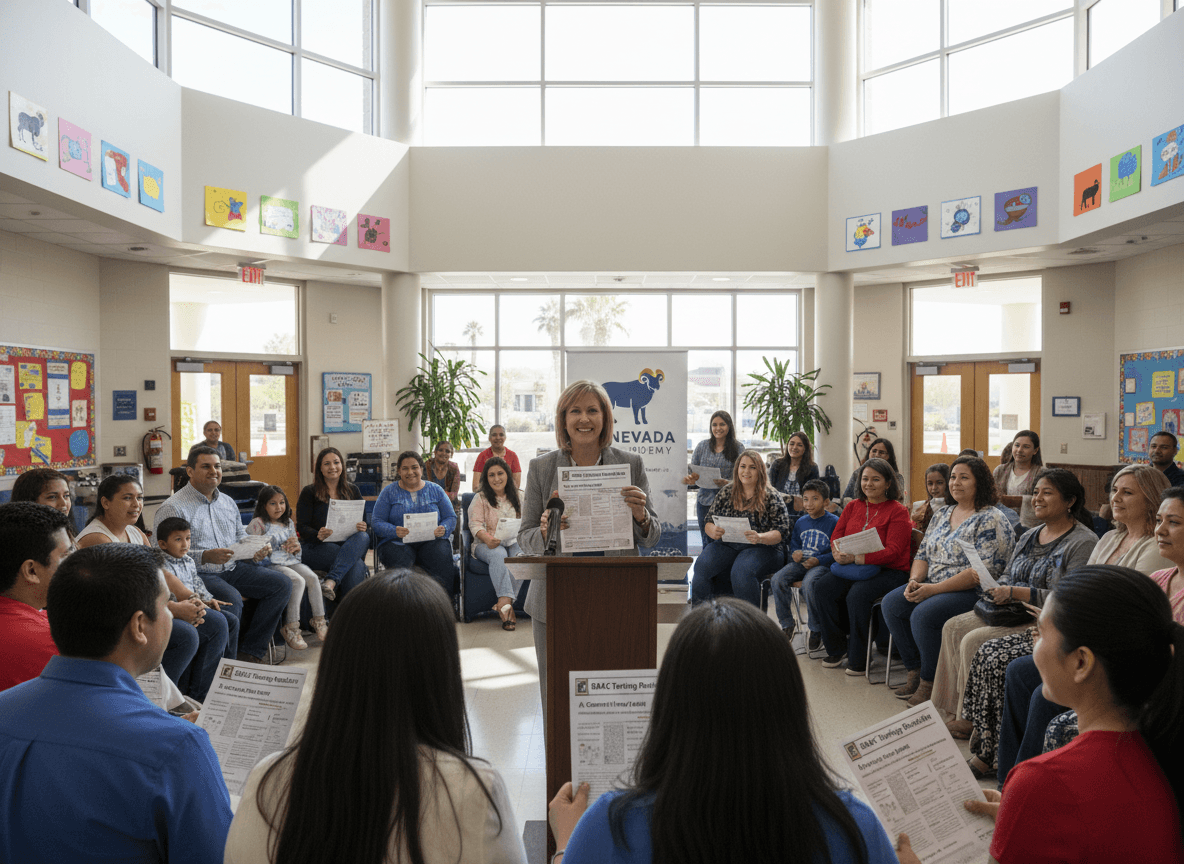
Nevada principals face a unique set of communication challenges. Clark County School District, which covers Las Vegas and surrounding areas, is the fourth-largest school district in the United States. A principal in CCSD is one of hundreds of campus leaders competing for parent attention in a sprawling, demographically complex district. Washoe County School District in Reno is smaller but similarly diverse, with large Spanish- speaking and Basque-heritage communities. Rural Nevada districts cover some of the most remote territory in the continental United States. In every context, the principal's newsletter is what differentiates your school from the district-level noise.
What Nevada parents expect from principal newsletters
Las Vegas parents are accustomed to high-volume communication from CCSD's central office. A newsletter that sounds like the district sounds like everyone else. Parents in Clark County respond to newsletters that feel specific to their school, their children's teachers, and their campus culture. School-specific content, student recognition, and a principal's voice that feels personal rather than corporate cut through the district noise.
Nevada has one of the highest proportions of English Learner students in the country. Many Clark County families primarily speak Spanish, Tagalog, Chinese, or Arabic. A newsletter in English only reaches a fraction of your parent community. Washoe County has significant Spanish-speaking and Indigenous communities as well. For principals serving ELL families, translation is not a nice-to-have. It is a basic communication requirement.
Rural Nevada parents, in communities like Elko, Winnemucca, or Ely, want personal, community-centered communication from their principal. Many rural Nevada schools serve students from ranching and mining families with deep roots in their communities. A newsletter that celebrates local students and community life earns more trust than one that reads like a compliance checklist.
Nevada NDE compliance requirements principals must communicate
- SBAC Pre-Test and Results Communication: Nevada uses the Smarter Balanced Assessment for ELA and math in grades 3-8 and grade 11. Principals must communicate testing windows in advance and distribute individual student score reports with context when NDE releases results.
- Read by Grade 3 Screening Notices (NRS 392.145): Principals serving grades K-3 must communicate reading screening schedules, notify parents of individual screening results, describe available interventions, and communicate the potential retention decision process for grade 3 students who do not meet proficiency.
- Nevada School Star Rating Communication: NDE publishes annual school star ratings (1-5 stars). Principals must communicate their school's rating when released, especially if the rating changed or if the school is in comprehensive or targeted support status.
- EL Program Annual Notifications: Nevada's high ELL population creates significant notification requirements. Principals must ensure annual EL program placement notices and progress reports reach families in a language they understand.
- Title I Annual Meeting: Nevada Title I principals must hold an annual meeting, distribute the school-parent compact, and communicate the family engagement policy each year.
- Nevada Science Assessment (NVSA): Nevada tests science at grades 5, 8, and high school. Add science testing dates to your testing communication calendar alongside SBAC.
Building the SBAC and reading communication calendar in August
Plan four newsletter touchpoints for SBAC before the year begins. First, include SBAC dates in the back-to-school newsletter. Second, send a January newsletter explaining Smarter Balanced, Nevada's performance levels, and how families can support preparation. Third, send a two-week reminder with attendance guidance. Fourth, plan a results newsletter for the fall release, explaining your school's star rating and proficiency rates with honest context and a clear improvement direction.
For grades K-3 principals, add Read by Grade 3 screening dates to this calendar. Communicate the screening schedule in August, send results notices promptly after each screening window, and explain the support plan for students who are behind. If your school has grade 3 students who may face the retention decision in spring, begin that communication no later than January.
Reaching Las Vegas's multilingual parent community
Clark County School District is among the most linguistically diverse districts in the country. Spanish is the most common language after English, but Filipino, Chinese, Arabic, and Somali communities are substantial in many CCSD schools. A bilingual English-Spanish newsletter is the minimum for most CCSD principals. For schools with large Filipino or Arabic-speaking communities, working with community liaisons to distribute translated summaries alongside the English newsletter reaches families who might otherwise miss critical information.
Washoe County School District principals in Reno and Sparks serve large Spanish-speaking populations and a significant Basque-heritage community. The approach is the same: design for the majority non-English language first, then add other languages based on your specific school's population data.
Nevada calendar events principals should cover every year
- SBAC testing window (spring, grades 3-8 and 11)
- Nevada Science Assessment dates (grades 5, 8, high school)
- SBAC results release and school star rating
- Read by Grade 3 screening dates (grades K-3)
- Read by Grade 3 results and intervention notices (grades K-3)
- Nevada school star rating release and your school's result
- Semester report card dates and parent conference schedule
- Title I annual meeting (for Title I schools)
- Professional development days (no school for students)
- ACT school day testing (high school, grade 11)
Building a newsletter system that holds up in Nevada's high-volume environment
Clark County principals are buried in administrative demands. CCSD's size means constant district-level communications, policy updates, and compliance requirements arriving from central office. Building a newsletter that takes three hours per week to produce will not survive that environment. A locked template with defined sections updated weekly is the only sustainable approach.
Daystage supports that workflow. Nevada principals using Daystage build their NDE compliance and community engagement template once, update content weekly in under 30 minutes, and send directly to parent inboxes. For CCSD principals managing multilingual families, the production workflow handles translation efficiently without rebuilding the layout each time. Daystage AI drafts routine sections so principals spend their time on judgment rather than writing. Free plan available, no credit card required.
Get one newsletter idea every week.
Free. For teachers. No spam.
Frequently asked questions
How often should a Nevada school principal send a newsletter?
Weekly is the standard for Nevada principals, especially those in Clark County School District. With over 320,000 students, CCSD is the fourth-largest school district in the country, and parents have no shortage of competing information sources. A consistent weekly newsletter from the principal is what makes your school feel distinct and keeps families connected to their specific campus rather than lost in the district's massive communication flow.
What should a Nevada principal include in the back-to-school newsletter?
The August newsletter should cover the school schedule, staff introductions, the SBAC testing window for spring, Nevada's Read by Grade 3 law and assessment dates if you have grades K-3, NDE's school star ratings and your school's current status, parent conference dates, and any Title I meeting dates. Setting assessment and accountability context in August prevents confusion when results arrive later in the year.
How should Nevada principals communicate about SBAC results?
Nevada uses the Smarter Balanced Assessment (SBAC) for English language arts and math in grades 3-8 and grade 11. NDE releases results in fall. Send a newsletter when scores come out, explaining the four performance levels, sharing your school's proficiency rates, and describing what support is available for students who did not reach proficiency. Nevada's school star rating system publishes this data publicly, so principals who communicate results proactively maintain credibility with families.
What do Nevada principals need to communicate about the Read by Grade 3 law?
Nevada's Read by Grade 3 law (NRS 392.145) requires schools to screen K-3 students for reading difficulties, provide intervention for identified students, and notify parents of results and supports. For grade 3 students who do not meet the reading proficiency standard, retention is possible unless specific exemptions apply. Principals should communicate the screening schedule, proficiency expectations, and the process for potential retention decisions well before spring, not in May.
What is the best newsletter tool for principals in Nevada?
Daystage helps Nevada principals send consistent, professional newsletters that deliver directly to parent inboxes without requiring a portal login or link click. Schools across Clark County and Washoe County use Daystage to manage SBAC and Read by Grade 3 communication calendars efficiently. For CCSD principals managing high ELL populations, Daystage supports multilingual workflows so translation does not add hours to production. Free plan available, no credit card required.

Adi Ackerman
Author
Adi Ackerman is a former classroom teacher and curriculum writer with 8 years in K-8 schools. She writes about school communication, parent engagement, and what actually works in real classrooms.
More for Principals
Ready to send your first newsletter?
3 newsletters free. No credit card. First one ready in under 5 minutes.
Get started free