
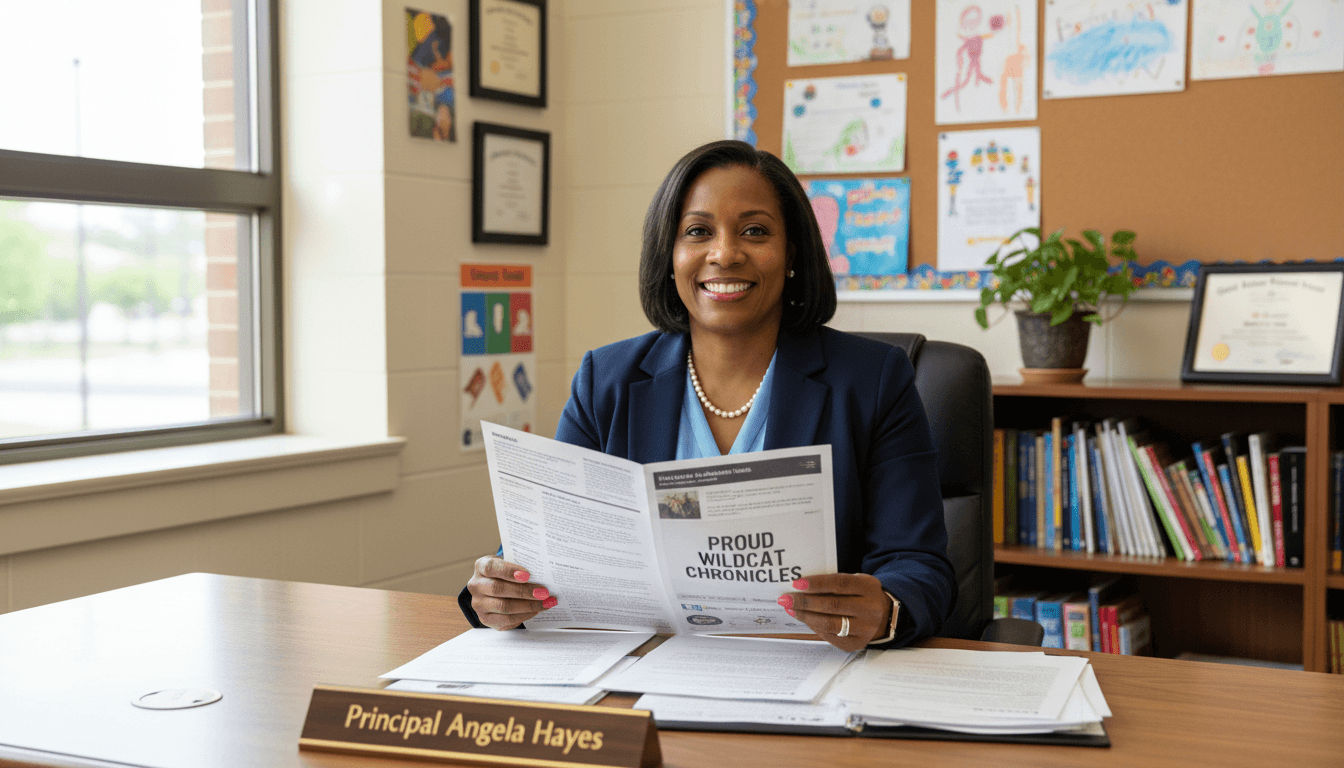
The North Carolina Principal Newsletter Guide
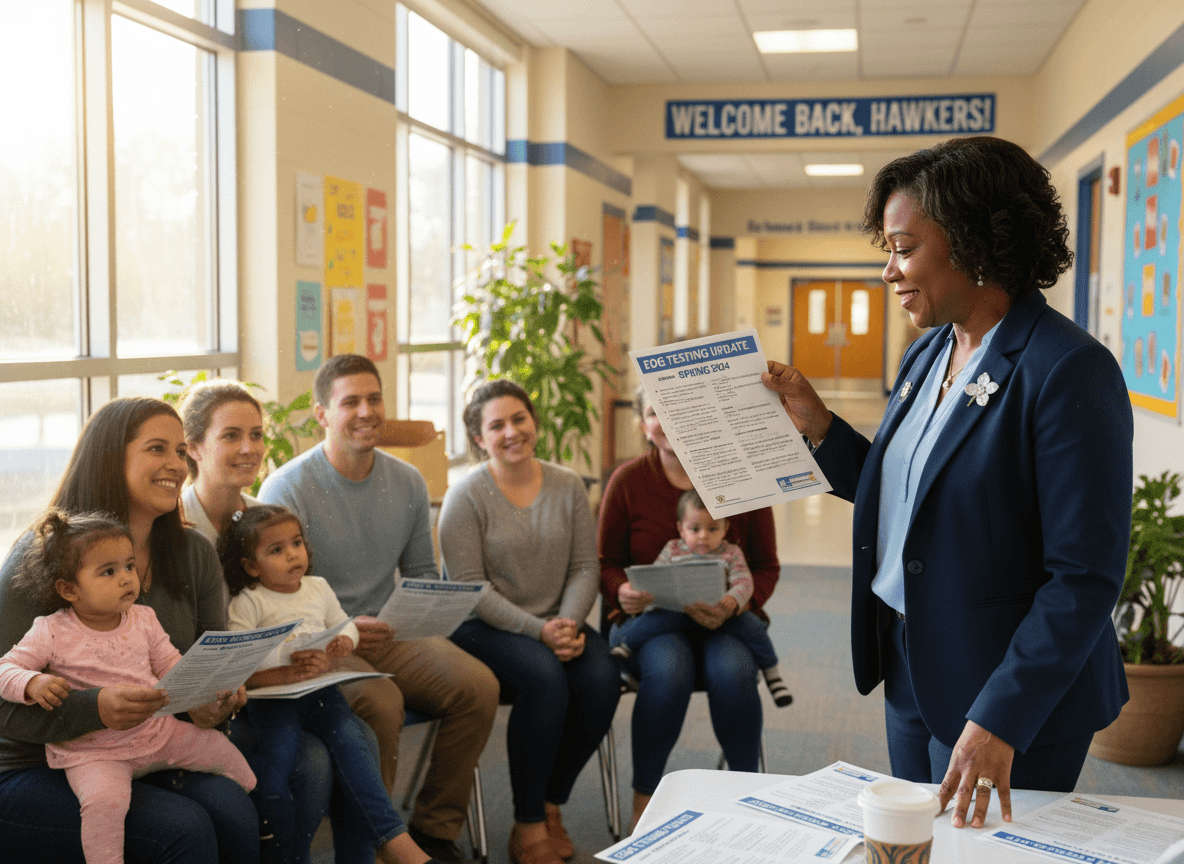
North Carolina principals navigate one of the South's most complex accountability environments. NCDPI's assessment system includes EOG tests, EOC assessments, NC Check-In benchmarks, and the Read to Achieve third-grade literacy gate. The annual NC School Report Card makes school performance publicly visible and directly influences parent school choice decisions in the state's growing urban districts. Charlotte-Mecklenburg Schools and Wake County Public School System are two of the fastest- growing large districts in the country, bringing thousands of new families each year who need orientation to how North Carolina's education system works. The principal newsletter is the most efficient way to provide that orientation and maintain the ongoing communication trust demands.
What North Carolina parents expect from principal newsletters
Charlotte-Mecklenburg Schools parents are attuned to school quality data given CMS's history with busing, school choice, and the ongoing conversation about school segregation and equity. CMS principals who communicate consistently about academic performance and improvement plans build credibility in a community that is skeptical of institutional promises. Wake County parents, many of them transplants from other states bringing high academic expectations, track EOG results, AP participation, and graduation rates. They chose their home based partly on school quality and they expect the principal to communicate that quality actively.
Rural North Carolina parents, in districts like Johnston County, Wilson County, or the mountain districts of western NC, want community connection alongside academic updates. These parents often have deep loyalty to their local school and respond to newsletters that celebrate local students, honor local traditions, and maintain the personal tone of a community school.
North Carolina NCDPI compliance requirements principals must communicate
- EOG Pre-Test and Results Communication: North Carolina's End-of-Grade tests cover ELA and math for grades 3-8, with science at grades 5 and 8. Principals must communicate testing windows in advance and distribute student score reports when NCDPI releases results in summer.
- EOC Assessment Communication (high school): End-of- Course assessments in Math I, English II, Biology, NC Civic Literacy, and other subjects count toward student course grades. High school principals must communicate EOC schedules and the grade weighting policy to families.
- Read to Achieve Third-Grade Gate (G.S. 115C-83.3): Principals serving grade 3 must communicate the reading proficiency requirement, the assessment schedule, intervention supports, and the promotion decision process to parents of all third graders.
- NC Check-In Benchmark Communication: NCDPI's NC Check-In diagnostic assessments provide mid-year data on student progress. Principals should communicate when Check-In assessments are administered and how parents can access results.
- NC School Report Card Communication: When NCDPI releases annual school report cards, principals must communicate the school's performance, especially if the school's designation changed.
- Title I Annual Meeting: North Carolina Title I principals must hold an annual meeting, distribute the school-parent compact, and communicate the family engagement policy each year.
Building the EOG and Read to Achieve communication calendar in August
The EOG testing window is predictable in spring. Plan four newsletter touchpoints before the year begins. First, include EOG dates in the back-to-school newsletter. Second, send a January newsletter explaining North Carolina's four achievement levels and how EOG is structured. Third, send a two-week reminder with attendance guidance and test-day logistics. Fourth, plan a results newsletter for when NCDPI releases scores, explaining your school's performance with honest context and a clear direction.
For grade 3 principals, add Read to Achieve communication to this same calendar. Communicate the law and assessment schedule in August. Send results and intervention plan notices after each reading screening. Communicate the promotion decision process no later than January so parents of struggling readers have time to engage with the support plan rather than being surprised in April.
Communicating the NC School Report Card honestly
NCDPI releases NC School Report Cards annually, assigning schools designations based on performance composite and growth scores. When your school's report card comes out, communicate the same week. If your school received a high designation, celebrate it with specific data. If your school is in a lower designation or received a school support status, acknowledge it directly, explain what the indicators measure, and share the improvement plan. Charlotte and Wake County parents check these ratings. Principals who communicate first and honestly are the ones whose communities trust them when the work gets hard.
CMS and WCPSS newsletter strategies for fast-growing districts
Charlotte-Mecklenburg Schools and Wake County Public School System both gain thousands of new students each year from families relocating to the Research Triangle, Charlotte metro, and surrounding areas. Many of these families have no prior experience with North Carolina's assessment system. A consistent principal newsletter that explains EOG, EOC, Read to Achieve, and NC Check-In each year serves both new and returning families simultaneously.
CMS and WCPSS principals should also communicate clearly about school choice, magnet programs, and specialized academies where relevant, since these programs are a major factor in how families in both districts select schools.
North Carolina calendar events principals should cover each year
- EOG testing window (spring, grades 3-8)
- EOG science testing dates (grades 5 and 8)
- EOC assessment schedule (high school)
- EOG/EOC results release and school performance summary
- Read to Achieve assessment dates and results (grade 3)
- NC Check-In benchmark assessment windows (fall and winter)
- NC School Report Card release and your school's designation
- Semester report card dates and parent conference schedule
- Title I annual meeting (for Title I schools)
- Professional development days (no school for students)
Building a newsletter system that holds up across the North Carolina year
North Carolina principals manage EOG prep, EOC scheduling, Read to Achieve intervention, NC Check-In results, and NC School Report Card communication all in a single school year. A newsletter workflow built on a locked template that is updated weekly rather than rebuilt from scratch is the only sustainable approach. Build your compliance and community template in August. Lock in the recurring sections. Update content weekly in 20-30 minutes.
Daystage is built for this. North Carolina principals using Daystage create their NCDPI compliance template and community engagement structure once, update it weekly, and send directly to parent inboxes. No portal login required on the parent end. Daystage AI helps draft routine sections so principals spend time on judgment, not blank pages. Free plan available, no credit card required.
Get one newsletter idea every week.
Free. For teachers. No spam.
Frequently asked questions
How often should a North Carolina principal send a newsletter?
Weekly is the right cadence for North Carolina principals. The EOG and EOC assessment window in spring, NCDPI's annual NC School Report Card release, the Read to Achieve literacy gate at third grade, and the NC Check-In benchmark assessments throughout the year all create communication pressure points that a monthly newsletter cannot address in time. Weekly newsletters keep parents informed and reduce the reactive calls and emails that principals receive when parents feel left in the dark.
What must a North Carolina principal include in the back-to-school newsletter?
The August newsletter should cover the school schedule, staff introductions, the spring EOG/EOC testing window, Read to Achieve assessment dates and the third-grade literacy gate for grade 3 principals, NC Check-In benchmark assessment schedule, your school's current NC School Report Card status and improvement goals, and parent conference dates. Setting context for multiple assessment layers in August prevents parent confusion when results arrive throughout the year.
How should North Carolina principals communicate about EOG and EOC results?
North Carolina's End-of-Grade assessments cover ELA and math for grades 3-8, with science at grades 5 and 8. End-of-Course assessments cover Math I, English II, Biology, and other high school subjects. NCDPI releases EOG results in summer. Principals should send a results newsletter explaining North Carolina's four achievement levels (Level 1-4), sharing the school's overall performance, and describing what interventions are available for students who did not reach Level 3 or 4. Proactive results communication builds more trust than waiting for parents to ask.
What do North Carolina principals need to communicate about the Read to Achieve law?
North Carolina's Read to Achieve law (G.S. 115C-83.3) requires students to demonstrate reading proficiency at grade level before advancing from third grade to fourth grade. Principals of schools with grade 3 must communicate the reading assessment schedule, what proficiency means, what intervention supports are available throughout the year, and what the promotion decision process looks like for students who do not meet the standard. Parents of third graders need this information in August, not April.
What is the best newsletter tool for principals in North Carolina?
Daystage helps North Carolina principals send consistent, professional newsletters that deliver directly to parent inboxes without requiring a portal login. Schools in Charlotte-Mecklenburg, Wake County, and rural NC districts use Daystage to manage EOG, Read to Achieve, and NC School Report Card communication calendars efficiently. Daystage AI helps generate routine content so principals spend time on the work that requires their judgment. Free plan available, no credit card required.

Adi Ackerman
Author
Adi Ackerman is a former classroom teacher and curriculum writer with 8 years in K-8 schools. She writes about school communication, parent engagement, and what actually works in real classrooms.
More for Principals
Ready to send your first newsletter?
3 newsletters free. No credit card. First one ready in under 5 minutes.
Get started free