

IB School Principal Newsletter: Communicating the IB Mission to Parents
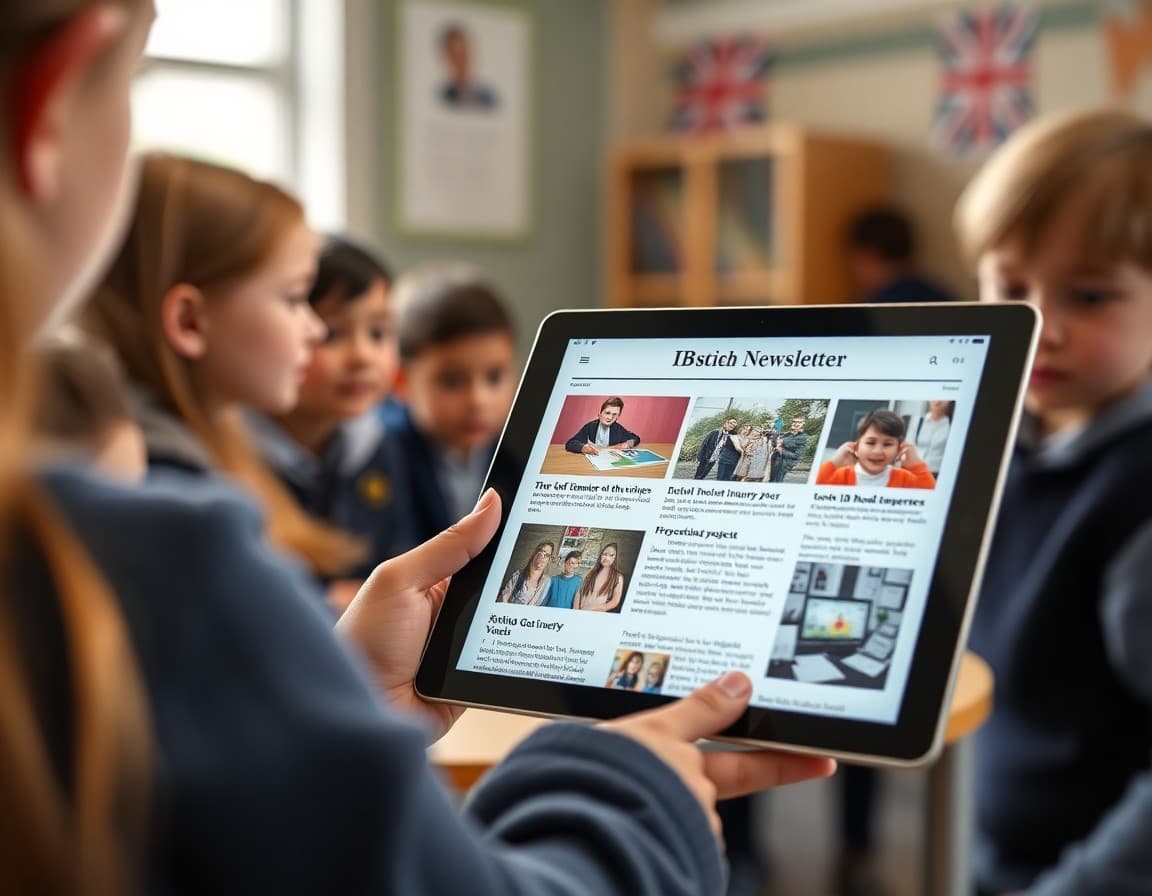
IB schools face a particular communication challenge: the program is philosophically distinctive, assessively different from what most families experienced as students, and genuinely demanding. Families who chose an IB school did so with a level of intentionality, but that intentionality often does not include a deep understanding of what the IB actually does and why. A principal newsletter that translates the IB mission into visible, specific student experiences builds the family engagement that IB programs require to succeed.
Translate the IB Learner Profile into Real Examples
The IB Learner Profile, inquirers, knowledgeable, thinkers, communicators, principled, open-minded, caring, risk-takers, balanced, reflective, is powerful philosophy but abstract language. Every newsletter should translate at least one profile attribute into a specific student moment: "This month, our 5th graders demonstrated what 'inquirers' looks like. During their Where We Are in Place and Time unit, three students decided the classroom research was not enough and organized an after-school interview session with four adults in different professional fields. Nobody asked them to do that. They designed the inquiry themselves."
Explain the Units of Inquiry for Each Grade Level
One of the most practical things an IB school newsletter can do is briefly describe the current unit of inquiry for each grade level. Families who understand the central idea and key concepts their child is exploring can have richer conversations at home and understand why the homework looks the way it does. "Grade 4 is currently exploring the unit 'How We Express Ourselves,' with a central idea that human expression reflects cultural identity. Students are examining traditional art forms from five cultures and creating an original piece that reflects an aspect of their own family identity."
Demystify IB Assessment
IB assessment is one of the most frequent sources of family confusion. Criterion-based rubrics, internal and external assessment, portfolio documentation, and the 1-7 scale all require explanation. A newsletter that regularly and briefly addresses assessment, connecting it to specific current work, builds family literacy over time: "The 3rd-grade Math assessment this month is based on IB Criterion B (Investigating Patterns). Students demonstrate their understanding by identifying, extending, and generating a rule for a pattern. Mastery is not about getting the right answer; it is about articulating the thinking process that led to the answer."
Address the Diploma Programme Early
For IB schools that run through the Diploma Programme, families of younger students often have no idea what they are working toward. A brief section twice a year that explains where the IB is going in secondary school gives families a long-term picture that shapes their engagement in primary and middle years. The Extended Essay, CAS requirements, and Theory of Knowledge are less daunting when families have four years to understand them before their child starts.
A Template Excerpt for an IB School Newsletter
"This month across our school: PYP Grade 3 is in the unit 'Sharing the Planet,' investigating water access as a human rights issue. Students have been tracking water usage at home and will present their findings as action proposals next week. MYP Grade 7 is completing their Design project cycle: they have moved from inquiry through ideation and are now in the create phase, building functional prototypes. DP Year 1 students submitted their first Internal Assessment draft in History this week. Their supervisor feedback sessions run November 14-18. And a reminder: our IB Parent Information Night is November 19 at 6pm. This is the best opportunity of the year to ask questions about the program directly."
Celebrate the IB Community's Accomplishments
IB schools generate distinctive student accomplishments: extended essays submitted, CAS projects completed, TOK presentations delivered. Celebrating these in the newsletter with specificity makes the program feel alive: "This month, our first cohort of Year 2 Diploma students submitted their Extended Essays. Forty-two students produced 4,000-word original research papers on topics ranging from the thermodynamic efficiency of traditional cooking methods in sub-Saharan Africa to the relationship between social media algorithm design and political polarization. They did this on top of their full diploma course load. I am genuinely proud of every one of them."
An IB school newsletter that makes the mission visible, translates philosophy into specific student experiences, and builds family literacy about the program over time is one of the most powerful retention and community-building tools an IB principal has. Families who understand the IB become advocates for it.
Get one newsletter idea every week.
Free. For teachers. No spam.
Frequently asked questions
What should an IB school newsletter communicate to families?
IB newsletters should translate the IB philosophy into visible student experiences. Families who understand what the IB Learner Profile means in practice, what inquiry-based learning looks like in their child's classroom, and how IB assessment differs from traditional testing are better partners in the program. Avoid jargon without explanation and always connect IB language to specific student experiences.
How do I explain IB assessment to families unfamiliar with the system?
Use concrete examples. Instead of explaining the 1-7 grading scale in abstract terms, describe what a 6 represents in student work: 'A student scoring a 6 in IB History has demonstrated thorough knowledge of the content and can analyze historical sources with limited assistance. A 7 requires the same plus original synthesis and consistent application to unfamiliar contexts.' Make the standard visible through what students actually do.
Should IB school newsletters cover the Extended Essay, CAS, and Theory of Knowledge?
Yes, and early. IB Diploma families often encounter Extended Essay and CAS requirements with insufficient preparation because the school waits until 11th grade to explain them. A newsletter that introduces these components in 9th grade, describes what successful completion looks like, and gives families a role in supporting their student is far more effective than a year-11 fire drill.
How do I address concerns from families who worry IB is too rigorous?
Acknowledge the rigor directly and give families a realistic picture: 'IB is demanding. Students who thrive here have strong study habits, are willing to ask for help, and find genuine interest in at least some of their subjects. We provide support structures specifically designed for the IB workload.' Honest framing prevents the shock that leads to mid-year transfers.
What newsletter tool is appropriate for IB school communication?
Daystage is a good fit for IB school newsletters because you can create a structured, professional layout that handles both the narrative IB content and the logistical information families need. Many IB school coordinators use Daystage for their monthly curriculum update newsletters because the format lets them clearly separate unit information, assessment updates, and community events.

Adi Ackerman
Author
Adi Ackerman is a former classroom teacher and curriculum writer with 8 years in K-8 schools. She writes about school communication, parent engagement, and what actually works in real classrooms.
More for Principals
Ready to send your first newsletter?
3 newsletters free. No credit card. First one ready in under 5 minutes.
Get started free