
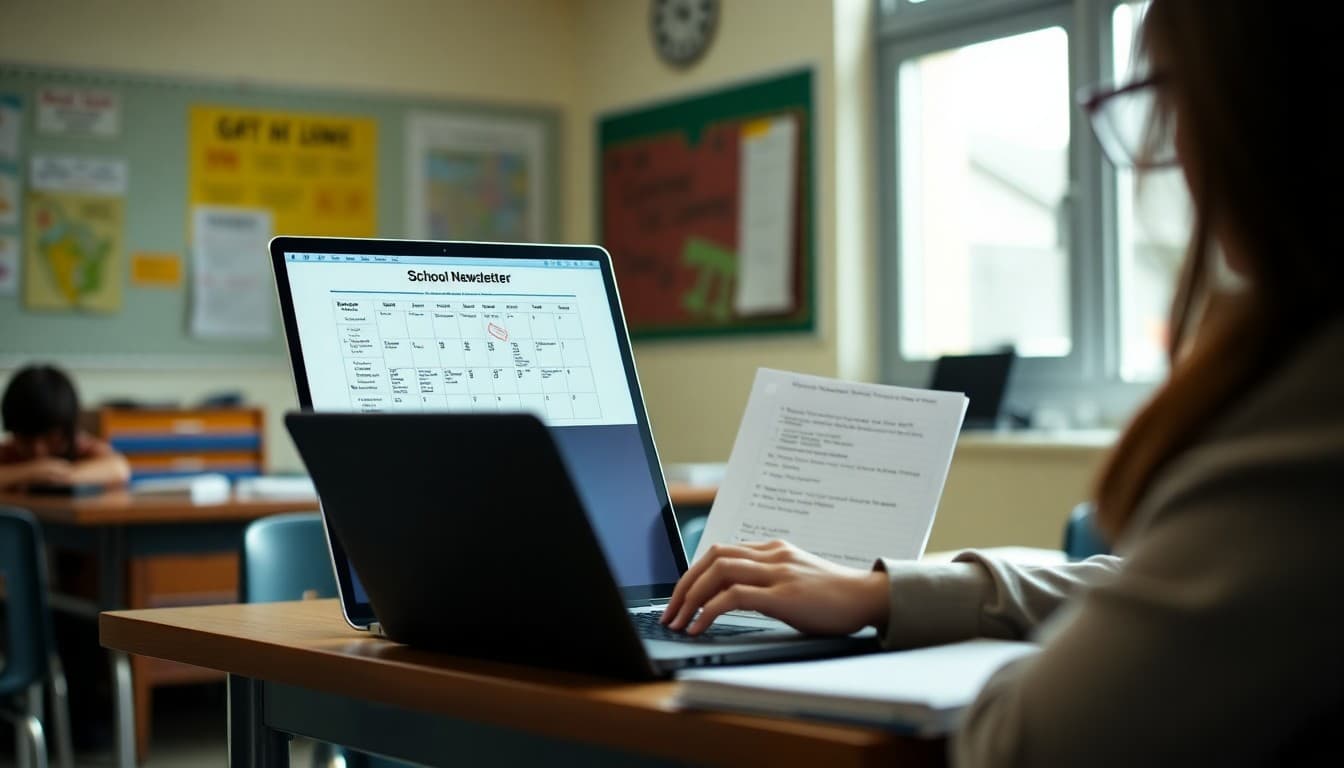
How to Write a School Newsletter That Families Actually Read

Most school newsletters are not bad because principals do not care. They are bad because principals are writing them at 9 p.m. on a Sunday with a format they inherited and no clear model for what works. This guide gives you that model.
Start with the reader, not the content
Before you write a word, ask: what does this specific family need to know this month? Not what do I want to communicate. What do they need to know to be informed, prepared, and connected to their child's school right now?
That reframe changes almost everything about what ends up in the newsletter. Announcements that serve the school's agenda get cut. Information that serves families stays.
Structure it in layers, not paragraphs
Families do not read school newsletters linearly. They scan. Structure your newsletter for scanning: clear section headers, short paragraphs, bulleted lists where information is list-shaped. A family who spends 20 seconds scanning your newsletter should be able to identify the most important item in each section without reading a full sentence.
The five sections that work:
- Principal message. Personal, specific, one to three short paragraphs.
- Upcoming dates. A clean bulleted list of the next three to four weeks.
- School highlights. One classroom, one student group, one achievement worth naming.
- Important updates. Policy changes, logistics shifts, anything families need to act on.
- Contact and resources. Your direct email, the front office number, and one or two relevant resource links.
Write the principal message last
The principal message is the hardest part to write if you start with it. It is easier if you draft the other sections first, then write the message with your actual week in mind. What did you see in classrooms this week? What is on your mind about the school right now? What do you want families to know about the kind of place your school is?
One good observation from inside the building, written as you would say it to a colleague, is worth more than three paragraphs of aspiration.
Cut anything that is not for the reader
The hardest editing skill in newsletter writing is cutting content that feels important to the school but is not relevant to families. Staff training days, internal announcements, committee meetings that do not involve parents: these belong on the school website or in staff communication, not in the family newsletter.
When editing, ask for each section: 'Does a family who reads this know something useful they did not know before, or can they do something as a result?' If the answer is no, cut it.
Use images intentionally, not decoratively
One or two images that show actual school life are more valuable than clip art or generic stock photos. A photo from the science fair, the morning meeting, or the recent field trip adds authenticity. Ask teachers to share a photo at the end of each week and you will have a steady supply.
Send and track consistently
Sending consistently is more important than sending perfectly. A newsletter that goes out on the first Tuesday of every month, reliably, builds a family readership habit over time. A newsletter sent whenever there is enough content trains families to ignore it.
Daystage makes consistency easier: duplicate last month's newsletter, update the sections, and send. The format is already built. The branding is already set. All you need to do is update the content.
Get one newsletter idea every week.
Free. For teachers. No spam.
Frequently asked questions
What is the ideal length for a school newsletter?
Four to six minutes reading time is the target for a monthly principal newsletter. In practice, that means three to five clearly organized sections. Anything shorter risks feeling thin and inconsistent. Anything longer risks being abandoned before the most important section. If you have more content, cut the less important items or link to a separate page.
What sections should every school newsletter include?
A personal principal message, upcoming events and dates, at least one student or classroom highlight, any policy or logistics updates, and contact information. These five sections cover the four things families most consistently want from a school newsletter: connection, planning information, academic context, and a path to reach you.
How do I make the principal message sound personal, not bureaucratic?
Write it the same week you send it, based on something you actually observed that week. One specific teacher, one classroom moment, one student interaction. Avoid opening with 'We are so excited' or any variation. Start with the observation: 'On Tuesday I walked into room 112 and found Ms. Torres teaching fractions using leftover pizza boxes.' That is memorable. Excitement claims are not.
How often should I send a school newsletter?
Monthly is the minimum. Bi-weekly is sustainable for most principals if the format is tight. The most important variable is consistency: same day of the week or month, every time. Families who know when to expect your newsletter open it at higher rates than families who receive it randomly.
What tool helps principals send newsletters efficiently?
Daystage is designed for principal-led school newsletters. It handles branding, contact management, and direct email delivery so families see your newsletter in their inbox without navigating to a website. The template system lets you duplicate last month's newsletter and update only the content.

Adi Ackerman
Author
Adi Ackerman is a former classroom teacher and curriculum writer with 8 years in K-8 schools. She writes about school communication, parent engagement, and what actually works in real classrooms.
More for Principals
Ready to send your first newsletter?
3 newsletters free. No credit card. First one ready in under 5 minutes.
Get started free