
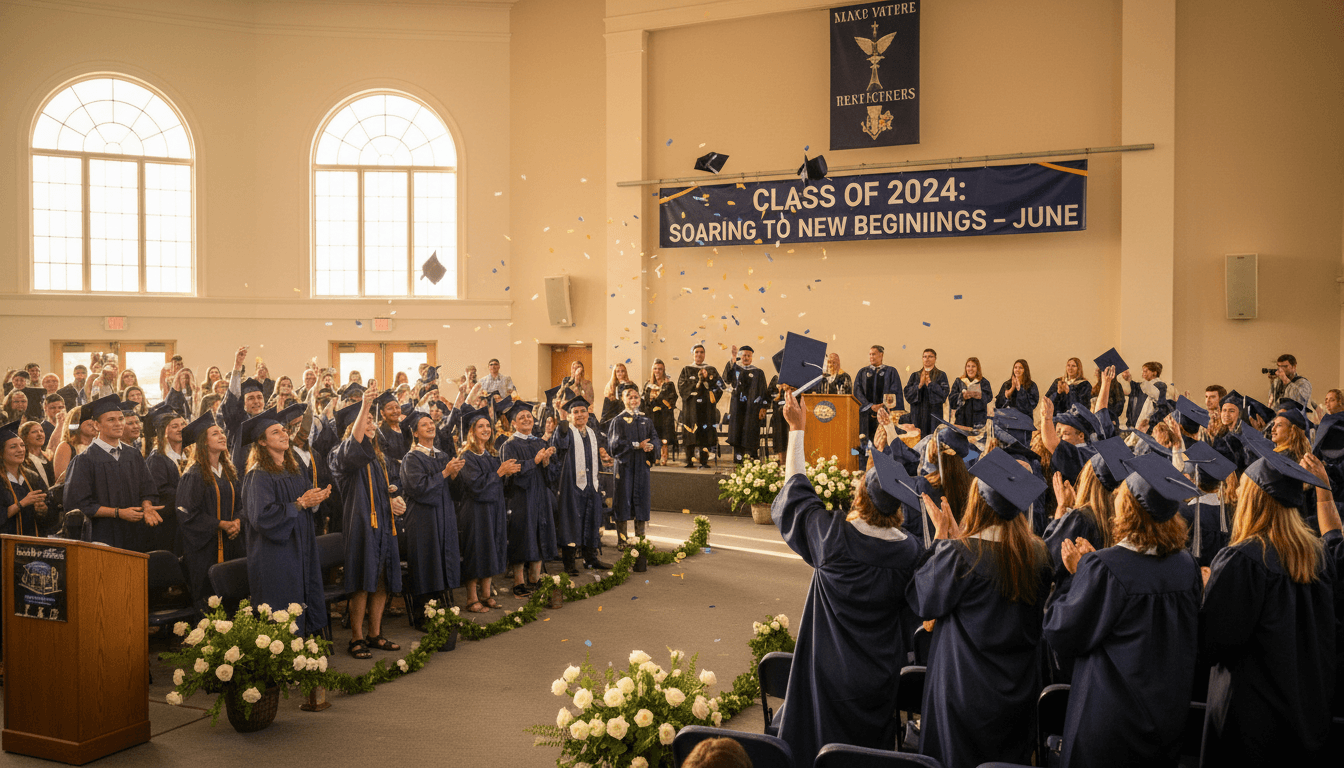
What to Put in Your High School Principal Newsletter in June

June is the closing chapter of the school year, and the principal newsletter that goes out at the end of the year carries real weight. Families are wrapping up routines, students are transitioning, and the community needs a proper send-off. At the same time, there is real practical information to cover: grades, summer school, fall planning, and who to call during the summer months.
A well-crafted June newsletter does both things at once.
Year-End Celebrations and Recognitions
Open with what the school accomplished. Academic awards, athletic championships, arts performances, community service milestones, and individual student achievements all belong in this section. Do not make it exhaustive, but make it specific. A list of every award winner is not as effective as a few highlighted achievements that represent what the year meant.
Thank staff members, parent volunteers, and community partners who contributed to the year. Recognition in the final newsletter of the year is one of the most meaningful places to offer it, and families notice who gets acknowledged and who does not.
Final Grades and Report Cards
Families need to know when final grades are posted, how to access report cards, and what the timeline is for official transcripts. For graduating seniors, explain when final transcripts will be sent to colleges. For underclassmen, clarify the process for reviewing and questioning grades if a family has concerns.
If your school uses an online gradebook or student information system, include login instructions or a link to the parent portal. The number of families who have forgotten their login after a summer away is higher than you might expect.
Summer School and Credit Recovery
Cover summer school options directly and without stigma. Explain who the programs are designed for, what subjects are offered, the start and end dates, how families register, and any costs involved. If there is financial assistance available for families who cannot afford summer school fees, include that information prominently.
Many families wait too long to enroll because they are hoping the regular school year results will improve, or because they are unsure whether summer school is necessary. A clear description of what credit recovery actually accomplishes and who benefits from it reduces that hesitation.
Technology and Device Return
If your school issues devices to students, June is when they come back. Include the return schedule, where students bring devices, what happens if a device is damaged or missing, and any fines or hold policies that affect report cards or transcripts. Being clear about consequences in the newsletter, before the last day of school, prevents a wave of late returns and missing equipment.
Incoming Freshmen and New Student Orientation
If your school runs a summer orientation program for incoming ninth graders or transfer students, include the details in the June newsletter. This reaches families of current eighth graders who are preparing to transition, as well as families new to the district who may have enrolled late. Include the orientation date, what students should bring, and who to contact for more information.
A Reflection on the Year
This is the place for a genuine note from the principal. Not a lengthy essay, but a paragraph or two that acknowledges what the year was, what was hard, what was good, and what the school is carrying forward. Families who feel that the principal sees and understands their community are far more likely to stay engaged through the summer and come back ready for fall.
Specificity makes this section land. Reference a real moment, a real challenge, a real achievement. Generic year-end platitudes are the easiest part of the newsletter to skip.
Summer Contact and Fall Preview
Close with practical summer information: main office hours during the summer, who handles urgent matters when school is not in session, when to expect fall registration materials, and the first day of school date for the coming year. If summer reading lists or fall assignments are available, include where to find them.
A brief forward-looking note about fall, even just a sentence, closes the loop and gives families a sense of continuity. Summer does not have to feel like a gap in the relationship between school and community.
Get one newsletter idea every week.
Free. For teachers. No spam.
Frequently asked questions
What should a high school principal include in a June newsletter?
A June newsletter should cover end-of-year celebrations and recognitions, final grade and report card timelines, summer school or credit recovery enrollment, fall registration information for incoming students, and a warm close to the school year for the whole community.
Should a June newsletter include a reflection on the school year?
Yes, briefly. Families appreciate a genuine acknowledgment of what the year held, particularly if it was a challenging one. Keep it to one or two paragraphs. Specific details, such as a particular achievement or a community moment, make it memorable. Generic year-end reflections tend to get skimmed.
How should a principal communicate summer school and credit recovery in June?
Clearly and without stigma. Explain what the programs are, who they are appropriate for, how to enroll, and what the schedule looks like. Some families feel embarrassed reaching out about credit recovery, so framing it as a normal option that helps students finish strong removes a barrier to participation.
What should the June newsletter say about fall preparation?
Include any known fall dates, when summer assignments or reading lists will be distributed, and who new students or incoming freshmen should contact with questions. Even a brief forward-looking note helps families feel connected to the school during the gap months.
What newsletter tool works best for high school principals?
Daystage is a practical choice for a June newsletter because it handles photo highlights, event summaries, and informational content cleanly in one send. The year-end newsletter often doubles as a community record of the year, and Daystage lets principals put that together quickly and professionally.

Adi Ackerman
Author
Adi Ackerman is a former classroom teacher and curriculum writer with 8 years in K-8 schools. She writes about school communication, parent engagement, and what actually works in real classrooms.
More for Principals
Ready to send your first newsletter?
3 newsletters free. No credit card. First one ready in under 5 minutes.
Get started free