

December Community Message Newsletter for Families: A Principal Guide
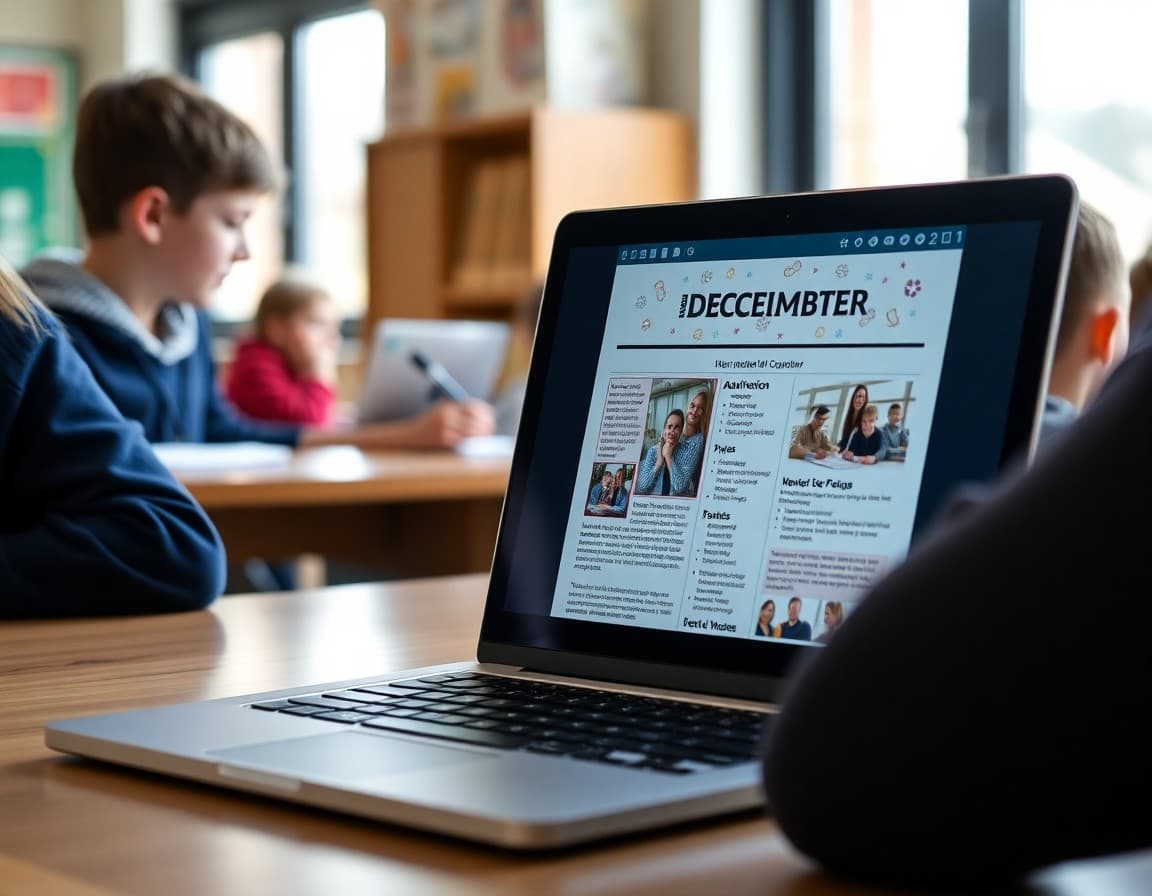
December is one of the busiest months on a principal's calendar, which makes it the worst time to let family communication slide. Winter performances, early dismissals, semester-end assessments, and the energy level of 400 kids who know break is coming all collide at once. Your December community message newsletter is the one place where you can get ahead of the chaos and give families a clear picture of what the next few weeks look like.
Start with Something Real
The fastest way to lose a family in paragraph one is to open with "As we approach the winter season..." Every principal newsletter in every school in the country starts that way in December. Instead, open with something specific to your school. A third-grade class that reached a reading milestone. The custodian who decorated the lobby at 6am. One detail that could only come from your building makes the whole message feel personal rather than templated.
Cover the Schedule Changes Clearly
Families do not read school emails carefully. They scan. Put your schedule changes in a format that survives scanning: a short bulleted list with dates on the left and the event on the right. If your last day before break is a half day, say the exact dismissal time. If there is an early release for report card prep, name the date and time. Do not bury these details inside a paragraph.
Acknowledge the Semester's Work
December is a natural checkpoint. Students have been in school for roughly 16 weeks, teachers have finished their first major assessment cycle, and families have had a chance to attend conferences. Use a paragraph to reflect on what the school accomplished. Be specific: "Our 5th graders completed their first independent research projects" lands better than "students have shown great growth."
Mention What Is Coming in January
Families appreciate a forward look. Even one sentence about January helps them feel connected to the school's rhythm: "When we return on January 6, we'll move into our second-semester reading units and begin preparation for state assessments in March." It signals that you are planning ahead and that the break is a pause, not a stop.
A Template Excerpt for Your Closing
The closing of a December newsletter is where principals often default to generic holiday language. Here is a version you can adapt:
"This has been a strong first semester, and I am grateful for the families who show up for their kids every day. Whether that looks like checking homework, attending a conference, or simply asking how school went, it matters. Enjoy the break. We will see your students on January 6 ready to build on everything they started this fall."
Adjust the return date, the tone, and any specifics. The structure works: acknowledge the community, be specific about something, and close with confidence.
Handle Sensitive Timing with Care
December community messages sometimes need to address difficult things: a staff departure before the break, a safety incident from earlier in the month, or a budget issue that will affect January. Do not avoid these in your newsletter out of a desire to keep the tone light. Families who heard something through the grapevine and then received a cheerful newsletter without any acknowledgment lose trust. Address difficult news briefly and honestly, then move forward.
Send at the Right Time
Most school newsletters get the highest open rates when they land Tuesday through Thursday between 7am and 9am. For December, aim for the first Tuesday of the month for your main message. Send a short follow-up the Thursday before break that contains only the logistics families need: dismissal time, return date, and who to contact during the break for urgent questions.
Keep It Readable on a Phone
More than 60 percent of school families open emails on a mobile device. If your December newsletter requires scrolling through large blocks of text to find a date, most families will not find it. Use short paragraphs, clear section headers, and a layout that works at 375 pixels wide. Tools like Daystage are built for exactly this, giving you a mobile-first newsletter format that does not require you to think about design.
A good December community message newsletter does not need to be long or elaborate. It needs to be clear, warm, and specific to your school. Families will remember the one that told them something real about their child's school, not the one with the most holiday clip art.
Get one newsletter idea every week.
Free. For teachers. No spam.
Frequently asked questions
When should I send my December community message newsletter?
Send it in the first week of December, before holiday events pile up on your calendar. Families need enough lead time to plan around school events and half-day schedules. A second shorter message the week before winter break is also worth doing to confirm last-day details.
What should a December community message cover?
Focus on four things: the academic schedule for the rest of the semester, upcoming holiday events and performances, any changes to arrival or dismissal during the last week, and a genuine closing message from you that reflects the year so far. Keep it under 400 words if you can.
How do I keep the December newsletter from feeling like a list of events?
Open with one specific moment from your school that month. A student who finally cracked long division. A class that finished a book together. One real detail grounds the whole message and reminds families you actually know their kids. Then move into logistics.
Should I address the holiday season specifically or stay neutral?
Acknowledge it without centering it. A phrase like "as we head into the winter break" or "this time of year brings a lot of excitement for students" works for every family. Avoid assuming religious observance and avoid language that erases the season entirely. Most families appreciate warmth without the assumption.
What tool makes December newsletters easier to send as a principal?
Daystage lets you build a December community message newsletter with a polished layout without needing a graphic designer. You can schedule it in advance, include event details with dates, and track whether families opened it. That open rate data is useful heading into January when you want to know how many families actually saw the winter break schedule.

Adi Ackerman
Author
Adi Ackerman is a former classroom teacher and curriculum writer with 8 years in K-8 schools. She writes about school communication, parent engagement, and what actually works in real classrooms.
More for Principals
November Community Message Newsletter: Gratitude, Giving, and Family Engagement Before the Break
Principals · 6 min read
January Community Message Newsletter for Families: Principal Templates
Principals · 6 min read
December Academic Update Newsletter: Closing the Semester on a Strong Note
Principals · 7 min read
Ready to send your first newsletter?
3 newsletters free. No credit card. First one ready in under 5 minutes.
Get started free