

Charter School Principal Newsletter: Templates and Best Practices
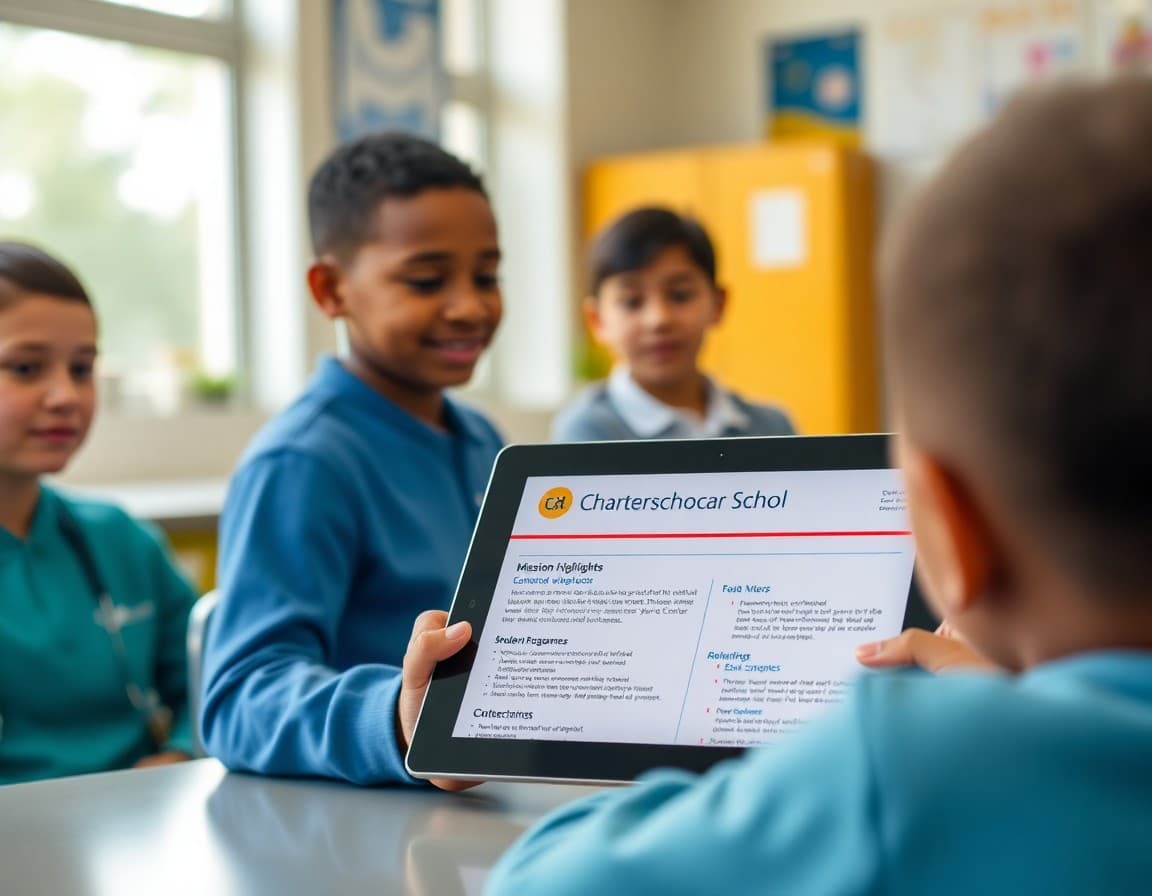
Charter schools communicate under a unique set of pressures. Families chose the school from a list of options, which means every newsletter is implicitly a case for staying. Authorizers and boards are watching outcome data closely. And the school's specific model, whether it is project-based learning, a liberal arts focus, or a college-prep mission, needs to be visible in family communications or it might as well not exist. A charter school principal newsletter that serves all of those purposes well is one of the most important operational tools a charter school leader has.
Make the Mission Visible Without Being Redundant
Every charter school has a mission statement. The principals who use it well do not repeat it verbatim in every newsletter. They make it visible through specific examples of what it looks like in practice: "Our college-prep mission means our 9th graders are already learning to read primary sources, take notes in a structured format, and argue a thesis in writing. Watch your student this month: those habits are forming right now." That sentence communicates mission more effectively than the mission statement itself.
Share Outcome Data Proactively
Charter families are often data-literate and outcome-focused. They chose the school partly because of what it promised to deliver academically. A principal who shares outcome data regularly, honestly, and with context builds the credibility that sustains re-enrollment. "Our mid-year benchmark shows 74 percent of students on track for grade-level proficiency in math, up from 68 percent at the start of the year. We are on pace to meet our annual goal. Here is what 'on track' means for each grade level."
Reinforce the Choice Families Made
Unlike neighborhood schools, charter schools operate in a competitive enrollment environment. Every communication is an opportunity to reinforce the wisdom of the family's choice without being promotional or defensive about it. One paragraph per semester that connects the school's model to a specific student outcome is enough: "Our project-based learning model does something specific: it creates students who know how to work through ambiguity. That is not an abstraction. It shows up in our 8th graders, who are completing independent research projects with a level of self-direction that would be unusual at the high school level in most schools."
Address the Accountability Structure Honestly
Charter schools operate under a charter that requires results. Most families understand this at a basic level but do not fully grasp the implications. A brief annual explanation builds family investment in the school's performance: "Our charter renewal comes up in 2028. The key criteria our authorizer evaluates are academic outcomes and financial management. The work we are doing this year directly shapes that outcome. Family engagement, attendance, and student performance all matter in that process."
A Template Excerpt for a Charter School Newsletter
"This month, I want to share two things that reflect what our school is actually about. First, our data: 78 percent of students scored proficient on the October benchmark, ahead of our target of 75 percent. We are particularly proud of our K-1 results, where the structured phonics program we adopted last year is showing significant gains. Second, a story: last week, our 6th graders led a Socratic seminar on a primary source document from the Civil Rights movement. Their discussion lasted 40 minutes and included insights I have never heard from adults. That is what a liberal arts education does. That is why you are here."
Build Community Across a Diverse Enrollment
Many charter schools draw students from a wide geographic area, which means the school community does not have the natural neighborhood bonds that traditional schools rely on. The newsletter plays a larger role in building that community: by naming shared values, celebrating collective accomplishments, and creating the sense of a community that transcends geography. A charter school newsletter that is purely informational misses its most important function.
Communicate with Your Authorizer in Mind
Charter school principals sometimes forget that their authorizer may read or be shown family newsletters. Write communications that you would be comfortable sharing with the authorizer as evidence of school leadership quality. Honest data reporting, clear accountability language, and professional tone all signal the same thing to families and to authorizers: this principal is serious about what they are doing.
A charter school newsletter that makes the mission visible, shares outcomes honestly, and reinforces the community is one of the most powerful retention tools a charter school leader has. Families who receive this kind of communication do not wonder whether they made the right choice. They tell their friends to apply.
Get one newsletter idea every week.
Free. For teachers. No spam.
Frequently asked questions
How is a charter school newsletter different from a traditional public school newsletter?
Charter school newsletters carry additional responsibilities: communicating the school's specific mission, demonstrating that the model is producing results, and reinforcing the values that distinguish the school from other choices available to families. Charter families chose your school. The newsletter should regularly remind them why that choice was right.
Should a charter school newsletter include mission and model information?
Yes, woven naturally into the communication rather than treated as a separate section. When sharing academic results, connect them to the instructional model. When sharing community news, connect it to the school's values. The newsletter that makes the mission visible in every section communicates far more effectively than one that adds a 'our mission is' boilerplate.
How should charter schools handle transparency about performance?
Charter schools are held to a higher accountability standard than traditional public schools: they must demonstrate results or risk losing their charter. A principal who shares outcome data honestly, including areas of challenge, demonstrates the kind of transparency that builds family and authorizer confidence. Families who chose a charter school expect high standards from leadership as well as from students.
What role does the newsletter play in charter school re-enrollment?
Re-enrollment decisions happen every year for many charter schools, and families who feel informed and connected are far more likely to re-enroll than families who have drifted. A newsletter that regularly demonstrates mission alignment and outcome data is a direct re-enrollment tool. It reminds families why they chose the school and what they would be giving up by leaving.
What platform do charter school principals use for newsletters?
Daystage is used by charter school principals who need to produce professional, mission-aligned communications without a dedicated communications staff. The clean layout, scheduling features, and read-tracking all support the disciplined communication that charter school accountability requires. Many charter school leaders use Daystage for both family and authorizer communications.

Adi Ackerman
Author
Adi Ackerman is a former classroom teacher and curriculum writer with 8 years in K-8 schools. She writes about school communication, parent engagement, and what actually works in real classrooms.
More for Principals
Ready to send your first newsletter?
3 newsletters free. No credit card. First one ready in under 5 minutes.
Get started free