

The Arizona Principal Newsletter Guide
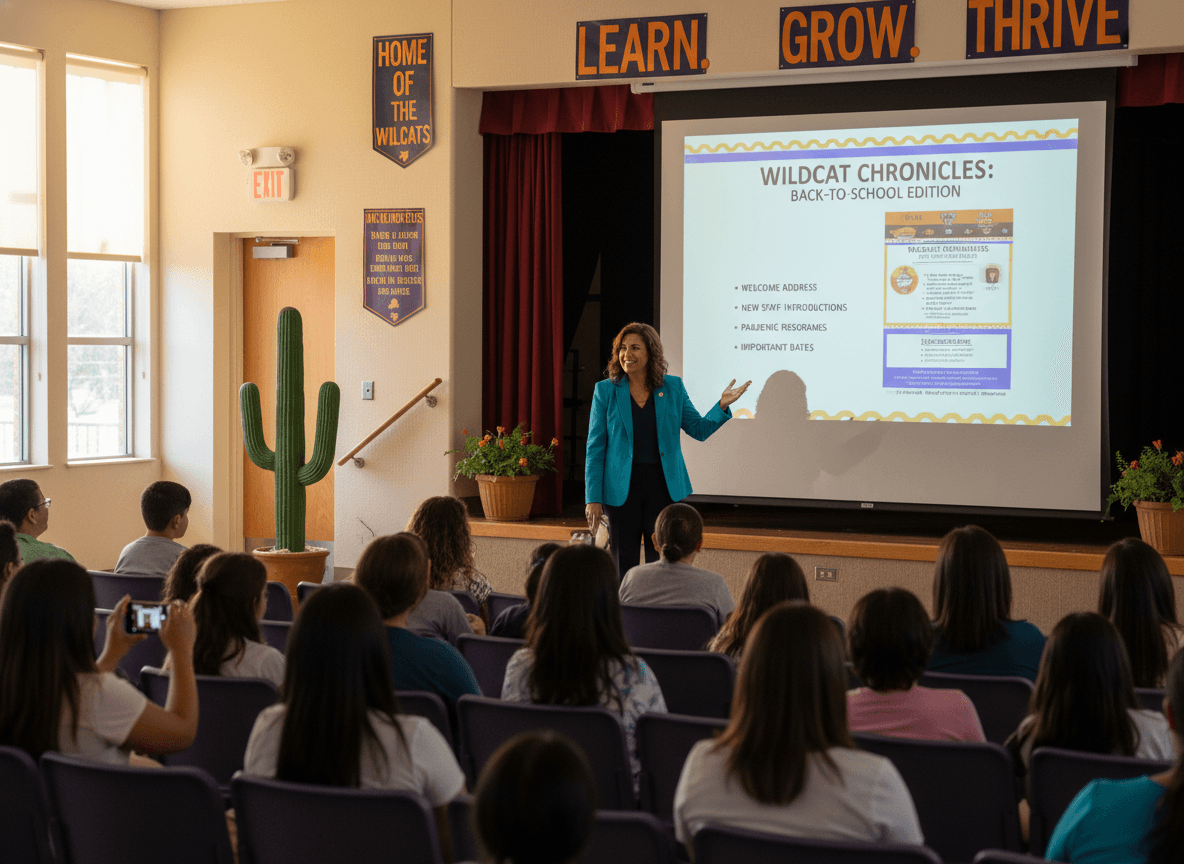
Arizona principals operate in one of the most competitive school choice environments in the US. With a large charter sector, expansive open enrollment policies, and an education savings account program, Arizona families have real alternatives to their assigned district school. The principal newsletter is not just a compliance exercise in Arizona. It is a retention and trust-building tool in a market where families can leave.
What the Arizona Department of Education expects from principal communication
The Arizona Department of Education (ADE) sets reporting and notification requirements that filter down to the school level. Arizona principals must communicate several items to families each year:
- Annual parent notification: Arizona Revised Statutes require schools to notify parents of student rights, the discipline process, and the school's policies at the start of each year.
- A-F letter grade transparency: When ADE releases school letter grades, principals should send a newsletter contextualizing what the grade reflects and what the school is doing in response. Saying nothing communicates nothing good.
- ELL identification and programs: Arizona has a specific structured English immersion (SEI) requirement under Proposition 203. Principals with ELL students must communicate program information and reclassification criteria to families.
- Title I schools: Parent engagement plans, Title I annual meeting notices, and school-parent compacts must be communicated to families of Title I schools.
AzMERIT and AASA: what to communicate and when
AzMERIT covers grades 3 through 8 in English language arts and math. The Arizona Algebra 1 Assessment (AASA) replaces AzMERIT for high school students taking Algebra 1. Both assessments feed directly into Arizona's A-F school accountability system.
Parents in Arizona are often more familiar with the A-F grade than with the underlying assessment data. Your newsletter job is to bridge that gap. Before the testing window, explain which grades test and what the testing schedule looks like. After results come out, explain the performance levels and what your school's data means for your specific student population. A school serving a high concentration of English learners has a different context than one serving a primarily English-proficient population. Own that context rather than letting the letter grade tell the whole story.
Arizona's charter school sector and what it means for district principal newsletters
Arizona has over 500 charter schools, the largest charter sector in the country as a percentage of total enrollment. In the Phoenix metro area, Maricopa County families often have 10 or more school options within a reasonable commute. This creates real competitive pressure for district school principals.
The families most likely to leave a district school for a charter school are often the ones receiving the least direct communication. Your newsletter does not need to be a sales pitch, but it does need to consistently demonstrate that your school is organized, transparent, and focused on student outcomes. Schools that communicate well retain families even when alternative options exist.
Open enrollment windows in Arizona typically run January through February for the following school year. A January newsletter that clearly communicates your school's programs, accomplishments, and plans for the coming year gives families a reason to stay or choose your school.
Phoenix metro vs. rural Arizona: how context changes communication
Principals in the Phoenix metro area, including Chandler, Gilbert, Scottsdale, and Mesa districts, are serving a digitally connected parent population. Email newsletters with mobile-optimized formatting work well. Open rates in these communities are typically strong.
Rural Arizona presents different challenges. Districts in Navajo County, Apache County, and rural Yavapai and Mohave counties serve communities with lower rates of internet access and higher proportions of families who are more reachable by phone or in person. In those contexts, the newsletter is one tool among several and may need to be supplemented with printed copies or voice messaging.
Tucson Unified, the second-largest district in Arizona, serves a highly diverse population including a significant Spanish-speaking community and families from the Tohono O'odham Nation. Bilingual newsletters are standard practice for most Tucson schools with significant Hispanic enrollment.
Arizona school calendar events to always cover in newsletters
- AzMERIT testing window (grades 3-8, English language arts and math)
- AASA testing dates for applicable high school grades
- Open enrollment window dates (typically January-February)
- Parent-teacher conference schedule
- Report card distribution dates
- Arizona public school holidays and early release days
- Title I annual parent meeting dates
- School Site Council or Governing Board meeting dates
- Kindergarten registration and class placement deadlines
Language access for Arizona principal newsletters
Arizona has a specific legal framework around English instruction under Proposition 203, but communication with non-English-speaking parents is a separate obligation. Arizona schools with significant Spanish-speaking parent populations need to send newsletters in Spanish. In the Phoenix metro area, this is a practical necessity for retaining families and maintaining engagement.
Schools near the Navajo Nation or Tohono O'odham Nation should consider whether any community liaisons or translators are available to help communicate key newsletter items to families who speak primarily Navajo or O'odham. The newsletter is still sent in English, but the communication strategy needs to account for who is in your community.
Building a newsletter system for Arizona's year-round and traditional calendars
Arizona has a higher proportion of year-round schools than most states, particularly in the Phoenix metro area where overcrowding historically drove the adoption of multi-track year-round schedules. If your school runs a modified calendar, your newsletter schedule, including vacation periods and testing windows, differs from traditional calendar schools. Make sure the calendar references in your newsletters always reflect your school's specific schedule.
Daystage principals in Arizona set up their school template once and build a 10-month or full year-round content calendar in the first week of school. The platform handles mobile formatting and delivers inline in email, which keeps the barrier to reading as low as possible for parents across Maricopa, Pima, Pinal, and the state's other counties.
Get one newsletter idea every week.
Free. For teachers. No spam.
Frequently asked questions
How often should an Arizona principal send a school newsletter?
Weekly is the standard for Arizona schools with active parent engagement. Arizona's school calendar has several high-communication periods: AzMERIT testing in spring, open enrollment windows in January and February, and school choice transition periods. Bi-weekly works as a starting point, but schools in competitive charter markets should send weekly to maintain visibility with families who have other school options.
What should an Arizona principal include in the back-to-school newsletter?
Cover school hours, bell schedule, dress code, staff introductions, how to contact teachers, and the AzMERIT or AASA testing schedule for spring. For schools in open enrollment areas, briefly remind families of the enrollment re-verification process and deadline. Title I schools should mention their parent engagement plan and upcoming Title I parent meeting dates.
How should an Arizona principal communicate AzMERIT and AASA results?
AzMERIT covers grades 3-8 in English language arts and math. The AASA (AzMERIT for high school) covers grades 9-12. Results come out in the fall and carry weight for Arizona's A-F school letter grade system. Send a dedicated newsletter when results arrive. Explain the performance levels, how your school's results compare to Arizona averages, and what specific programs or interventions are in place for students who scored below proficient.
How does Arizona's open enrollment law affect principal newsletters?
Arizona has one of the most expansive open enrollment and school choice frameworks in the country, including public school open enrollment, charter schools, and an education savings account program. Arizona principals need to communicate their school's value clearly throughout the year, not just during enrollment season. Families have real alternatives, and consistent, substantive newsletters help retain enrolled families and attract transfers.
What is the best newsletter tool for Arizona principals?
Daystage is used by principals across Arizona, from Phoenix metro schools in Maricopa County to Tucson Unified schools and rural districts across Yavapai and Coconino counties. It delivers newsletters inline in Gmail and Outlook, which means parents in a competitive school choice environment see your content immediately without extra steps. Arizona principals using Daystage typically build their school-year template in the first week of August and update it weekly through the year.

Adi Ackerman
Author
Adi Ackerman is a former classroom teacher and curriculum writer with 8 years in K-8 schools. She writes about school communication, parent engagement, and what actually works in real classrooms.
More for Principals
Ready to send your first newsletter?
3 newsletters free. No credit card. First one ready in under 5 minutes.
Get started free