
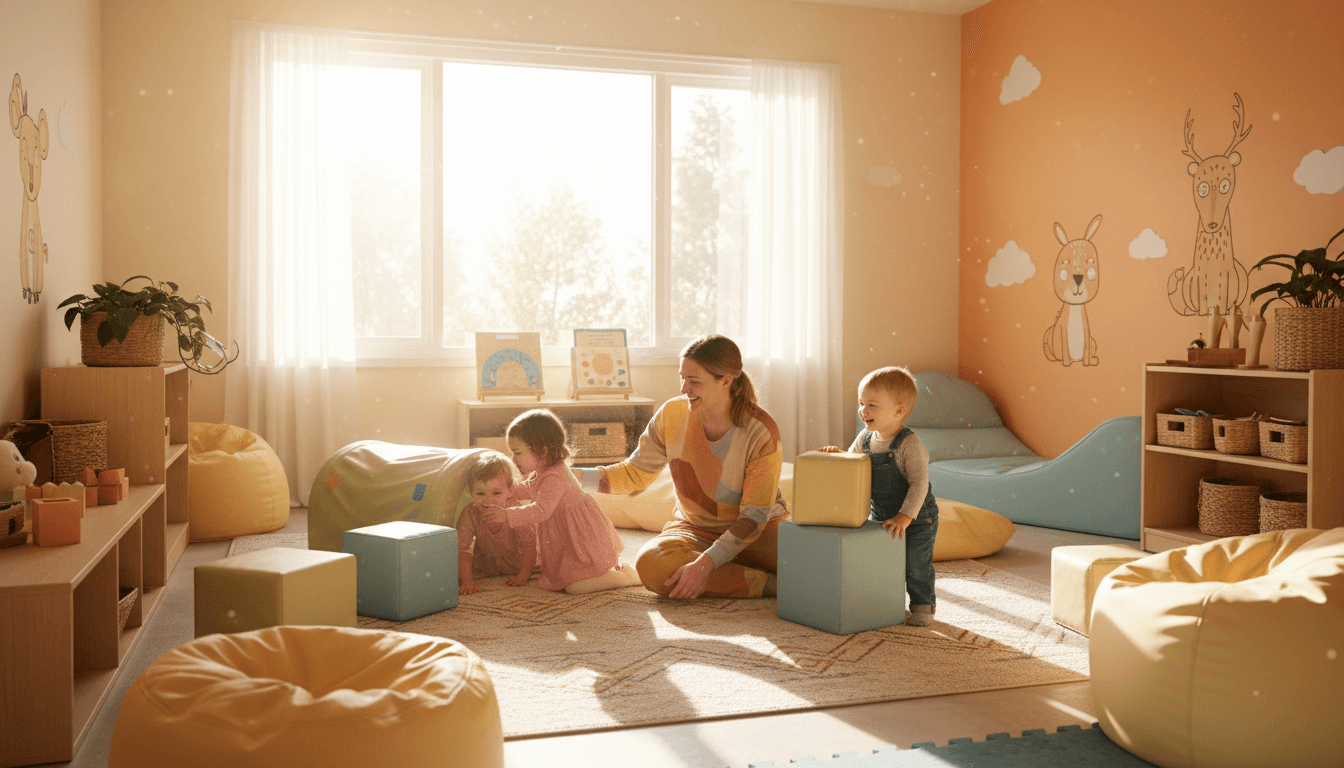
Toddler Room Newsletter Guide: What Daycare Teachers Should Share with Parents
Toddler room newsletters are not the same as preschool newsletters. The children are younger, the developmental stakes feel higher to parents, and the things worth communicating are more specific. A newsletter written for a four-year-old classroom transplanted into a toddler room will not work.
Toddler parents have a particular kind of anxiety. They cannot yet ask their child what happened today and get a real answer. They hand their one- or two-year-old to someone for eight hours and trust them completely, without any direct way to verify what that day looked like. The newsletter is one of the few tools that makes them feel included in a day they did not witness.
What Toddler Parents Need Most
Before deciding what to write, understand what toddler parents are actually asking when they read a newsletter. They are asking:
- Is my child happy when I am not there?
- Are they developing the way they should be?
- Does my child have friends, even at this age?
- What does a typical day actually look like in that room?
- Is the teacher paying attention to my child specifically, not just the group?
A newsletter that answers these questions, even briefly, earns more trust than any amount of administrative information. The goal is not to inform. It is to include.
Developmental Milestones: What to Share and How
Toddler parents are tracking development closely, often comparing their child to online charts or to their neighbor's child. A newsletter that addresses developmental milestones in a grounded, non-alarming way does real work.
Do not frame milestones as checklists. Instead, describe what you are noticing in the room: "Several children in our group are starting to show interest in playing next to each other rather than just alongside. This is called parallel play, and it is the first step toward real friendship at this age. We are seeing it at the sensory table and during block play." That is more useful than a bullet point that says "parallel play: 18 months."
Reserve individual developmental concerns for a direct conversation with parents. The newsletter is not the place to flag that a specific child is behind. It is the place to normalize the range of what typical development looks like at this age.
Sleep and Feeding Patterns: Mention Them Without Over-Reporting
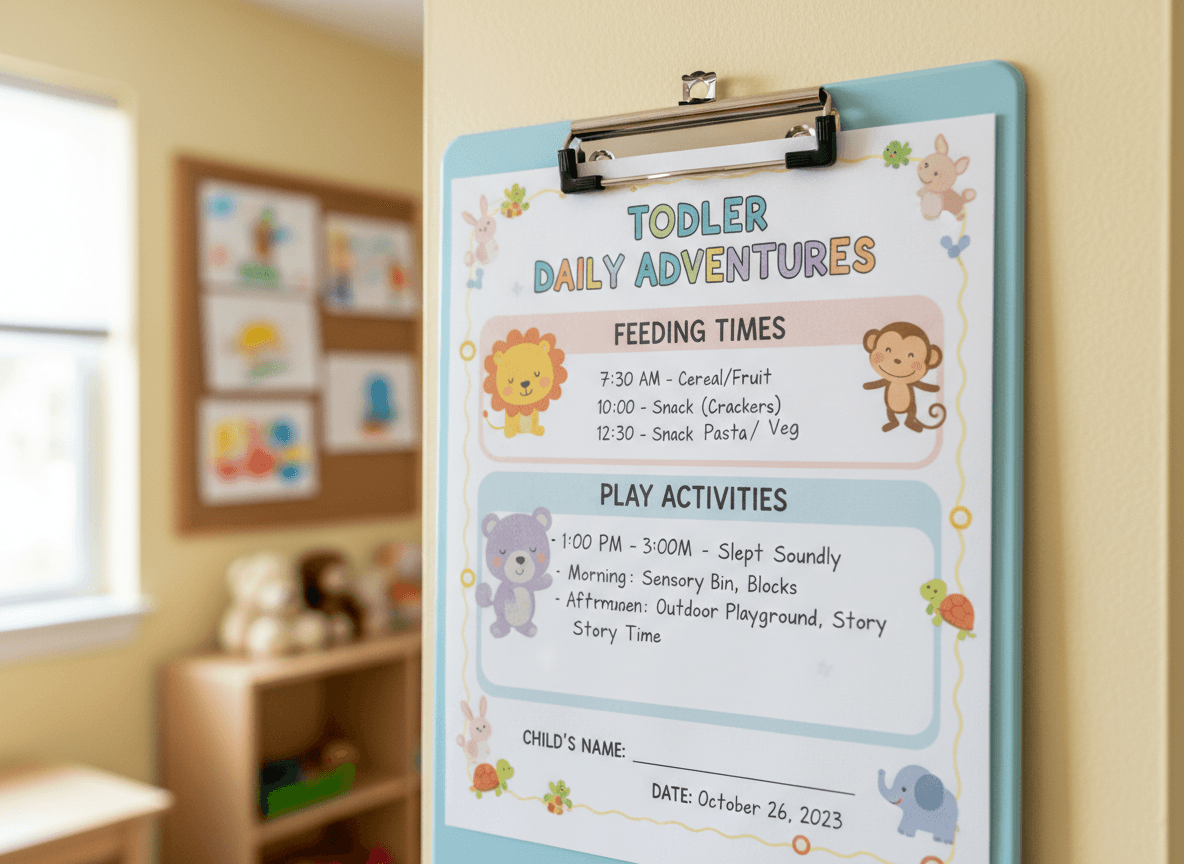
Most toddler programs handle sleep and feeding through daily sheets or apps. The newsletter does not need to duplicate this. But mentioning how the group is doing with nap transitions or a change in the room's snack setup helps parents understand why their child might be extra tired or extra hungry on certain days.
One sentence is enough: "We moved the afternoon nap back by 30 minutes this week to align with how the children have been naturally winding down. Most are settling faster now." That kind of observation tells parents that you are paying attention and adapting. It also explains something they might notice at home without knowing the reason.
Socialization: The Part Toddler Parents Wonder About Most
Parents of toddlers worry about socialization more than almost anything else. They know their child does not yet "play with" other children the way a five-year-old does, but they still want to know that their child is not isolated, ignored, or struggling.
Name specific social moments without naming specific children. "A group of four was very invested in filling and dumping cups at the water table this week. There was a lot of watching, imitating, and offering cups to each other." That image tells parents their child is in a socially alive room. It does not require disclosing which children were there.
What to Skip Entirely
Toddler room newsletters fail when they try to cover too much. Leave these out:
- Lengthy curriculum descriptions. Toddler learning is experiential and sensory. "We played with shaving cream" is more meaningful than "sensory exploration supports cognitive development and fine motor integration."
- Multiple photos with no captions. A photo without context is just a snapshot. One photo with a two-sentence caption beats four unlabeled images.
- Information that should go in a direct call. Behavior concerns, sleep regressions that seem unusual, health observations. These deserve a conversation, not a newsletter mention.
- Anything that takes longer than 90 seconds to read. Toddler parents are running on less sleep than anyone. Keep it short.
Frequency: How Often to Send
Weekly newsletters work well for toddler rooms because toddler development moves fast enough that there is always something new to report. If weekly feels unsustainable, biweekly is a reasonable fallback. Monthly is too infrequent for this age group. A lot changes in a month for a 20-month-old and parents feel the gap.
The key is picking a cadence and holding it. A newsletter that arrives every other Tuesday builds expectation. Parents start looking for it. That anticipation is itself a form of engagement.
The One-Photo Rule
For toddler room newsletters, one good photo with a clear caption does more than any other single element. Parents will forward it to grandparents. They will save it. They will mention it at pickup. No other section of the newsletter generates that response.
Take one or two photos during the week specifically for the newsletter. Do not rely on scrolling back through your camera roll. Intentional photos, taken with the caption already in mind, are always better than documentary shots.
Building the Newsletter Without Eating Up Planning Time
Toddler room teachers rarely have a dedicated planning period. Writing a newsletter during nap time, when the room needs to be sanitized and materials prepped, is a real constraint.
Daystage is designed for exactly this situation. A reusable template means the structure is always ready. You add the photo, fill in what the room was doing this week, update the dates section, and send. Most toddler room newsletters written in Daystage take under 15 minutes once the template is set. That is the version that actually gets sent every week.
Get one newsletter idea every week.
Free. For teachers. No spam.
Frequently asked questions
When should toddler room teachers send newsletters to parents?
Biweekly is the right starting cadence for most toddler rooms, with a shift to monthly if writing time is genuinely scarce. Toddler parents who are often in the middle of the most demanding year of parenting will read a short, warm update every two weeks reliably. Daily operational updates through an app handle the urgent communication, leaving the newsletter free to focus on connection.
What should a toddler room newsletter include?
Include what the class has been doing together this week or month, a brief developmental note explaining why a current activity matters for toddlers specifically, one photo if consent allows, any logistics or supply needs, and a closing sentence that gives parents a glimpse of the room's energy. Keep the total length short enough to read in ninety seconds.
How should toddler room teachers write in a way that resonates with parents of very young children?
Write with warmth about specific moments rather than program descriptions. 'This week the toddlers discovered that banging spoons on the sensory table makes a satisfying sound and they spent twenty minutes experimenting' tells a parent more than 'We explored musical concepts.' Toddler parents are hungry for a window into the hours they cannot see.
What are common mistakes in toddler room parent communication?
Using a preschool or elementary newsletter format in a toddler room is the most common structural mistake. Toddler parents need reassurance more than curriculum summaries, and the newsletter should reflect that. A second mistake is writing for the center's marketing goals rather than for the families reading it, which produces newsletters that sound polished but do not feel personal.
Is there a tool designed for toddler room newsletters?
Daystage is built for early childhood teachers, including toddler room educators, and helps you create short, warm newsletters that fit the communication needs of families with very young children.

Adi Ackerman
Author
Adi Ackerman is a former classroom teacher and curriculum writer with 8 years in K-8 schools. She writes about school communication, parent engagement, and what actually works in real classrooms.
More for Pre-K
Ready to send your first newsletter?
3 newsletters free. No credit card. First one ready in under 5 minutes.
Get started free