
How to Explain the Block Center to PreK Parents in Your Newsletter
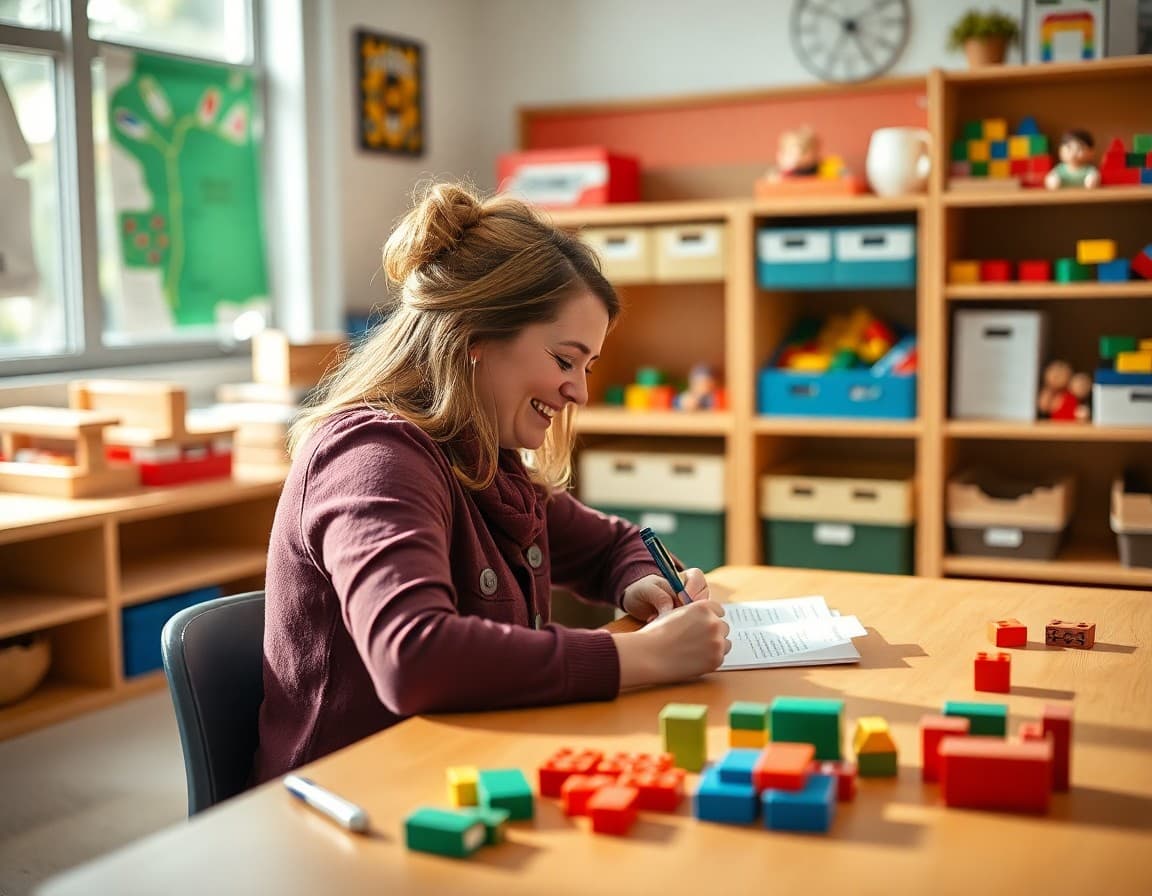
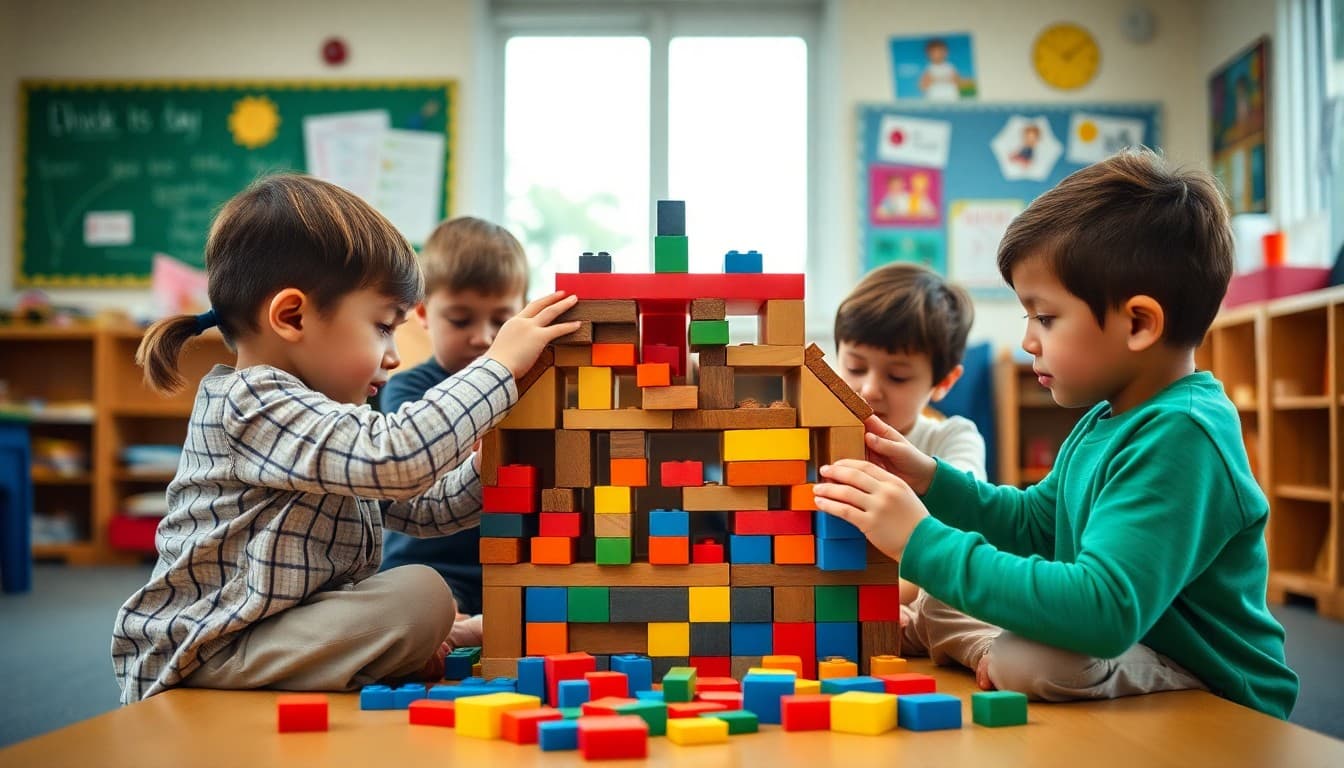
The block center looks like fun. It is also one of the most academically rich learning environments in your classroom. Families who understand what block play builds, specifically what math, spatial reasoning, science, and language it develops, become strong advocates for open-ended construction time rather than asking when the children will do something educational. Your block center newsletter is the tool that produces that understanding.
Mathematics Built Into Every Block Structure
Start your block center newsletter by explaining the mathematical architecture of unit blocks themselves. Standard wooden unit blocks have specific, proportional dimensions: the long block is exactly twice the length of the short block, four short blocks equal one long block, and two square blocks span exactly the same length as one long block. Children who play with these blocks over time discover these relationships through physical experience before they encounter them symbolically in math class. They are building an intuitive understanding of fractions (half, double, quarter), measurement, and proportional reasoning that no worksheet can replicate.
Spatial Reasoning in Every Structure
Every block structure requires spatial reasoning: the mental ability to visualize how shapes fit together in three dimensions, to imagine what a structure will look like from a different angle, and to predict whether a stack will balance or fall before testing it. Children who build with blocks regularly show stronger spatial reasoning scores, which research consistently identifies as one of the best predictors of overall mathematics achievement. Your newsletter can explain this connection explicitly so families see block play as math preparation rather than a break from learning.
Engineering Thinking: The Iteration Cycle
What happens when a block tower falls? A child with developing engineering thinking does not give up. They adjust their strategy, try a different approach, and test again. This iteration cycle, plan, build, test, adjust, rebuild, is the same cycle engineers and scientists use to solve real problems. Children who experience repeated failure and recovery in block play build resilience, hypothesis testing habits, and the understanding that first attempts are rarely the best attempts. Your newsletter can describe a specific moment from the block center this week where this iteration process happened and what it produced.
A Sample Newsletter Excerpt to Copy
“This week in the block center, four children spent 35 minutes building a bridge that would hold a small toy car. The first three attempts collapsed. Each time, the children analyzed what went wrong: the span was too wide, the base was not stable, one side was higher than the other. The fourth attempt worked. They tested it six times. That 35-minute project involved geometry, measurement, balance physics, collaborative planning, and more persistence than most adults have about most problems. Ask your child if they built anything in the block center this week. The answer will tell you something real.”
Language and Narrative in Block Play
Block play generates remarkable language. Children building together negotiate, describe, explain, and narrate constantly. They use spatial vocabulary (put the long one across here, the tall one goes in the back), math vocabulary (this side needs two more to be even), and descriptive vocabulary (ours is the biggest one, it is a castle with a tower). When the structure becomes a setting for dramatic play, the vocabulary expands further into story language and character dialogue. Your newsletter can highlight specific vocabulary that emerged from this week's block play to make the language development visible to families.
Stages of Block Play and What They Mean
Share the stages of block play development in your newsletter so families can observe where their child is. Very young children carry blocks and stack them two or three high. Older children create rows and towers. Then they begin bridging: placing a block across two vertical supports to span a gap. Then enclosures: surrounding a space to create an interior. Then structures with symmetry and decorative patterns. Finally, structures that represent real places: this is our school, that is the hospital. Each stage represents new spatial and mathematical understanding. Knowing the stages helps families appreciate what they are seeing at home and what their child is building toward.
Sending Your Block Center Newsletter With Daystage
Daystage makes it easy to send a block center newsletter with a photo of children fully absorbed in building, a brief explanation of the math, spatial reasoning, and science being developed, and one suggestion for construction play at home. When families see their child's elaborate block structure and read your explanation of the fractional relationships, engineering iteration, and spatial planning involved, they stop seeing block play as optional enrichment and start seeing it as one of the most important things their child does all day.
Get one newsletter idea every week.
Free. For teachers. No spam.
Frequently asked questions
What does block play actually build in Pre-K children?
Block play builds spatial reasoning (mentally rotating and fitting shapes), mathematical concepts (symmetry, fractions as halves and quarters, area, measurement), scientific thinking (balance, gravity, stability, engineering iteration), language (vocabulary for shapes, sizes, positions, and descriptions), social skills (collaborative building, negotiating plans and roles), and fine motor control. Research consistently identifies block play as one of the highest-value early childhood activities across multiple developmental domains.
Why do Pre-K programs emphasize block play over other construction activities?
Unit blocks, the traditional wooden blocks found in most Pre-K classrooms, are specifically designed to have mathematical relationships built into their dimensions. The long block is exactly twice the length of the short block. Two square blocks equal one long block. These proportional relationships, which children discover through play rather than instruction, build foundational fraction and measurement concepts. No other construction material builds mathematical relationships so directly through physical manipulation.
What block play skills do Pre-K children develop across the year?
Block play research identifies developmental stages: from carrying and stacking (ages 2-3), to creating rows and towers, to bridging (placing a block across two others to span a gap), to enclosures (surrounding a space with blocks), to elaborate structures with patterns and decorative elements, to structures that represent real places (we are building our school). Each stage builds new spatial and mathematical concepts. A teacher who knows these stages can describe where individual children are and what they are building toward.
How can families support block play at home without a full set of unit blocks?
Many household materials work as construction materials: cardboard boxes of different sizes, toilet paper and paper towel rolls, small plastic containers with lids, and wooden boards. The key property to look for is consistency: materials that have predictable dimensions allow children to discover proportional relationships. Lego and Duplo are excellent supplements to unit block play. Cardboard boxes are free and build on a larger scale than traditional blocks.
How does Daystage help teachers communicate block center learning to Pre-K families?
Daystage makes it easy to send a block center newsletter with a photo of children engaged in construction, a brief explanation of the spatial reasoning and math being built, and one suggestion for construction play at home. Families who see their child's elaborate block city and read your explanation of the geometry, measurement, and engineering thinking involved have a fundamentally different understanding of what was happening.

Adi Ackerman
Author
Adi Ackerman is a former classroom teacher and curriculum writer with 8 years in K-8 schools. She writes about school communication, parent engagement, and what actually works in real classrooms.
More for Pre-K
Ready to send your first newsletter?
3 newsletters free. No credit card. First one ready in under 5 minutes.
Get started free