

Preschool Monthly Newsletter Template: A Repeatable Structure That Saves You Time
Weekly newsletters sound appealing in September. By November, most preschool teachers have stopped sending them. The math does not work: a new newsletter every five days means roughly 36 newsletters per school year. That is 36 separate writing sessions on top of lesson planning, documentation, parent conferences, and everything else.
Monthly newsletters work for most preschool classrooms. One newsletter per month, sent the first Friday, covers the same ground with far less friction. Families get enough information to feel connected. You get a sustainable habit you can actually keep.
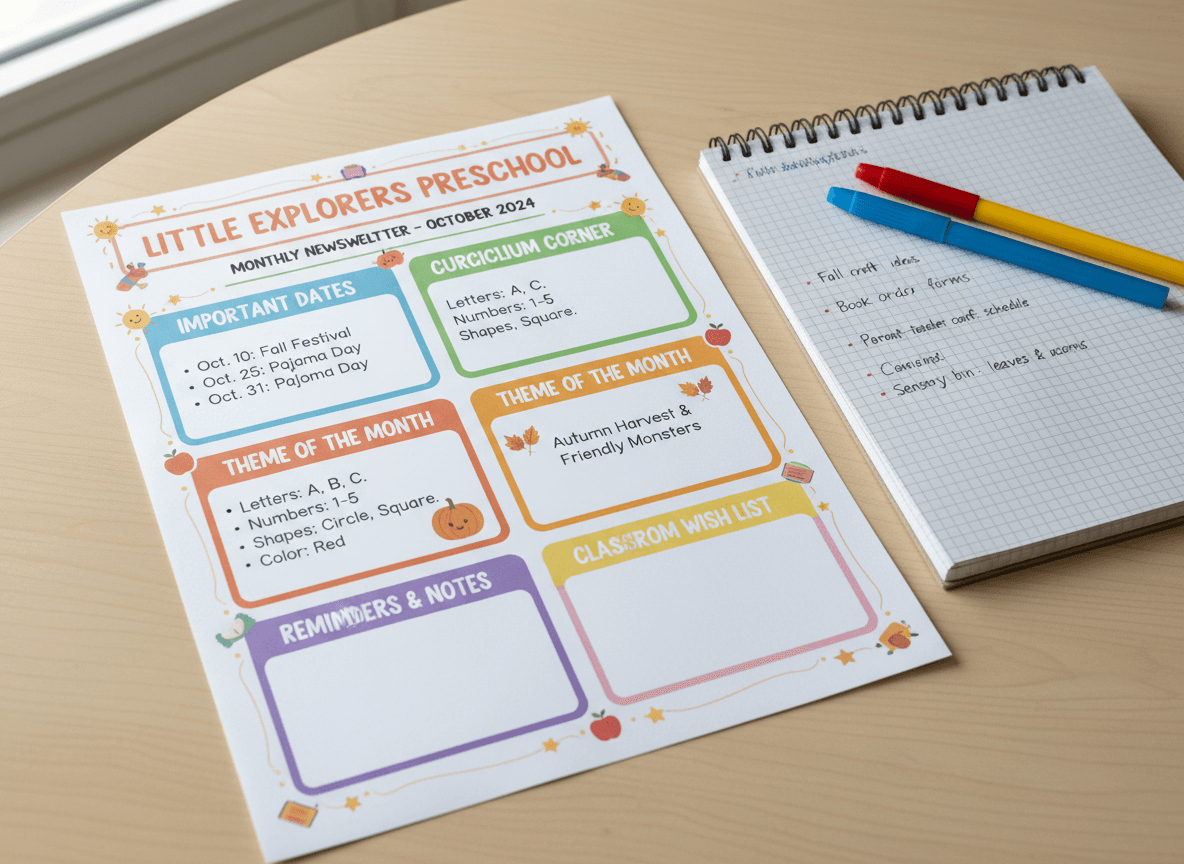
The key is a fixed structure. When you already know exactly what goes in each section, filling it in stops being a writing task and becomes a form-filling task. Here is the six-section structure that works.
Section 1: What We Are Learning This Month
Two to four sentences describing the main themes, books, or concepts you will cover in the coming month. Keep it concrete. "We are reading three books about animals that hibernate and building a classroom cave out of cardboard" gives parents something to talk about at home. "We are exploring the natural world" gives them nothing.
You do not need to list every learning objective. Parents of preschoolers want narrative, not curriculum documentation. Give them the story of the month.
Section 2: Skills We Are Practicing Together
One paragraph on a developmental skill the class is working on as a group. This could be turn-taking during circle time, using words to express frustration, cutting with scissors, or recognizing the first letter of their name. Frame it at the class level, not at the individual child level.
Include one thing families can do at home to reinforce it. Keep it simple: "At dinner, try asking your child to wait for everyone to be seated before eating. We are practicing the same thing at snack time." Simple asks get done. Elaborate homework does not.
Section 3: Classroom Highlights from Last Month
Three to five sentences describing something memorable that happened. A project that went well. A book the kids loved. A moment of spontaneous learning. This section is also where you batch your photos.
The most efficient approach: take photos throughout the month with the newsletter in mind. One folder on your phone labeled with the month. At the end of the month, pick two photos, write three sentences about what you see in them, and you have this section done. Do not wait until newsletter day to look for photos.
Section 4: Dates and Reminders
A short bulleted list. School photos, holiday closures, theme days, supply needs, permission slip deadlines. This is the section parents screenshot and share with co-parents and grandparents.
Keep reminders short and actionable. Instead of "Please remember that we are having a pajama day this month to celebrate finishing our unit on sleep and rest," write "Pajama Day: Friday, November 15. Kids can wear pajamas to school." Date first, instruction second, reason optional.
Section 5: How to Reach Us
Your preferred contact method, the hours you respond, and any logistics note for the month. This section seems unnecessary because families already know how to reach you. It is there because consistency builds trust, and because new families and substitute caregivers rely on it.
One sentence is enough: "The best way to reach me is email. I check messages between 3:30 and 4:30pm on school days and will reply within 24 hours."
Section 6: A Note from the Teacher
Two to three sentences in your own voice. Something you noticed this month, something you are grateful for, something you are looking forward to. This is the section that makes the newsletter feel human rather than institutional.
It does not need to be profound. "This month I have been watching how the kids are starting to use each other's names during play. Hearing them call out to a friend across the room never gets old. I am glad you are all here" is enough. Authenticity matters more than polish.
Making the Template Actually Repeatable
The goal is for filling in the template to take under 10 minutes on the first Friday of the month. That only happens if you are not starting from a blank page. Set up the template once with the six headings already in place. Each month, you replace the content and update the dates. The structure never changes.
Teachers who use Daystage for their preschool newsletters keep the same template active all year. The six sections stay in place. Each month they update the text in each block, swap the photos, and send. The formatting takes care of itself, and the newsletter goes out as a clean email that parents can read on their phones without pinching and zooming.
The first newsletter of the year takes 30 minutes to build. Every newsletter after that takes under 10. That is the whole point of a repeatable structure.
What to Leave Out
A common mistake in preschool newsletters is trying to say too much. Parents of young children are reading your newsletter on their phones at pickup or after the kids are in bed. Shorter newsletters get read. Longer newsletters get skimmed or skipped.
Leave out detailed curriculum theory, lengthy explanations of early childhood frameworks, and anything that reads like a parent education handout. If you want to share deeper information about your program's philosophy, link to it. Do not put it in the newsletter itself. The newsletter is a connection tool. Keep it connecting.
Get one newsletter idea every week.
Free. For teachers. No spam.
Frequently asked questions
When should preschool teachers send monthly newsletters to parents?
Send on the same date every month, ideally the first Monday or the last Friday of the month, so families develop the habit of expecting and opening it. Predictability matters more than the specific date. Teachers who send on a consistent schedule get higher open rates than those who send whenever the newsletter is ready.
What should a preschool monthly newsletter template include?
Six sections cover everything: a classroom highlight from the month, what the class explored in learning time, one upcoming date requiring action, a take-home activity tied to the current theme, a supply or reminder note, and a brief personal closing from the teacher. This structure keeps the newsletter focused and completable in under ten minutes once you have the template.
How should preschool teachers keep a monthly newsletter short enough to be read?
Set a hard limit of one page or one screen on a phone and write to that constraint. If a section needs to be longer, that content belongs in a separate one-time communication, not inside the monthly template. Parents who know the newsletter is always short will read it consistently. Parents who find it is sometimes long will start skipping it.
What are common mistakes when using a preschool monthly newsletter template?
Treating the template as optional and changing the format each month removes the efficiency benefit and confuses families who have learned where to look for information. A second mistake is filling in the template with curriculum language that parents cannot connect to what their child tells them at home, which makes the newsletter feel irrelevant even when it technically contains useful information.
Is there a tool that provides a ready-to-use preschool monthly newsletter template?
Daystage is built for early childhood teachers and includes a repeatable monthly template structure so you fill in content rather than rebuilding the format each time.

Adi Ackerman
Author
Adi Ackerman is a former classroom teacher and curriculum writer with 8 years in K-8 schools. She writes about school communication, parent engagement, and what actually works in real classrooms.
More for Pre-K
Ready to send your first newsletter?
3 newsletters free. No credit card. First one ready in under 5 minutes.
Get started free