
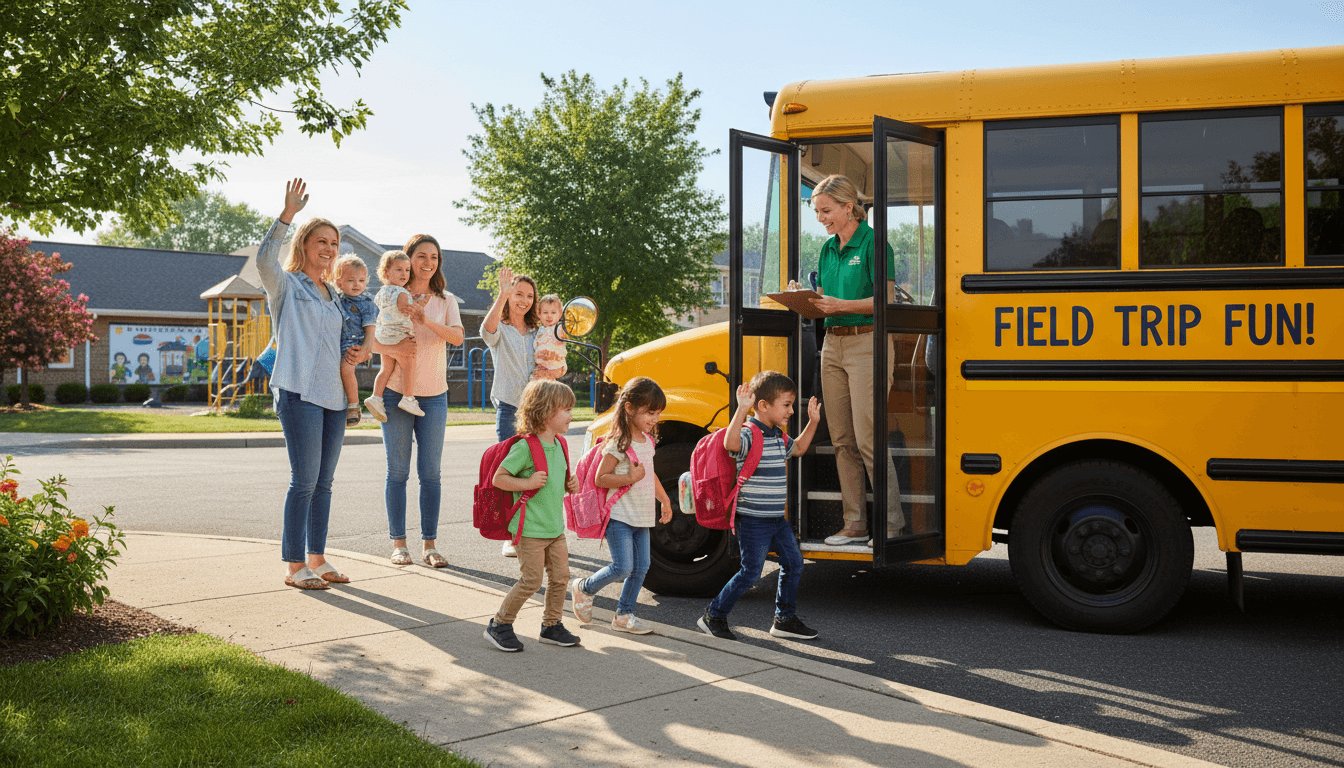
Preschool Field Trip Newsletter: How to Communicate Before, During, and After
A field trip for 3 and 4 year olds is genuinely exciting. It is also a reliable source of parent anxiety. The questions start the day the trip is announced and keep coming until the children are back in the building. Most of those questions have the same answer: you already sent this. The problem is usually not the information. It is where and when you sent it.
A structured field trip communication plan has three parts: a pre-trip newsletter that covers logistics and addresses what parents of toddlers actually worry about, an optional day-of update if your setup allows for it, and a post-trip newsletter that closes the learning loop. Here is how to handle each one.
What Parents of 3 and 4 Year Olds Actually Worry About
Parents of older children worry about logistics. Parents of preschoolers worry about their child specifically. Will someone know that my daughter panics in loud, crowded spaces? Will my son remember to tell someone he needs the bathroom? What if he cries when we leave and I am not there?
The pre-trip newsletter should answer the logistics and then go one level deeper. Name the adults who will be there. Mention the ratio. Tell parents how bathroom breaks will be handled. If children are grouped with a specific volunteer or adult, say so. This is the information that shifts a parent from anxious to reassured. A permission form that only covers the date, time, and cost misses the whole point.
The Pre-Trip Newsletter: What to Include
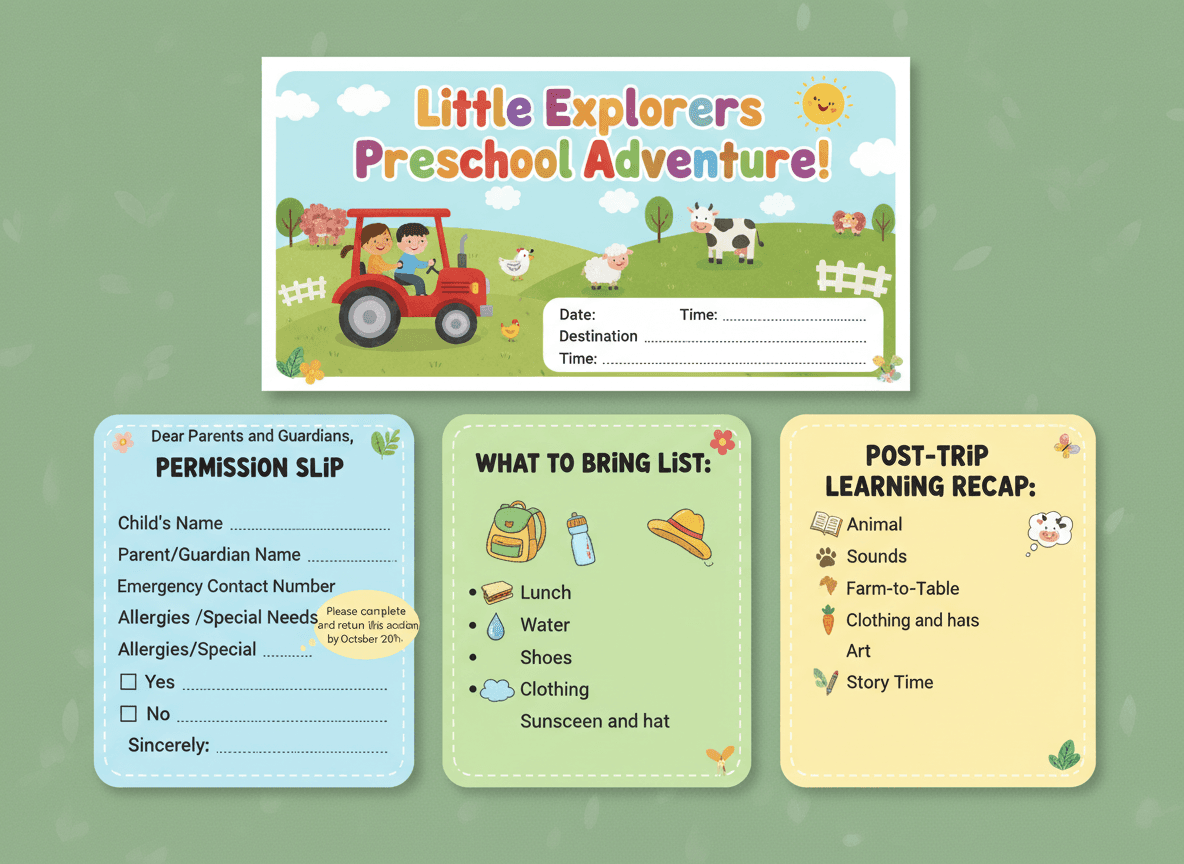
Send this newsletter 10 to 14 days before the trip so families have time to return forms and make arrangements. Structure it in this order:
- Where you are going and why. One sentence on the destination and one sentence connecting it to what children have been exploring in class.
- Date, departure time, and return time. Be specific. "We leave at 9:15 and return by 1:30" is more useful than "morning trip."
- Transportation details. School bus, walking, or parent drivers. If buses, note that car seats are not used on school buses and clarify your school's policy on this.
- What to send with the child. Packed lunch or not. Weather-appropriate clothing. Closed-toed shoes. Whether a backpack is needed.
- Adult supervision and ratio. How many adults. Whether parent volunteers are joining. This is the detail that matters most to parents of this age group.
- Bathroom and rest logistics. How breaks will work at the destination. This is a non-obvious concern to address proactively.
- Permission deadline and how to return the form. Make this the last item so it is easy to find and act on.
Language That Reassures Without Overpromising
Avoid language that sounds like a liability disclaimer. "All necessary precautions will be taken" does not tell parents anything. Instead, be specific: "Each child will be assigned to a small group of four with one adult. Children will wear name tags with the school phone number. We will do a headcount every 20 minutes."
Specific details work better than general reassurances. Parents can picture what you are describing. They cannot picture "all necessary precautions."
Day-Of Communication
Not every program can send updates while a trip is in progress, and you should not feel obligated to. But if you have a co-teacher or assistant who stays at the school, a short check-in message when you arrive at the destination costs almost nothing and does a lot for parent confidence. Even two lines: "We arrived at the nature center. Children are exploring the pond exhibit. Everyone is happy."
If this is not feasible, set the expectation in the pre-trip newsletter: "We will not be sending updates during the trip but will be back in touch as soon as we return." Unmet expectations cause more anxiety than no updates at all.
The Post-Trip Newsletter: Closing the Learning Loop
The post-trip newsletter is often skipped, which is a missed opportunity. This is where you connect what children experienced to what they will keep working on in the classroom. It is also where photos do the most work.
Send it within 48 hours while the experience is still fresh. Include two or three photos with captions that name the learning, not just the activity. "Gabi sorts pinecones by size at the nature table" tells parents more than "fun at the park."
Add one or two questions parents can ask their child to continue the conversation at home. Children at this age often cannot answer "what did you do today?" but they can answer "what was the loudest thing you heard?" or "what did the goat feel like?" Giving parents those specific prompts extends the learning and builds the parent-teacher relationship.
Photo Sharing and Permission on Field Trips
Photos taken off school grounds fall under the same permission rules as classroom photos, but the stakes are higher because location is more identifiable. Use your photo release forms to guide what you share publicly versus what you send only to your class list.
Tools like Daystage let you send photos directly to your enrolled family list without them landing on social media or in an unprotected group chat. For preschool field trips where parents are especially attentive to their child's face being shared, keeping distribution within the class roster matters.
Handling Absences and Late Permission Slips
Address both in the pre-trip newsletter rather than waiting for individual questions. A single line works: "If your child cannot join us, regular classroom activities will continue with our assistant teacher. Permission slips received after Friday cannot be accepted." Clear, no negotiation, no ambiguity.
Parents who know the policy in advance are far less likely to push back on the deadline. And you avoid spending the day before the trip chasing down forms.
Get one newsletter idea every week.
Free. For teachers. No spam.
Frequently asked questions
When should preschool teachers communicate about field trips in newsletters?
Send the initial field trip notice at least two weeks before the trip to give families time to return permission slips and arrange schedules. Follow up with a reminder three to four days before the trip with logistics details and what to pack. Send a brief recap in the next newsletter after the trip with a photo or two so families who did not attend as chaperones feel connected to the experience.
What should a preschool field trip newsletter include?
Include the destination and purpose of the trip, departure and return times, what children should wear or bring, the chaperone request if you need volunteers, the permission slip deadline, and your contact information for questions. Address safety directly by describing supervision ratios and the plan for keeping the group together, which is the question most preschool parents carry.
How should preschool teachers reduce the volume of field trip questions from parents?
Answer the questions parents always ask before they ask them. The most common questions are: who is watching my child, what happens if my child gets upset, what if it rains, and how do I find out how it went. A pre-trip letter that covers all four will cut your follow-up questions by half. A post-trip recap with photos cuts the remaining questions to near zero.
What are common mistakes in preschool field trip communication?
Sending the permission slip without enough context about the trip is the most common mistake. Parents who receive a slip without understanding the destination, purpose, or safety plan are slower to return it and more likely to call with questions. A second mistake is not sending a post-trip update, which leaves families who wanted to come but could not feeling entirely excluded from the experience.
Is there a tool that helps preschool teachers create field trip newsletters?
Daystage is built for early childhood teachers and supports the full communication arc of a field trip, from the initial notice through the post-trip recap.

Adi Ackerman
Author
Adi Ackerman is a former classroom teacher and curriculum writer with 8 years in K-8 schools. She writes about school communication, parent engagement, and what actually works in real classrooms.
More for Pre-K
Preschool Allergy and Food Policy Newsletter: Communicating Safety to Families
Pre-K · 5 min read
Preschool Fire Safety Newsletter: Teaching Young Children About Fire Safety at School and Home
Pre-K · 5 min read
Preschool Screen Time Policy Newsletter: Communicating Media Guidelines to Families
Pre-K · 5 min read
Ready to send your first newsletter?
3 newsletters free. No credit card. First one ready in under 5 minutes.
Get started free