
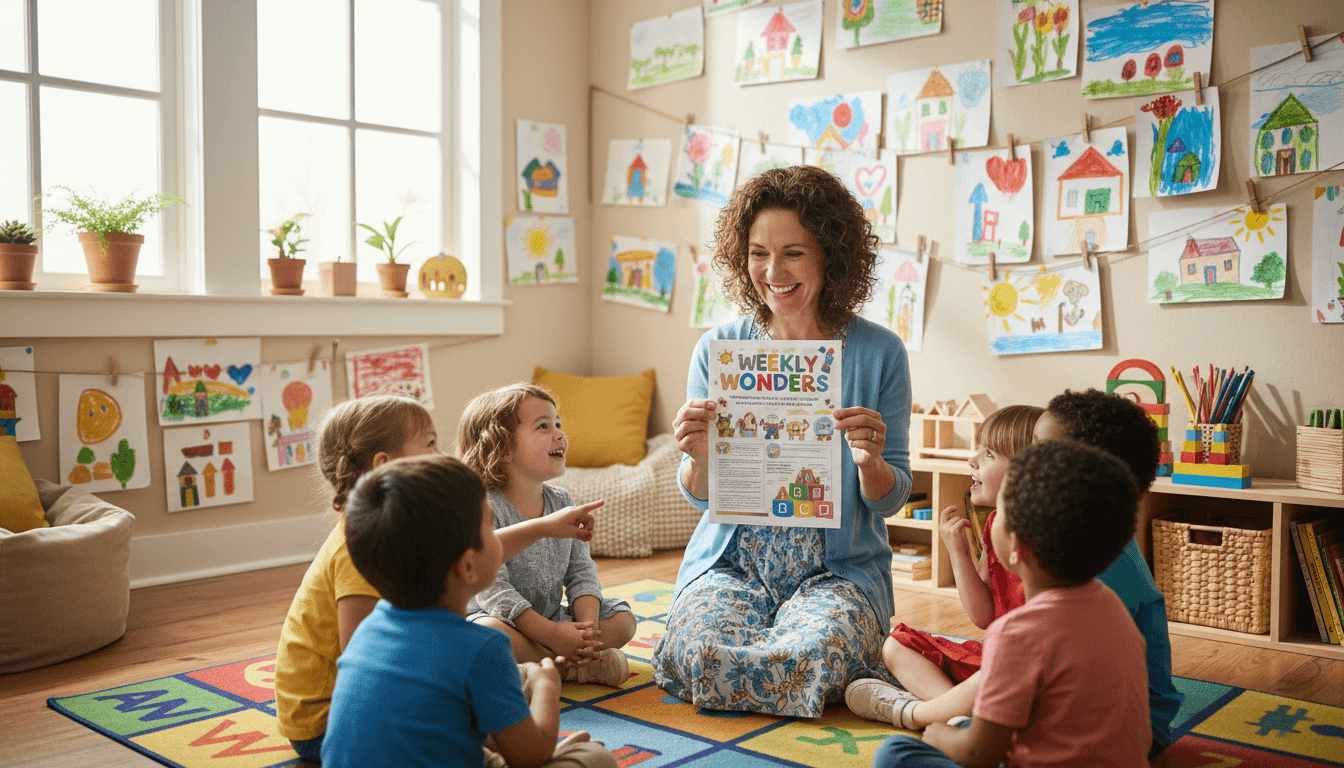
Preschool Classroom Newsletter Template: What to Include Every Month
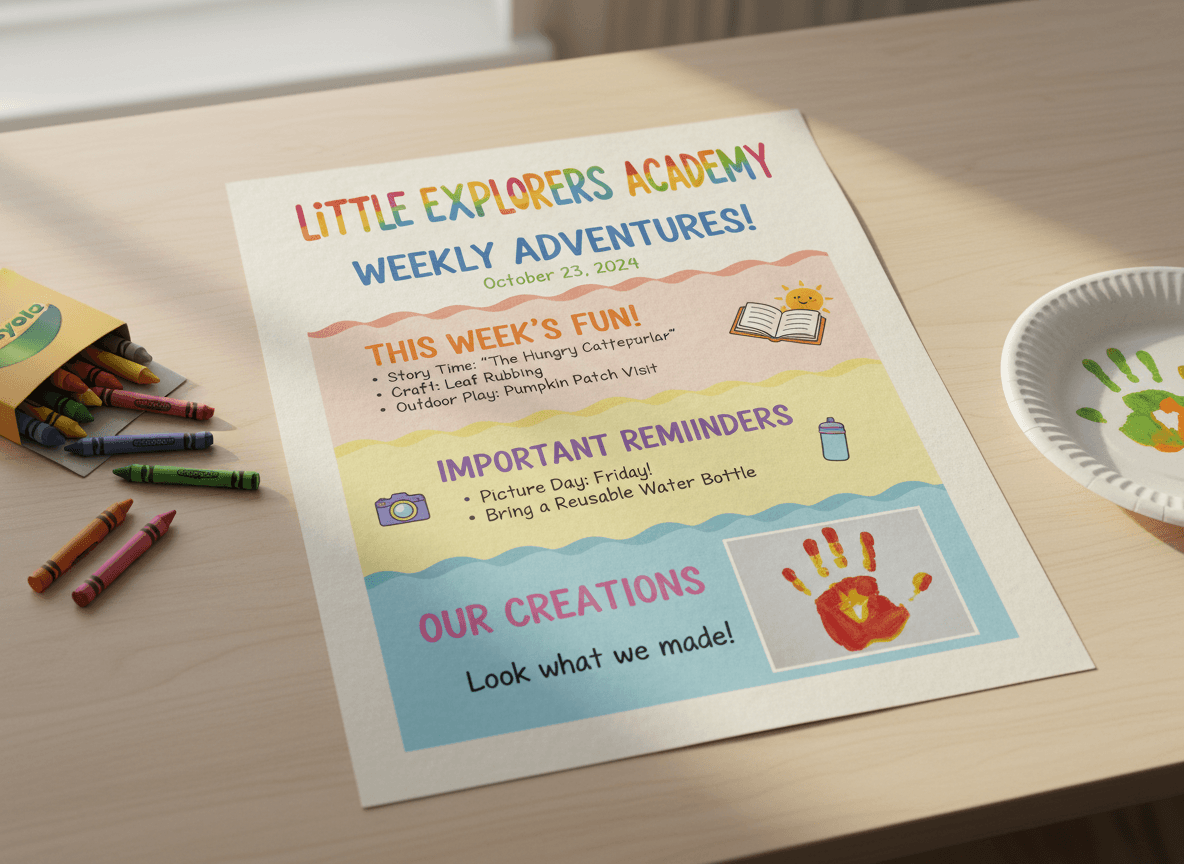
Most preschool newsletters get abandoned before the school year ends. The teacher starts with good intentions in September, sends a few, then stops when prep time runs short and nothing bad visibly happens. Parents rarely complain. They just quietly disconnect.
The newsletters that survive all year share one thing: a repeatable structure. When you know exactly what goes in each section, writing the newsletter takes 20 minutes instead of 90. Here is a template that works for both monthly and weekly schedules, with guidance on which one fits your classroom better.
Monthly vs. Weekly: Which Schedule Fits Preschool
Weekly newsletters make sense for upper elementary teachers whose curriculum changes fast and whose parents are tracking homework. Preschool is different. The pacing is slower, the themes stretch across multiple weeks, and parents are not tracking assignments. They are tracking whether their child seems happy and what they are learning through play.
A well-written monthly newsletter with photos and a theme preview gives preschool parents exactly what they need without requiring you to produce 36 newsletters in a school year. Most early childhood programs land on monthly as the right cadence. If your school or director expects weekly, the same template below still works. Just trim it down and focus on the first three sections.
Section 1: The Theme or Learning Focus
Start with what children are exploring this month. This is not a curriculum document. It is one short paragraph that gives parents a window into the classroom.
Name the theme, connect it to what children are doing concretely, and explain one reason it matters developmentally. Example: "This month we are exploring insects. Children are looking at worms and beetles with magnifying glasses, sorting plastic bugs by size and color, and building habitats out of clay and leaves. Sorting builds early math skills. Close observation builds the habit of patience and attention to detail."
Parents who understand the purpose behind play are more likely to extend learning at home. They ask different questions on the drive back. That connection matters.
Section 2: A Photo or Two with a Caption
Photos are the most-read part of any preschool newsletter. Parents scroll past words and stop at faces. One or two photos per newsletter, each with a caption explaining what is happening, does more for family engagement than three paragraphs of text.
Keep privacy in mind. Get photo permissions at enrollment and store the signed forms somewhere easy to reference. If some children do not have permission, photograph the activity rather than the children, or shoot from behind. A caption like "Building a cityscape during morning choice time" still communicates the learning even without faces.
Never share photos in a group text or an unprotected Facebook post. Send them in a newsletter tool that keeps delivery within the family list.
Section 3: Upcoming Dates and Reminders
This is the section parents actually use. Fieldwork permission deadlines, photo day, show and tell themes, school holidays, and clothing requests all belong here in a simple list. No sentences needed. Just dates and what parents need to do.
Put the closest date first. Parents read the first bullet and sometimes stop there. If the field trip permission slip is due Friday, that bullet leads.
Section 4: A Note from the Teacher
This is optional but powerful when used well. A two or three sentence personal note from the teacher that is not logistical, just observational, changes the tone of the whole newsletter. Something like: "This class has been genuinely curious about where worms go at night. We have had four serious debates about it this month. I love teaching this age."
This section is where parents remember that a real person is with their child every day. It builds trust faster than any formal communication could.
Section 5: How to Help at Home
One concrete suggestion for extending the month's theme at home. Not homework. A conversation prompt or a simple activity. "Ask your child to find three things in your house that are smaller than their thumb. See what they come up with." Parents appreciate having a specific thing to try rather than a vague invitation to "talk about learning."
Sending the Newsletter Consistently
The template only works if you actually send it. The barrier for most teachers is time and formatting. Building a newsletter in a Word document and then copy-pasting it into an email platform every month adds friction until the whole system collapses.
Tools like Daystage are built specifically for educators who want to send clean, professional newsletters without managing an email marketing platform. You write the content, add photos, and send directly to your family list. The formatting stays consistent without any extra work. For preschool teachers managing a full classroom alone, removing that friction is what actually keeps the newsletter alive all year.
What to Leave Out
Longer is not better. Preschool parents are reading newsletters during the 90 seconds while dinner boils or during morning pickup. Anything over 400 words risks not getting read at all.
Skip: general parenting advice, links to outside articles, lengthy descriptions of child development theory, and anything that would be better communicated in a face-to-face conversation. Save the hard topics, a child's behavior, a social situation, a concern about development, for a direct call or a conference. The newsletter is not the place.
Get one newsletter idea every week.
Free. For teachers. No spam.
Frequently asked questions
When should preschool teachers send newsletters to parents?
Monthly newsletters are the most sustainable frequency for preschool teachers and the cadence that consistently gets read by families. A monthly newsletter also gives you enough classroom material to write something genuinely worth reading, whereas weekly newsletters often run out of content by November and become filler.
What should a preschool classroom newsletter template include?
A solid six-section template covers: a classroom headline from this month, what the class explored in learning time, an upcoming date requiring action, a take-home activity, a supply or reminder item, and a closing personal note from the teacher. That structure is repeatable, takes under ten minutes to fill in once you have it set up, and covers everything families actually need.
How should preschool teachers format a newsletter so busy parents actually read it?
Use headers to break the newsletter into scannable sections so parents can find what they need in ten seconds. Keep total length to one screen on a phone. Include at least one photo if consent allows. A newsletter that looks approachable gets opened; one that looks like a wall of text gets saved for later and never read.
What are common mistakes in preschool classroom newsletters?
Starting strong in September and abandoning the newsletter by November is the pattern that harms trust the most, because families notice the silence even when they do not say anything. A second common problem is using a different format every month, which means parents never know where to find what they need and have to read the whole thing just to find the pickup time.
Is there a tool that provides a reusable preschool newsletter template?
Daystage is built for early childhood teachers and includes a repeatable newsletter structure so you are filling in content rather than building a new format from scratch every month.

Adi Ackerman
Author
Adi Ackerman is a former classroom teacher and curriculum writer with 8 years in K-8 schools. She writes about school communication, parent engagement, and what actually works in real classrooms.
More for Pre-K
Preschool Substitute Teacher Newsletter: Preparing Families When the Regular Teacher Is Out
Pre-K · 5 min read
How to Explain Play-Based Learning to Parents in Your Preschool Newsletter
Pre-K · 7 min read
Preschool Block Play Newsletter: The Math and Science Happening in the Block Area
Pre-K · 5 min read
Ready to send your first newsletter?
3 newsletters free. No credit card. First one ready in under 5 minutes.
Get started free