

PreK Teacher Newsletter Examples That Delight Families
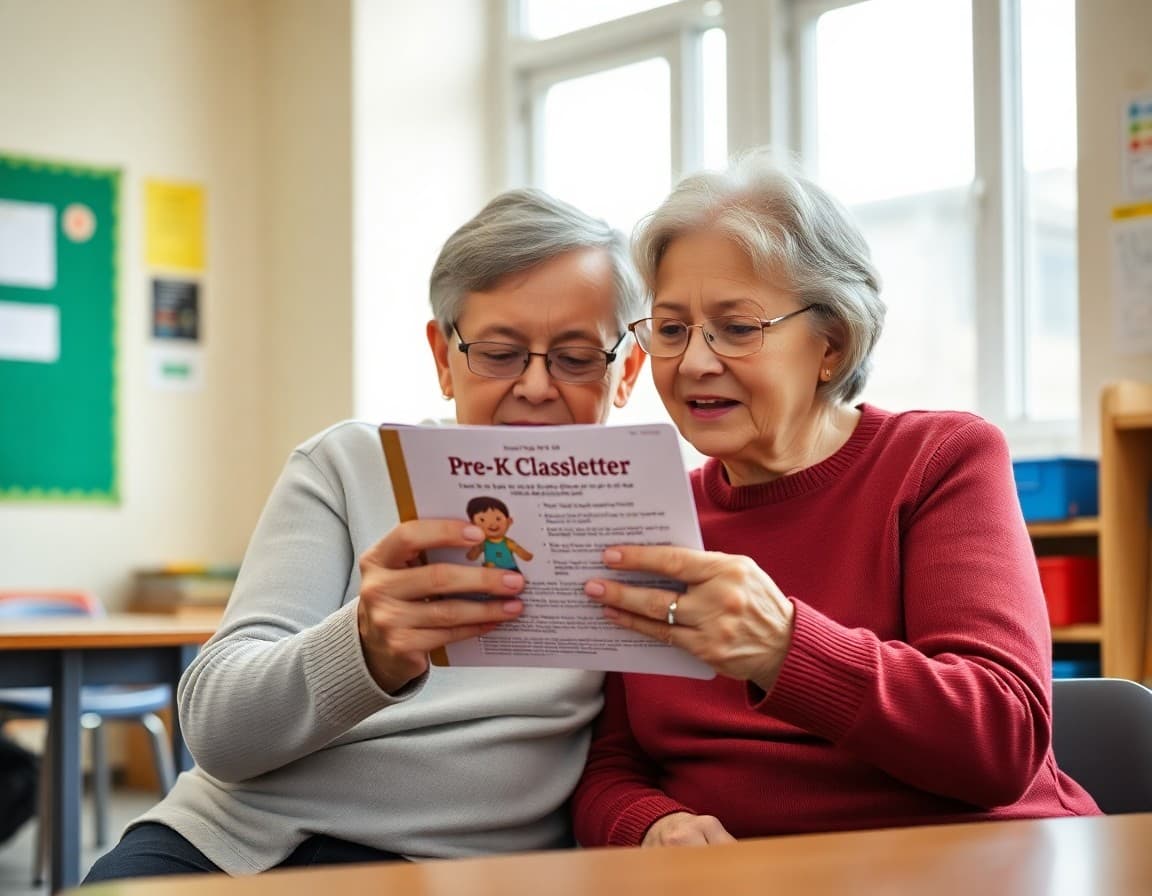
The best way to learn how to write an effective Pre-K newsletter is to read what effective ones actually look like. Here are seven real-world newsletter examples covering the most common scenarios Pre-K teachers face, each adapted for use in your own classroom.
Example 1: The Weekly Learning Update
“Week of October 14th: This week we discovered that worms come to the surface when it rains. After Monday's rain, we went outside and counted 11 worms on the path. This led to a big conversation about what worms eat, where they live, and why they matter to the soil. Ask your child to explain the worm's job in the garden. You'll get a surprisingly detailed answer. At home this week: find something living outside together and ask ‘what job does this creature have?’”
This example is specific, mentions a number, gives a conversation starter, and ends with an activity. It takes 90 seconds to read.
Example 2: The Welcome Letter
“Dear Families: I am so happy to be your child's Pre-K teacher this year. My name is Ms. Adi and I have been teaching 4-year-olds for eight years. This year we will explore science, build with blocks, paint and create, read hundreds of books, and grow as a community. Our day runs from 8 AM to 3 PM and includes a morning snack, lunch, and rest time. I will send a weekly newsletter every Friday with what we learned and one thing you can try at home. My best way to reach me is by responding to this newsletter. I look forward to a great year together.”
Example 3: The Holiday Preparation Newsletter
“As winter break approaches, you may notice some extra energy and emotion in your child. That's normal. The combination of excitement and routine disruption can be hard for Pre-K-age children to regulate. A few things that help: keep bedtimes as consistent as possible, give your child one low-key morning per week during the break with no plans, and read together every day. Even 10 minutes of shared book time anchors the holiday chaos. We return January 8th. See you then.”
Example 4: The Challenging Behavior Context Newsletter
“You may have heard the phrase 'my friends aren't being nice' at pickup this week. This is a normal 4-year-old experience! We are in a phase where children are learning to negotiate who plays what role in pretend play, and it is hard. Our classroom has been practicing a script: 'I want to play. Can I be the [character]?' and 'Let's take turns.' If your child comes home upset about a social situation, the most helpful response is: 'That sounds hard. What did you try?' rather than solving it for them.”
Example 5: The Unit Launch Newsletter
“Next week we begin our community helpers unit! We will explore what doctors, firefighters, mail carriers, and farmers do. If someone in your family has a job you think the class would love to hear about, let me know. A 10-minute virtual visit or a short video is wonderful. This unit runs for three weeks and ends with our classroom career fair where each child presents their favorite job. Ask your child this week: what do you want to be when you grow up? Their answer might surprise you.”
Example 6: The Developmental Milestone Spotlight
“Four-year-olds are in a huge language window right now. The average 4-year-old knows about 4,000 to 6,000 words, and the gap between children with rich conversation at home and children without it grows wider every month. One easy thing that makes a big difference: narrate your day out loud with your child nearby. 'I'm making a list because I need to remember what to buy.' 'I'm turning left here because this is the faster way.' Children absorb vocabulary from hearing adults talk about their thinking.”
Example 7: The End-of-Year Reflection
“What a year this has been. At the start of September, most of our class had never been in a school setting before. Now they write their names, read their friends' names, count past 20, tell stories with beginnings, middles, and ends, and solve social problems without adult help most of the time. Those are not small things. That is a year of real growth. Thank you for trusting us with your children. We are so proud of every single one of them.”
Building Your Newsletter Library With Daystage
Daystage makes it easy to build newsletters like these in minutes rather than hours. You can save a template with your standard structure, swap out the content each week, add a photo, and send. Families receive it directly on their phones, and you can see who has opened it. Over the course of a school year, the newsletters you send through Daystage become a record of your class's learning story, one that families will return to long after the year ends.
Get one newsletter idea every week.
Free. For teachers. No spam.
Frequently asked questions
What does a good PreK newsletter actually look like?
A good Pre-K newsletter has a warm, specific opener that references something the children actually did this week, a brief explanation of why that activity mattered developmentally, a concrete take-home activity, and one or two upcoming dates. It runs about 200 to 350 words, has a photo, and is formatted for easy reading on a mobile phone. The test is: does a tired parent reading this at 9 PM feel more connected to their child's school day than they did before opening it?
Can you give an example of a strong Pre-K newsletter opening?
Yes: 'This week the class discovered that not everything that looks light IS light. We tested objects with a balance scale and found some surprising results. Ask your child what surprised them most.' This opening is specific, uses a concrete classroom example, and immediately gives parents a conversation starter. Compare it to: 'This week we worked on science skills.' Both describe the same activity. One creates engagement; the other does not.
What makes a Pre-K take-home activity suggestion effective?
Three things: it uses materials the family already has, it takes ten minutes or less, and it connects to something specific from the classroom that week. 'Try measuring five things in your house using your hand as the measuring unit' works. 'Continue to reinforce measurement concepts at home' does not. The more concrete and immediately actionable the suggestion, the more likely a family will actually try it.
How should a PreK welcome newsletter read differently from a regular weekly update?
A welcome newsletter answers the questions families have at the start of the year: who are you, what does your day look like, what should families know to prepare their child, and how will you communicate throughout the year. It can be slightly longer than a regular weekly update, but should still be warm and personal rather than listing policies. End with something that invites families in rather than concluding with rules.
What platform makes it easy to create Pre-K newsletters like these examples?
Daystage is built for exactly this kind of newsletter. Teachers can build a polished, photo-rich newsletter using the examples described here in about ten minutes. The platform handles formatting, delivery to family phones, and engagement tracking automatically. Teachers who switch to Daystage find that the quality of their newsletters improves while the time spent producing them drops significantly.

Adi Ackerman
Author
Adi Ackerman is a former classroom teacher and curriculum writer with 8 years in K-8 schools. She writes about school communication, parent engagement, and what actually works in real classrooms.
More for Pre-K
Ready to send your first newsletter?
3 newsletters free. No credit card. First one ready in under 5 minutes.
Get started free