

Pre-K Parent Engagement: How Newsletters Drive Classroom Involvement
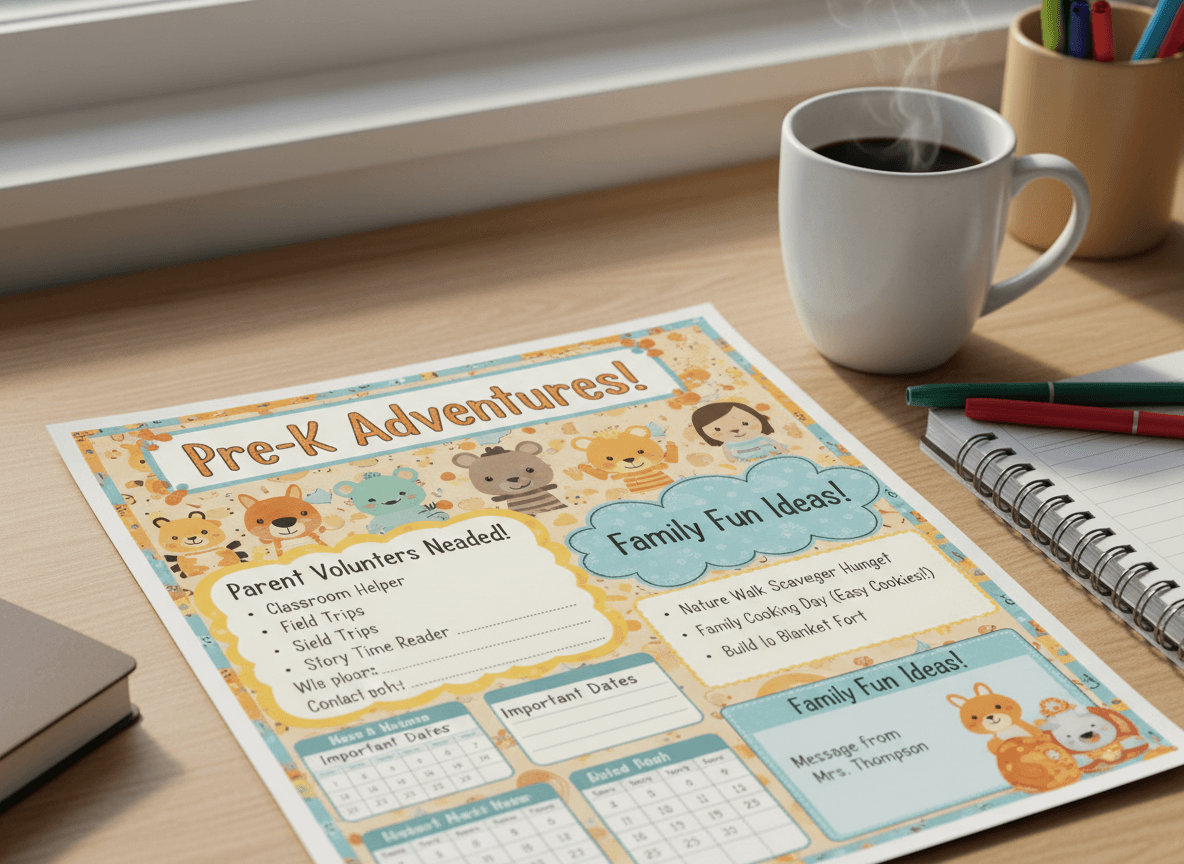
The research on early childhood parent involvement is consistent: when families are engaged in their child's early education, children do better across almost every measure that matters. Language development, social skills, school readiness, and long-term academic outcomes all improve when parents are genuinely connected to what is happening in the classroom.
The newsletter is one of the most practical tools for building that connection. But it needs to be used with clear-eyed expectations. A newsletter does not create engagement on its own. It creates the conditions for engagement. The distinction matters because it shapes how you write it.
What Newsletters Can Actually Do
A newsletter can inform. It can invite. It can reduce the friction that keeps willing parents from participating. It can build the sense of shared purpose between families and teachers that makes a classroom feel like a community rather than a service.
What it cannot do: it cannot reach families who are not reading it, it cannot replace direct outreach for disengaged families, and it cannot substitute for the in-person interactions that build real trust. Knowing what the newsletter cannot do keeps you from overloading it with work it was never designed to handle.
The Families Who Are Already With You
In most preschool classrooms, a subset of families is highly engaged from the first week: they read everything you send, they volunteer when asked, they follow up on reminders. Your newsletter primarily serves this group, and that is worth valuing. These families are your ambassadors. When they talk to other parents at pickup, they carry information from your newsletter into conversations you are not part of.
Write the newsletter in a way that gives engaged families something worth sharing. A specific anecdote, a photo that captures something real, a piece of information that is useful to know. When the newsletter has genuine value, engaged families pass it along.
Volunteer Opportunities That Actually Get Filled
Volunteer requests in newsletters fail for one consistent reason: they are too vague. "We would love parent volunteers this month" produces nothing. A specific ask with a specific date, time, duration, and task produces results.
"We need two parents to help with our garden planting activity on Thursday, May 9th from 9:00 to 10:30am. No experience needed. We will have gloves and tools. Reply to this email if you can come." That version gives a parent enough information to check their calendar, decide, and respond in under 60 seconds. Make every volunteer ask that specific.
Limit yourself to one volunteer ask per newsletter. Multiple requests compete with each other and produce lower response rates than a single clear ask.
Homework for Families, Not for Kids
Pre-k children do not have homework. But families can have intentional at-home practices that extend the learning happening in your classroom, and framing these clearly in your newsletter is one of the highest-leverage uses of the space.
The key is keeping the ask small and specific. "This week we started reading books about family traditions. Ask your child to tell you about one tradition we talked about today at school" takes two minutes and creates a genuine connection between home and classroom. "Explore books together about your family's cultural heritage" is too vague to produce action.
One at-home suggestion per newsletter, placed near the end, framed as optional but worth trying. That is the right dose.
Building Community Across Families
One of the underused functions of preschool newsletters is building horizontal community: helping families feel connected to each other, not just to the teacher. At the pre-k level, family community matters because parents coordinate pickups, plan playdates, and support each other through the early years of school.
Small gestures in the newsletter create that community. Celebrating a child's birthday (with family permission). Mentioning a class event that families attended together. Noting when a family brought in something from home that sparked a class conversation. These moments signal to every family that this is a real community, not just an institution.
Daystage makes this easier by letting preschool teachers include photos directly in their newsletters without the compression and formatting problems that come with email attachments. A photo of the class at last week's garden planting, sent to all families with a caption that names the activity, does more for classroom community than three paragraphs of text.
The Families Who Are Harder to Reach
Not every family reads the newsletter. Language barriers, work schedules, digital access, and general overwhelm all reduce readership among the families who might benefit most from staying connected. The newsletter alone will not reach them.
What you can do: make the newsletter as accessible as possible (short, visual, easy to read on a phone), consider a printed copy for families who prefer it, and use the newsletter as the source material for verbal summaries at pickup. "I sent a newsletter this week about what we are doing with letters and sounds. Did you see it? Let me give you the short version" is a conversation opener that works even when the newsletter did not get read.
Measuring Engagement the Right Way
Open rates are not the right measure of a newsletter's success in a preschool context. Volunteer sign-ups, parent questions that reference newsletter content, at-home activities that children mention in class, and the overall tone of your family relationships are better signals.
If families are coming to pickup conversations with questions about the curriculum, your newsletter is working. If you are getting volunteer sign-ups when you make specific asks, it is working. If parents seem to feel like they know what their child's days look like, the newsletter is doing its job. Numbers matter less than whether the classroom community feels connected.
Get one newsletter idea every week.
Free. For teachers. No spam.
Frequently asked questions
When should preschool teachers send newsletters to drive parent engagement?
Newsletters that include a clear call to action, a volunteer opportunity, an event to RSVP for, or a learning activity to try at home, get better engagement when sent early in the week rather than on Fridays. Mid-September through October is the highest-leverage window for building parent involvement habits that carry through the year.
What should a pre-k parent engagement newsletter include?
Include one specific invitation per newsletter, whether that is a classroom volunteer slot, a take-home activity with instructions, or an upcoming event with an easy RSVP process. Families who feel specifically invited are more likely to participate than families who receive general statements about the importance of involvement.
How should preschool teachers use newsletters to build classroom community?
Share small, specific details about group dynamics, a kindness one child showed another, a problem the class solved together, a moment of shared laughter. These details do not require identifying individual children by name and give families a sense that their child is part of something real and cared for, not just attending an institution.
What are common mistakes in preschool parent engagement communication?
Generic engagement language, phrases like 'we value parent involvement' or 'families are welcome anytime' does not actually bring families in. Specific invitations with clear logistics do. A second mistake is sending engagement opportunities only in the newsletter rather than also mentioning them at pickup or drop-off, where the human connection makes the ask land differently.
Is there a tool that helps preschool teachers build parent engagement through newsletters?
Daystage is built for early childhood teachers and makes it easy to include engagement prompts, home activities, and classroom updates in a newsletter format families actually open.

Adi Ackerman
Author
Adi Ackerman is a former classroom teacher and curriculum writer with 8 years in K-8 schools. She writes about school communication, parent engagement, and what actually works in real classrooms.
More for Pre-K
Ready to send your first newsletter?
3 newsletters free. No credit card. First one ready in under 5 minutes.
Get started free