
Pre-K Newsletter Ideas for Parents: 30 Topics That Actually Get Read
The reason most pre-k newsletters go unread is not that parents are disengaged. It is that the newsletters read like administrative memos. Dates, reminders, curriculum language copied from a scope and sequence document. Parents skim it for anything that requires action, find one date, and close the email.
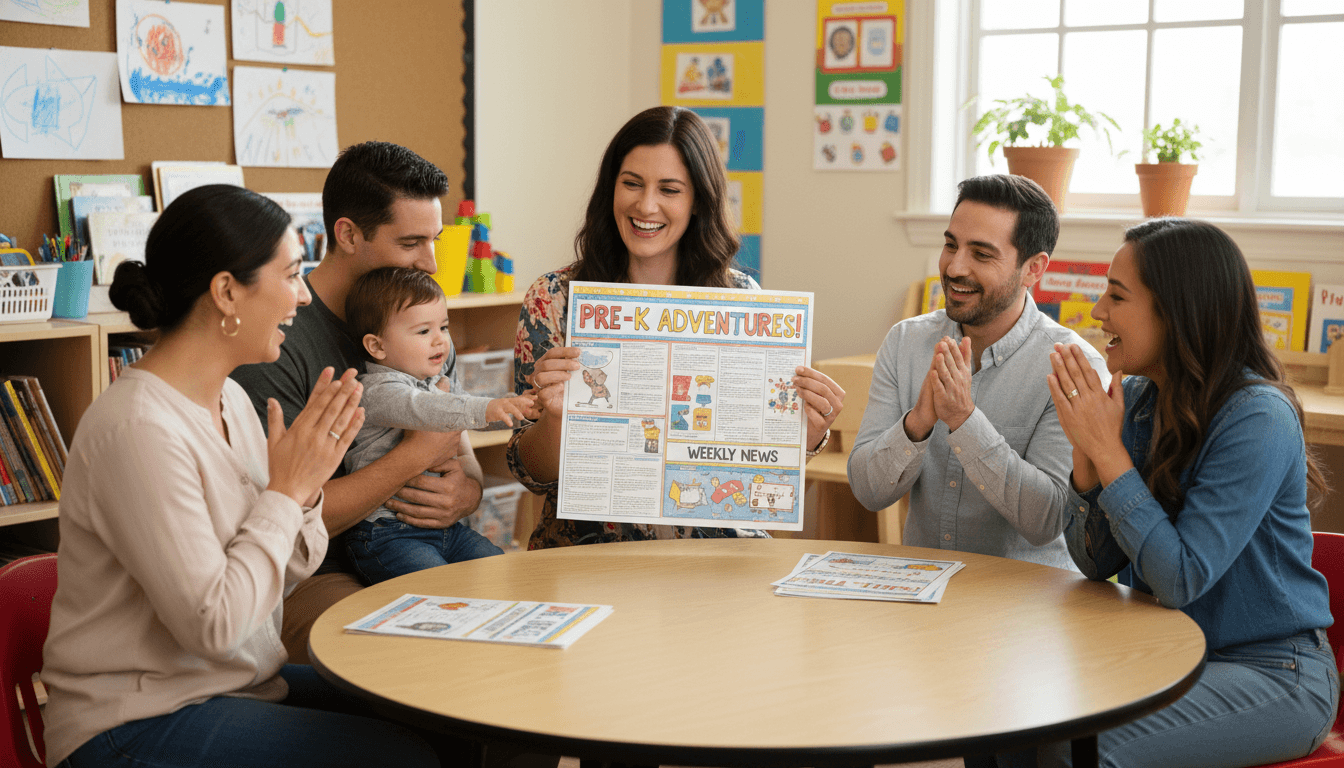
The newsletters that get read, forwarded, and responded to have something different: they feel like a window into the classroom, not a bulletin board. Below are 30 topic ideas organized by category, with notes on how to approach each one.
Learning and Curriculum Topics (10 Ideas)
These topics connect parents to what their child is actually doing in class.
- This month's theme explained. Describe the theme and why it was chosen. Connect it to one specific developmental skill children are building.
- How we teach math through play. Show parents what sorting, counting, and patterning look like in a pre-k classroom. Most parents are surprised.
- What emergent literacy looks like at this age. Explain what pre-k teachers are actually watching for: print awareness, phonological awareness, the desire to write.
- A skill your child is working on right now. Not a formal assessment. A one-paragraph description of something concrete, like cutting with scissors or writing their first letter.
- Why we spend so much time on dramatic play. Role play is not a break from learning. This topic lets you explain the research in plain language.
- How we handle books in the classroom. Read-alouds, the library corner, how children choose books. A window into literacy culture.
- This week's science exploration. A photo and two sentences about what children are investigating. Worms, ramps, ice, plants.
- What children said about a big question. Pick one question from morning meeting. Write down three actual answers. Parents are always surprised by what their children say at school.
- How we use outdoor time for learning. Mud kitchen, bug hunts, balance beams. Help parents see the yard differently.
- The book we read this month and why we chose it. One picture book. One paragraph on what the class noticed and talked about.
Milestone and Development Topics (8 Ideas)
These topics reassure parents that development is on track and help them know what to watch for at home.
- What four-year-olds are supposed to struggle with. Normalize the hard stuff: sharing, waiting, losing a game. Parents often worry when they should not.
- Social development: what we watch for in pre-k. Parallel play vs. cooperative play, conflict resolution, friendship building.
- Emotional regulation at this age. What is developmentally typical and what strategies the classroom uses when children are overwhelmed.
- Fine motor development: where your child is headed. Explain the progression from grip to drawing to writing, and what supports it at home.
- What independence looks like in pre-k. Pouring their own water, putting on their coat, cleaning up their space. Small things that matter a lot.
- Language development: what to expect this year. Vocabulary growth, sentence complexity, the ability to tell a story with a beginning, middle, and end.
- How children handle transitions. Why some children struggle with moving from one activity to the next, and how the classroom structures transitions to reduce meltdowns.
- A milestone many parents miss. Something that happens in the classroom that parents often do not notice at home, like a child initiating conversation with a peer for the first time.
Community and Classroom Culture Topics (7 Ideas)
These topics make families feel like they are part of the classroom, not just dropping their child off at the door.
- Our classroom agreements. What the class decided together about how to treat each other. Quote the children when you can.
- How we celebrate birthdays. Simple, clear. Parents want to know before they send cupcakes on the wrong day.
- A behind-the-scenes look at morning arrival. What the first 20 minutes of the school day look like. Most parents have no idea.
- What children talk about at snack time. A lighthearted, specific observation from one snack conversation this month.
- How families can get involved this month. Not generic. A specific thing: coming in to read, donating specific supplies, volunteering for a specific event.
- A note on classroom culture. Something the class is getting better at together, like listening to each other during circle time or cleaning up without being asked.
- Introducing a new classroom routine. If something changes, explain why. Parents who understand the reason behind a change accept it without pushback.
Seasonal and Calendar Topics (5 Ideas)
Seasonal topics are easy to write because they have a built-in hook. Use them to teach something, not just celebrate the calendar.
- What we do with seasonal changes in the garden or yard. Planting in spring, composting in fall, observing in winter.
- How we approach holidays in a diverse classroom. What you include, what you skip, and why. Parents appreciate the transparency.
- End-of-year growth: what we celebrate. A reflection on how far the class has come since September. Specific. Personal.
- Getting ready for summer. Books to read, activities to try, how to maintain pre-k skills without turning summer into school.
- Preparing for the transition to kindergarten. What children need to be ready for and what parents worry about that does not actually matter.
Why Topic Variety Matters
A newsletter that runs the same format every month, dates, theme summary, reminders, becomes invisible. Parents stop reading because they already know what to expect. Rotating through different topic categories keeps the newsletter worth opening.
You do not need to cover everything every month. Pick one or two topics from this list, write them well, and keep the newsletter under 400 words. That is more effective than a comprehensive document nobody finishes.
Making the Writing Easier
The biggest barrier to consistent newsletters is sitting down and starting. Having a topic already chosen removes that barrier. Keep a running list of moments from the classroom: something a child said, an activity that went unexpectedly well, a question that sparked a real discussion. Those moments become newsletter content.
Daystage has a built-in AI draft feature that can turn a few bullet points into a readable newsletter section. You write the observation, the tool drafts the paragraph, you adjust the tone. For teachers writing newsletters solo without an assistant or coordinator, this cuts the writing time significantly without making the content feel generic.
Get one newsletter idea every week.
Free. For teachers. No spam.
Frequently asked questions
When should preschool teachers send newsletters to parents?
Monthly is the most sustainable frequency for most pre-k teachers and the frequency that gets reliably read by parents. Weekly newsletters work early in the year when relationships are being established but often taper off by November when preparation time gets tight. A consistent monthly newsletter that parents expect beats an inconsistent weekly one every time.
What should a pre-k newsletter for parents include?
Include three to five items: what the class explored that month, an upcoming date that requires action, one at-home activity connected to the current theme, and a short personal observation from the classroom. The personal observation is what separates a newsletter families read from one they skim.
How should pre-k teachers choose newsletter topics that parents actually care about?
Choose topics that answer questions parents are already carrying: what is my child doing all day, how are they getting along with others, what can I do at home to support what you are working on. Topics that answer those three questions consistently will be read. Topics that address only administrative logistics will be scanned for action items and forgotten.
What are common mistakes in pre-k newsletter content?
Curriculum language copied directly from a scope and sequence document is the most reliable way to lose a parent's attention in the first sentence. Newsletters that read like administrative memos, full of dates, policy reminders, and supply lists, communicate that the teacher views the newsletter as a task rather than a connection.
Is there a tool that helps pre-k teachers generate newsletter topics and content?
Daystage is built for pre-k and early childhood teachers and includes tools that make newsletter creation faster so you are not starting from a blank page every month.

Adi Ackerman
Author
Adi Ackerman is a former classroom teacher and curriculum writer with 8 years in K-8 schools. She writes about school communication, parent engagement, and what actually works in real classrooms.
More for Pre-K
Ready to send your first newsletter?
3 newsletters free. No credit card. First one ready in under 5 minutes.
Get started free