
How to Communicate About Potty Training in Your Preschool Newsletter
Potty training is one of the most sensitive topics in early childhood education, and most preschool teachers handle it imperfectly because they were never taught how to communicate about it. The instinct is usually to avoid the topic in writing or to be so clinical and general that the communication does not actually help anyone.
There is a better approach: be specific and useful in private communication, and be general and policy-focused in group communication. This guide covers what belongs in a newsletter versus what stays in a direct conversation, how to write about bathroom routines without embarrassing families, and what accommodations and special circumstances require explicit individual handling.
What Belongs in the Group Newsletter
The newsletter is the right place for school policy and general classroom expectations. It is not the right place for anything that references a specific child's situation, even indirectly.
In a back-to-school newsletter or early-in-the-year communication, include your school's enrollment requirements around toilet training, if any. If your program accepts children who are still in the process of training, say so and describe what support looks like. If the program requires full training before enrollment, state that clearly and note the process for addressing accidents.
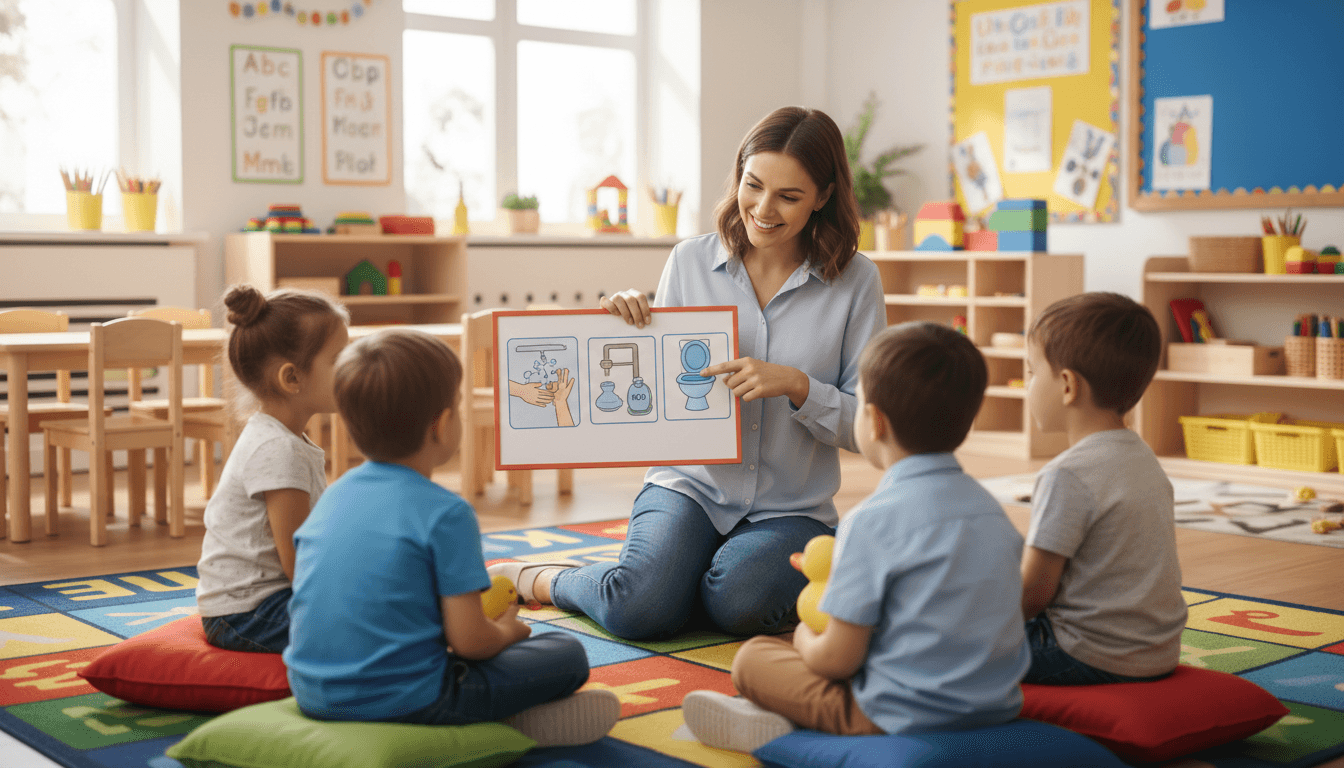
General bathroom routine information also belongs in the newsletter: when bathroom breaks happen during the day, whether children can request a bathroom trip independently or should let a teacher know, and what children should do if they need a change of clothes. This is useful for every family in the classroom and does not signal anything about any individual child.
How to Write About Bathroom Routines Without Embarrassing Anyone
The key is describing the classroom routine rather than describing children's needs. The sentence "We take scheduled bathroom breaks after morning meeting and before lunch" is about your program. The sentence "Some children in our class are still working on potty training and may need extra support" is about children in a way that may make families feel singled out, even when written generically.
Write from the classroom's perspective. What does your program do? When do breaks happen? What does a child do when they need to go outside of the scheduled time? What happens if there is an accident? These questions have factual answers that give parents useful information without implying anything about their specific child.
Example language that works: "We have scheduled bathroom breaks throughout the day and children can always let a teacher know if they need to go at any other time. We keep spare changes of clothes on hand and ask all families to have a labeled change of clothes in their child's backpack throughout the year."
That last sentence, asking all families to keep a change of clothes, handles accidents without singling out any child or signaling that you expect accidents from particular students.
What to Keep in Private Communication
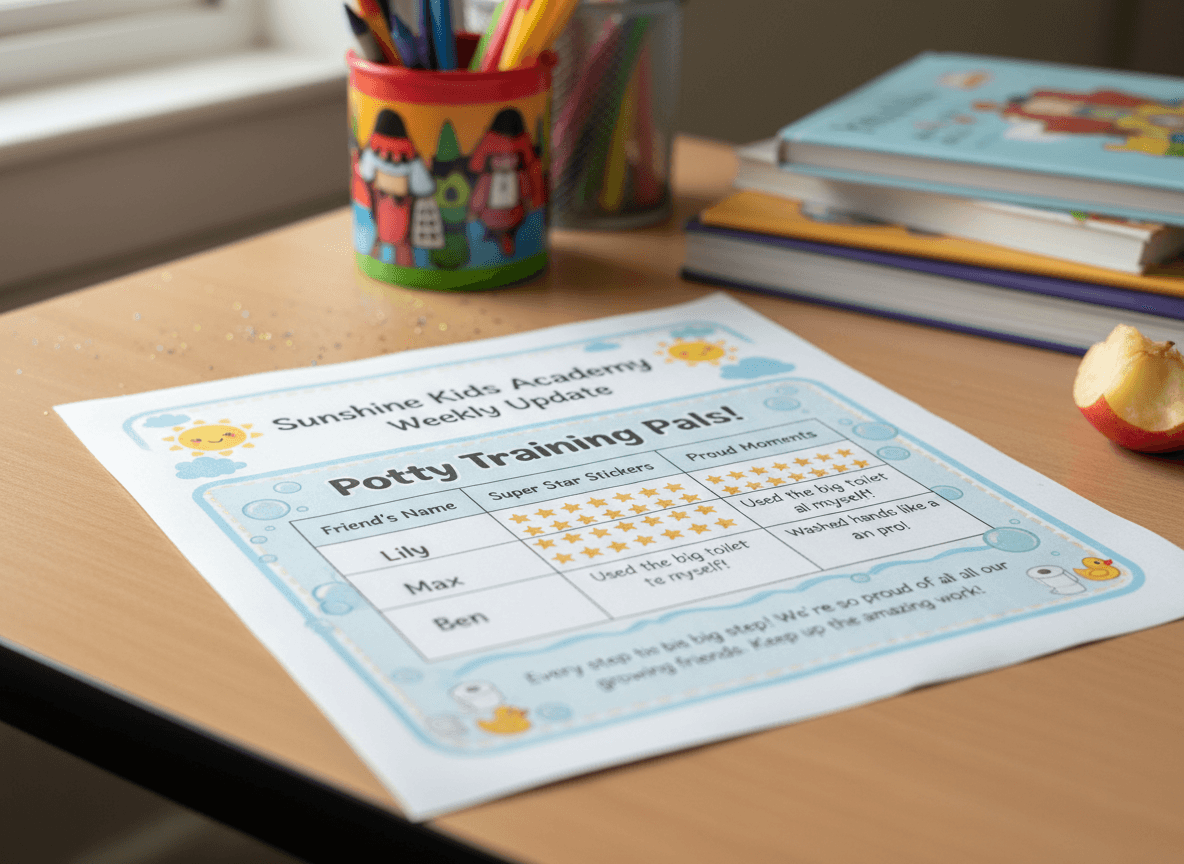
Everything that involves a specific child's bathroom situation belongs in a private conversation, not a newsletter.
If a child is having frequent accidents, that is a one-on-one conversation with the family. If a family is actively working on training and wants school-home consistency, that is a direct email or in-person meeting. If a child's accidents seem to be connected to stress or a change at home, that is a sensitive conversation that should never be in writing in a group format.
When you have that private conversation, be factual rather than evaluative. "Marcus used the bathroom four times today and needed a clothing change after lunch" is more useful and less loaded than "Marcus is really struggling with accidents this week." The first gives the family information. The second adds a judgment that may make them defensive or ashamed.
Keep a brief record of accidents for children who are in active training, both for your own reference and because it is useful to have concrete information when families ask how things are going. But keep that record private.
School-Home Consistency: How to Coordinate Without the Newsletter
School-home consistency in potty training is genuinely important for children who are in the active training phase. The same language, the same timing, and the same response to accidents at school and at home helps children build consistent habits more quickly.
But building that consistency is a private coordination effort, not a newsletter topic. Set up a brief meeting or a short check-in at pickup with the specific family. Ask what language they use at home ("Do you say bathroom, potty, or something else?"), what the timing looks like, and what they do when there is an accident. Share what you do at school. Agree on the areas where you can match.
If a family is using a sticker chart or a reward system at home, ask if they want you to mirror that at school. Many will. Some will not. Asking shows you are paying attention and taking the coordination seriously.
IDEA Accommodations and Children with Disabilities
Some children have IEPs or 504 plans that include accommodations related to bathroom use. This may include extra bathroom breaks, support from an aide, specific scheduling, or accommodations for children with physical disabilities, developmental delays, or medical conditions that affect continence.
These accommodations are confidential and should never appear in group communications, even in vague terms. They belong in the IEP or 504 documentation and in direct communication with the specific family. If you have questions about how to implement an accommodation or how to communicate with the family about it, your school's special education coordinator or administrator is the right resource.
If a child's bathroom needs are likely to require communication with other staff, for example a classroom aide who covers your breaks or a substitute, that communication should happen through private professional channels, not in any written format accessible to other families.
A Note on Shame
Toilet training accidents carry social weight for families in ways that other developmental milestones often do not. A parent whose four-year-old is still having accidents regularly may be worried that their child is "behind," embarrassed at pickup, or anxious about what other parents think.
The way you communicate, both in the newsletter and in private, shapes whether that parent feels like a partner or a problem. Every communication decision about this topic should start from the question: does this give the family information they need, or does it just make them feel bad? If the answer is the latter, rewrite it.
Normalizing accidents as part of the preschool experience, without making it the center of your communication, is the standard to aim for. Families whose children are training quickly will not notice. Families whose children are taking longer will feel the difference.
Get one newsletter idea every week.
Free. For teachers. No spam.
Frequently asked questions
When should preschool teachers address potty training in their newsletters?
Address bathroom routines in a general newsletter at the start of the year to establish shared expectations before individual issues arise. Individual potty training updates belong in private conversations, not group newsletters, so the group newsletter is best used for classroom-wide bathroom policies and routines rather than progress reports.
What should a preschool newsletter include about potty training communication?
Include information about the classroom bathroom routine such as scheduled group bathroom breaks and handwashing procedures, what families should send in the child's bag, and what the classroom policy is when accidents happen. Keep the content focused on the shared classroom experience rather than any individual child's status.
How should preschool teachers communicate privately about potty training with specific families?
Use a one-to-one channel: a brief note in the pickup report, a quick word at the door, or a direct message if your communication app supports it. Keep the tone matter-of-fact and focused on what the child accomplished rather than what they did not do. Families are often anxious about this topic, and a calm, specific update reduces that anxiety faster than a vague reassurance.
What are common mistakes in preschool potty training communication?
The most common mistake is either avoiding the topic entirely in writing, leaving families without shared expectations, or over-sharing in a group newsletter in ways that embarrass families or inadvertently identify a child. A second mistake is using language that implies judgment about a child's readiness, which is developmentally normal but lands badly in writing.
Is there a tool that helps teachers manage private and group communication separately?
Daystage is built for early childhood teachers and supports both group newsletters and individual parent messages, so sensitive topics like potty training stay in the right channel.

Adi Ackerman
Author
Adi Ackerman is a former classroom teacher and curriculum writer with 8 years in K-8 schools. She writes about school communication, parent engagement, and what actually works in real classrooms.
More for Pre-K
Ready to send your first newsletter?
3 newsletters free. No credit card. First one ready in under 5 minutes.
Get started free