

Student Teacher Newsletter Guide: Communication During Practicum
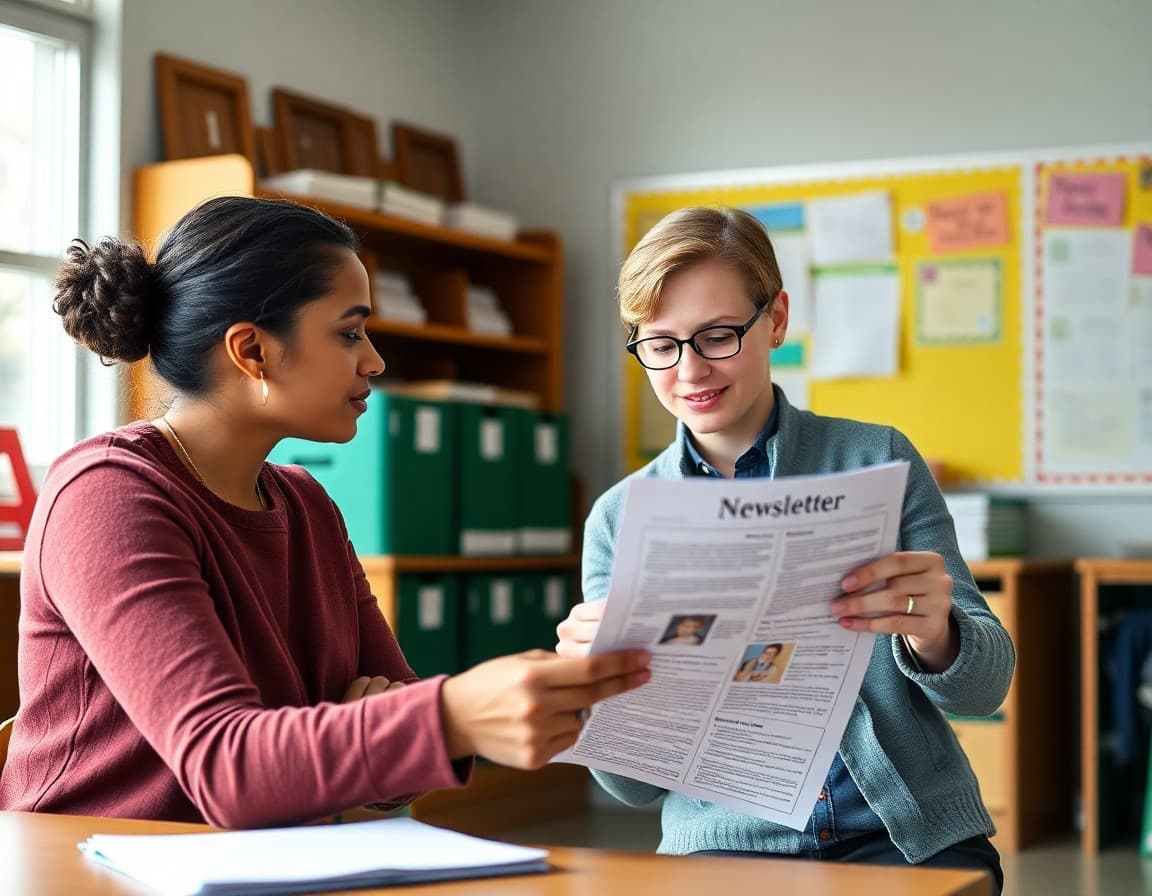
Student teaching is the moment when everything you have learned in coursework meets actual families, actual students, and an actual communication relationship that you do not fully own yet. Navigating parent communication during a practicum requires a clear understanding of your role, genuine respect for the cooperating teacher's established practices, and the initiative to learn actively from everything you observe.
Understanding Your Role in the Communication Hierarchy
During your practicum, the cooperating teacher is the primary relationship holder with class families. They have built that relationship over months or years, and every communication you send either reinforces or complicates it. Your job is to participate in that communication relationship as a guest who is learning, not as an independent actor who happens to be in the room. That means asking before you do anything that involves direct family contact, following the cooperating teacher's communication style rather than imposing your own, and treating every family interaction as an opportunity to observe professional practice rather than demonstrate yours.
This is not a limitation on your professional development. It is the most accurate model of what you will encounter when you are actually responsible for your own classroom and need to work within a school community's communication norms. The habit of checking with your cooperating teacher is the same habit that will make you a thoughtful departmental colleague later.
Your Introduction to Families: What to Write
Most cooperating teachers will include a brief student teacher introduction in their weekly newsletter or send a short separate introduction. If your cooperating teacher asks you to write it, keep it to four or five sentences. Name, university, duration of your placement, what you will be doing in the classroom, and one genuine sentence about why you are glad to be there. Avoid overpromising or claiming expertise you do not yet have. Families appreciate authenticity. A note that says "I am in my final semester at State University and am grateful for the opportunity to learn alongside your children" is better than one that positions you as an expert.
Here is a template you can adapt: "Hello, I am Jamie Nguyen, a student teacher from [University] completing my final practicum in this classroom. I will be here through [date], gradually taking on more teaching responsibilities as the weeks progress. I am so glad to be in this class and am looking forward to getting to know your students. Please feel free to reach out to Ms. Torres with any questions during my placement."
Contributing to the Newsletter Without Overstepping
Many cooperating teachers welcome a student teacher contribution to the weekly newsletter, especially once the practicum is fully underway and the student teacher is leading instruction. The contribution might be a paragraph about a lesson you led, a reflection on something that went well, or a preview of what you are planning for the following week. Discuss this with your cooperating teacher before the placement begins and agree on the format and review process. The review process is important: all newsletter content should be read by your cooperating teacher before it goes to families, both for accuracy and because it is their name and their class.
When you write content for the newsletter, match the tone and style of your cooperating teacher's existing communications. If they write in a warm, conversational tone, match that. If they use a more formal structure, follow it. The newsletter is their voice reaching families, and your contribution should feel like a natural extension of that voice, not an insertion of a different one.
What to Do When a Parent Approaches You Directly
During your practicum, parents may approach you at pickup, at events, or by email. This is a situation to navigate carefully. For informal, positive interactions, responding warmly and briefly is appropriate: "It was a great week. Mrs. Torres is an excellent teacher and I am learning a lot." For substantive questions about a child's academic progress, behavior, or social situation, redirect to the cooperating teacher: "That is a really good question for Mrs. Torres. She knows your student much better than I do at this point. Would it be helpful if I let her know you would like to connect?" Never make commitments, share assessment information, or discuss another student's behavior in response to a parent query, even if you know the answer.
Observing to Learn: The Newsletter as a Case Study
Your practicum is also an opportunity to study what effective parent communication looks like in practice. Pay attention to: how your cooperating teacher structures the newsletter and why, which sections families respond to (ask about this directly), how the tone shifts for different types of news, how your cooperating teacher handles a newsletter that involves acknowledging something difficult, and how the communication connects to the relationship you observe at parent events and conferences. These observations are as valuable as anything you practice yourself, and they will inform your own communication approach when you have your own class.
Keep a brief reflective journal during your practicum about what you observe in parent communication. Your own notes from a practicum are more useful preparation for your first year than any assigned reading, because they are specific to real families in a real context.
Preparing Your Own Communication System for After Graduation
Your practicum is also preparation for the system you will set up when you have your own classroom. Use the placement to decide: what format will you use, what frequency will you commit to, what sections will anchor your newsletter, and what tool will you use to write and send it. Many student teachers find it useful to draft a few sample newsletters during their practicum, not to send, but to practice before the real thing. When the first week of your first year arrives and you need to send your very first newsletter, having practiced the format makes the writing significantly less intimidating.
Get one newsletter idea every week.
Free. For teachers. No spam.
Frequently asked questions
Should a student teacher send their own newsletter or contribute to the cooperating teacher's?
This depends entirely on what your cooperating teacher prefers. The right approach is to ask explicitly in the first week of your placement: 'What is your communication practice with families, and how would you like me to participate?' Some cooperating teachers will want you to send a brief introduction to families and then contribute a section to the weekly newsletter. Others prefer all communication to remain under their name during the placement. Never send independent communication to class families without the cooperating teacher's explicit approval, as you are a guest in their classroom and their relationship with families is built over time.
What should a student teacher's introduction to class families include?
A student teacher introduction to families should cover: your name and the university you are student teaching from, how long you will be in the classroom, what role you will be playing (initially observing, then taking over specific subjects, then the full class), and a brief genuine note about why you are excited to be in this particular class. Keep it to one short paragraph. Families appreciate knowing who is in the room with their child. They do not need your full educational philosophy; they need the basic facts and a sense of who you are.
How do student teachers handle parent questions or concerns that come during the placement?
All significant parent questions or concerns should be routed to the cooperating teacher, not handled independently. If a parent approaches you with a concern about their child, the appropriate response is: 'I appreciate you sharing that with me. I want to make sure Ms. [cooperating teacher] is in the loop on this. Can I let her know you would like to connect?' You are a professional in training, but you are not the primary teacher of record, and you do not have the full context or authority to make commitments or decisions about a student's academic plan.
Is it appropriate to mention the student teaching placement in newsletter content?
Yes, with the cooperating teacher's agreement. A brief mention of something the student teacher introduced or led is positive for families to see and gives the student teacher visibility as a contributor to the class. A note like 'Ms. Rodriguez, our student teacher from State University, led our fractions introduction this week and the class took to it immediately' is appropriate and appreciated by most families. What is not appropriate is positioning the student teacher as an equal voice to the cooperating teacher in the newsletter or making independent commitments on behalf of the class.
Can a student teacher use Daystage during their practicum to practice newsletter writing?
Yes, with the cooperating teacher's guidance. Several university programs have student teachers use tools like Daystage to draft newsletters that the cooperating teacher reviews and sends, which builds the practice of writing for a family audience before the student teacher has their own class. The hands-on experience of writing, receiving feedback, and revising for a real audience is more valuable than any classroom lesson on parent communication.

Adi Ackerman
Author
Adi Ackerman is a former classroom teacher and curriculum writer with 8 years in K-8 schools. She writes about school communication, parent engagement, and what actually works in real classrooms.
More for New Teacher
Ready to send your first newsletter?
3 newsletters free. No credit card. First one ready in under 5 minutes.
Get started free