
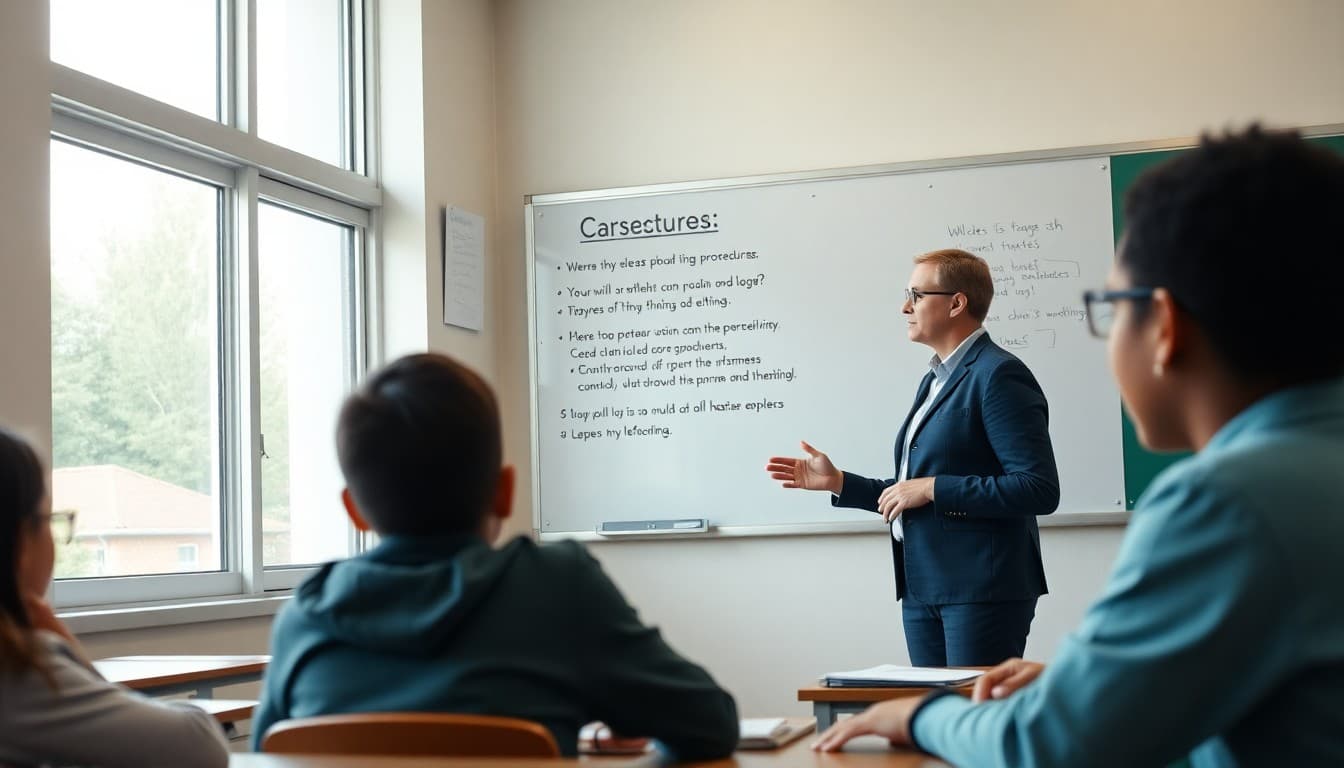
New Teacher Classroom Procedures Newsletter for Parents

A classroom procedures newsletter serves two purposes. It informs families about how your classroom operates, and it invites them to reinforce those procedures at home. When families understand your expectations and can discuss them with their child, you have allies in building the routines that make everything else possible. When families do not know what is expected, they cannot help, and sometimes they accidentally work against it.
Why Procedures Newsletters Matter More Than Most Teachers Realize
The first few weeks of school are when classroom procedures are either established or not. Research on classroom management by Harry Wong and many who have followed his work is consistent: classes where teachers invest time in explicitly teaching procedures in September have significantly fewer management problems throughout the year. A newsletter that brings families into this process, explaining the procedures and asking them to reinforce them at home, extends the teaching from the classroom into the evening routine.
A child who hears at dinner "your teacher explained the homework procedure today, tell me how it works" has now retrieved and explained the procedure to an interested adult, which is one of the most powerful memory consolidation strategies known. The newsletter creates the prompt that makes that conversation possible.
A Template Classroom Procedures Newsletter
Here is a complete template you can adapt:
"Classroom Procedures for [Class Name], [Year]
After two weeks in class together, we have established some routines that I want to share with you. These procedures help us use our time well and create a classroom where everyone can learn.
Arrival: Students should arrive by 8:05 AM. When they enter the classroom, they unpack, put their homework in the tray, and begin the morning warm-up activity on the board. If your child arrives after 8:10, they should go directly to the office for a late slip before coming to class.
Homework: Homework is due the day after it is assigned. I accept late work up to two days after the due date at full credit. After two days, late work receives partial credit. There is no penalty for a missed due date if a student communicates with me before the deadline. I will note missing work in the grade portal the day after it was due.
Materials: Your child should bring their binder, pencil case, and a book for independent reading every day. If these are left at home, they can borrow from our classroom supply, but please help your child develop the habit of checking their bag each evening.
How students ask for help: During independent work time, students put a small red card on their desk and continue working until I can come to them. This means no one is sitting with a hand raised waiting. If your child comes home frustrated because they felt stuck in class, they can email me that evening and I will prioritize checking in with them the next morning.
Behavior expectations: Students in this class are expected to be ready to learn, respectful of others' space and ideas, and honest. Those three expectations cover almost everything. If something specific comes up that I need to discuss with you, I will reach out directly rather than addressing it in the newsletter."
The Late Work and Homework Policy: Be Specific
Homework and late work policies are the two areas where families most frequently feel surprised or frustrated. Cover these specifically and in plain terms. What is the homework routine (frequency, expected duration, where to find it)? What happens when work is not turned in (grace period, partial credit, communication expectation)? What should families do when their child is stuck on homework at home (contact you, try for X minutes and then stop, come in during the morning)? Answering these questions in the procedures newsletter prevents the mid-October parent email about a missing homework policy that the family insists was never communicated.
The Procedures That Do Not Belong in the Newsletter
Some classroom procedures should not appear in a family newsletter because they create anxiety or misunderstanding out of context. Consequences for specific behavioral violations should be addressed individually when they are relevant, not announced in advance to the full class community. Emergency and safety procedures are governed by school-wide policy and should not be summarized in a classroom newsletter. And very internal classroom management tools, like class-dojo points or a specific behavior system with its full mechanics, should be explained verbally at Back to School Night rather than through the newsletter, where they are hard to understand without seeing them in practice.
Inviting Family Feedback on Your Procedures
A procedures newsletter that ends with a question or an invitation to discuss gets more parent engagement than one that ends with a statement. A closing line like "If anything about these procedures raises a question or concern, I want to hear it before it becomes a problem. Please reply or reach out directly" signals openness and preempts the accumulation of small frustrations that can eventually produce a difficult email. Families who feel their teacher is approachable will communicate early. Families who feel their teacher is defensive will wait until they are frustrated, which is always worse for everyone.
Get one newsletter idea every week.
Free. For teachers. No spam.
Frequently asked questions
When should a classroom procedures newsletter be sent to families?
Within the first two weeks of school, after you have established the procedures with students. Sending a procedures newsletter before you have actually introduced and practiced the routines with students is premature because you may need to adjust things based on how the class responds. Sending it in the first two weeks, before the novelty of school routines wears off, helps families reinforce at home what is being established at school while the habits are still forming.
What classroom procedures should be explained to parents?
Focus on procedures that have a home component or that explain behavior families may observe in their child. Homework policies, late work policies, what materials students should bring each day, how class transitions work, what happens during morning arrival, lunchroom behavior expectations, and how students are expected to request help are the most relevant for families. You do not need to explain every internal classroom procedure; focus on the ones where family awareness and reinforcement make a difference.
How do you explain classroom behavior expectations without sounding punitive?
Frame expectations as what success looks and sounds like rather than what happens when rules are broken. 'Students learn best when the room is quiet during focused work time, so that is our practice for independent work' is different from 'students who talk during work time will have a consequence.' Both communicate the same expectation, but the first frames it as a learning norm rather than a rule-and-punishment system. Save the consequence structure for parent conferences or direct communication about specific incidents, not for the class-wide newsletter.
What is the right length for a classroom procedures newsletter?
One to two pages equivalent, or approximately 400 to 600 words. The procedures newsletter is meant to inform, not to be a comprehensive policy document. Cover the procedures families most need to know and reference the student handbook or school website for the full list. A newsletter that parents can read in three minutes is more effective than an exhaustive document they bookmark and never finish.
How can Daystage help new teachers communicate classroom procedures clearly to families?
Daystage lets you present procedures in a structured, visual format that is easy to scan. Using headers and short sections rather than long paragraphs makes the procedures newsletter the kind of document families can actually reference when they need to, rather than a block of text they read once. Teachers who use Daystage for their procedures newsletter often find that parent questions about basic logistics decrease significantly because the information is accessible and clearly organized.

Adi Ackerman
Author
Adi Ackerman is a former classroom teacher and curriculum writer with 8 years in K-8 schools. She writes about school communication, parent engagement, and what actually works in real classrooms.
More for New Teacher
Ready to send your first newsletter?
3 newsletters free. No credit card. First one ready in under 5 minutes.
Get started free