

New Teacher Classroom Newsletter Template: Your First-Year Framework
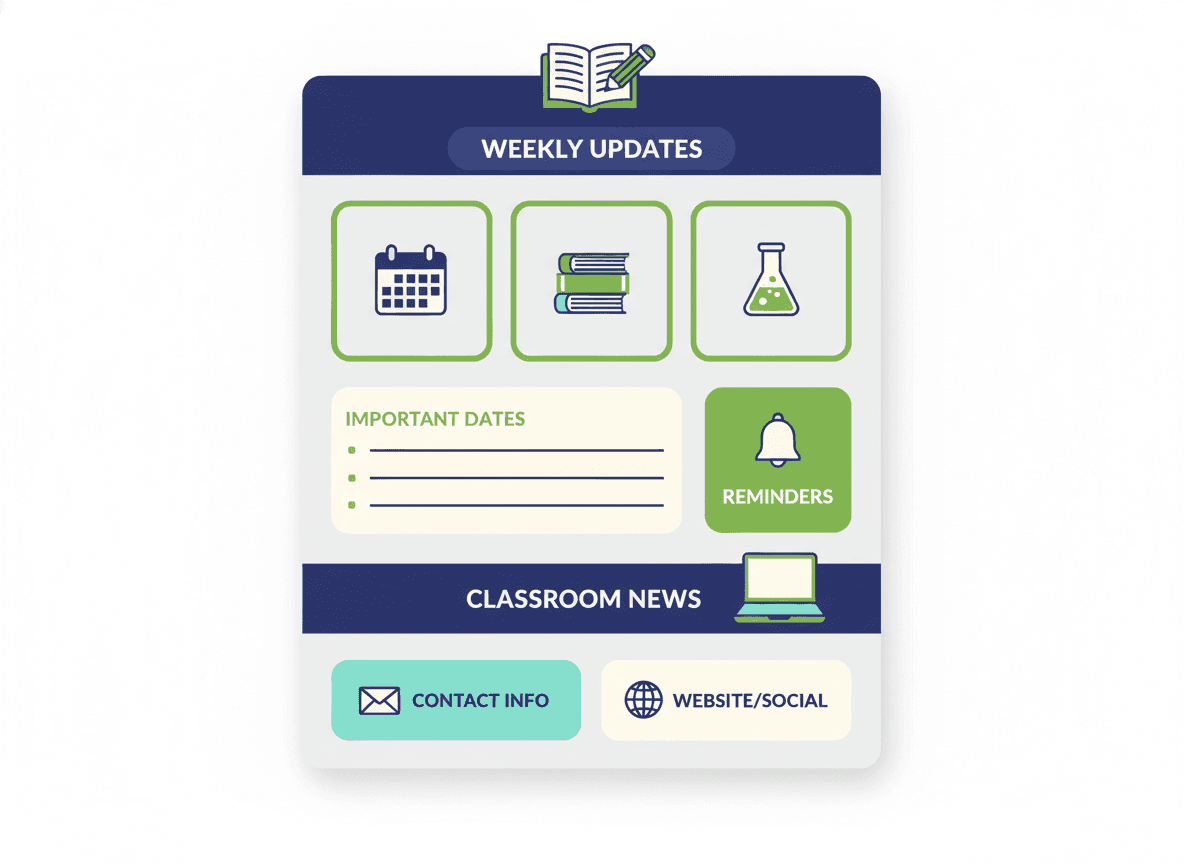
New teachers often spend more time worrying about what to put in a newsletter than actually writing one. The format anxiety is real. Should it have sections? How long should each one be? What if there is not enough to say one week?
The answer is to stop designing and start with a template that already works. This one does. It covers everything parents need, keeps the newsletter short enough that people actually read it, and takes less than 30 minutes to fill in once you have the habit down.
The Five-Section Template
Section 1: What We Did This Week
Two to four sentences describing what the class covered. Not a comprehensive lesson plan summary. A brief glimpse at what students were doing so parents can ask informed questions at home.
Good example: "This week we started our weather unit in science and practiced two-digit addition with regrouping. We also did our first partner read-aloud activity, which went really well."
Bad example: "We covered CCSS.MATH.CONTENT.2.NBT.B.7 and explored meteorological concepts in alignment with our unit objectives." Parents do not read this. Write like you would talk to a parent at pickup.
Section 2: Coming Up Next Week
A short list of what families should know is happening in the next five to ten school days. Upcoming tests, field trips, book report due dates, picture day, spirit day, anything that requires family awareness or action.
Keep this as a bulleted list, not prose. Parents scan this section looking for dates. Make it easy to scan.
Example:
- Monday: Library day, please return books
- Wednesday: Math chapter 4 test
- Friday: Pajama day (school spirit week)
Section 3: Reminders and Action Items
What do you need from families this week? This section is the most important one for parents to read and act on. Make it stand out. Put it in bold or give it a distinct header.
Examples: permission slips that need to come back, supplies that are running low, forms from the main office, parent volunteer sign-ups, or surveys from the school.
If you have nothing urgent this week, say so briefly or skip the section. "No action needed from families this week" is a perfectly fine entry. It reassures parents who were bracing for a request.
Section 4: A Classroom Win or Spotlight
One specific positive moment from the week. Not "we had a great week" (which is generic and tells parents nothing). One specific thing.
It could be a class achievement: "We collectively finished our first class novel." A student moment you can describe without naming names: "A student helped a classmate work through a math problem this week and explained it better than I did." Or a funny quote from a student that captures something real about classroom life.
Parents love this section. It is often the most-shared part of classroom newsletters. It makes the class feel real to families who are not there.
Section 5: How to Reach Me
Your email address and preferred contact method, every single week. Even if parents already have it. Repetition removes friction. If a parent has a question on Sunday night while reading your newsletter, your email is right there.
Include your expected response time. "I respond to emails on school days within 24 hours" sets a clear expectation and prevents parents from following up the same afternoon.
How Long Should Each Section Be?
The target length for the entire newsletter is a three-minute read. Here is a rough guide:
- What We Did This Week: 2-4 sentences
- Coming Up: 3-6 bullet points
- Reminders and Action Items: 1-4 items
- Classroom Win: 2-4 sentences
- How to Reach Me: 2-3 lines
Total: around 200-300 words. That is a newsletter. Not a report. Not a lesson recap. A newsletter.
What to Do When You Have Nothing to Say
Some weeks feel thin. No major events, no big classroom moments, no reminders. Send the newsletter anyway. A short one is fine.
"This week was a work week. We pushed through a big chunk of our fractions unit and students are building stamina for longer problem sets. Coming up: quiz on Friday." That is a newsletter. It is short. It is honest. It shows parents the class is moving forward.
The consistency of showing up in parents' inboxes every week matters more than any individual newsletter being impressive.
Using a Tool That Does the Formatting for You
The fastest way to build this habit is to use a tool designed for teacher newsletters rather than starting from a blank email. Daystage lets you set up a newsletter template with your school's branding and fill in your sections each week without worrying about formatting, fonts, or whether it looks good on mobile. You write the content. The tool handles the rest.
Set up your template once. Then each week, you open it, fill in the five sections, and send. That is the routine.
The Real Goal of a Classroom Newsletter
A classroom newsletter is not about impressing parents or demonstrating your curriculum expertise. It is about maintaining a consistent line of communication that keeps families connected to what is happening in their child's school day.
Parents who receive consistent newsletters ask fewer one-off questions. They come to conferences more prepared. They are more likely to follow through on at-home strategies you recommend. They trust you more, which means the difficult conversations go better when they come up.
None of that happens from one great newsletter. It happens from showing up in their inbox every week for nine months.
Get one newsletter idea every week.
Free. For teachers. No spam.
Frequently asked questions
When should a new teacher send their first classroom newsletter?
Send it at the end of the first week of school, not before. Families do not need information before school starts, and waiting until Friday of week one gives you actual content to share. Sending on Thursday or Friday sets a natural rhythm for the rest of the year.
What should a new teacher include in their classroom newsletter template?
A reliable template has five sections: this week in our classroom, coming up next week, a quick student spotlight or moment, reminders and dates, and one tip for supporting learning at home. You fill in the same five boxes each week, which makes writing faster and reading predictable.
How should new teachers format their classroom newsletter to get parents to read it?
Keep each section to two to four sentences, use plain subject lines with the week and class name, and send as an email rather than a PDF attachment. Parents open emails faster than they download files, and short sections mean the whole newsletter gets read in under two minutes.
What mistakes do new teachers make with their classroom newsletter template?
The most common mistake is using a different format every week, which forces parents to relearn how to read it. A second mistake is adding so many sections that the template becomes unmanageable. Build a lean five-section template once and protect it.
Is there a classroom newsletter template built for new teachers?
Daystage provides a ready-made five-section template so you never start from a blank page. You open the tool, fill in the week's content, and send directly to your parent list without switching between a writing app and an email platform.

Adi Ackerman
Author
Adi Ackerman is a former classroom teacher and curriculum writer with 8 years in K-8 schools. She writes about school communication, parent engagement, and what actually works in real classrooms.
More for New Teacher
New Teacher Back-to-School Communication Checklist: Everything to Do Before Day One
New Teacher · 7 min read
New Teacher Gifted Student Communication: What to Tell Families About Advanced Learning
New Teacher · 6 min read
First Parent-Teacher Conference Prep: How New Teachers Should Brief Families
New Teacher · 5 min read
Ready to send your first newsletter?
3 newsletters free. No credit card. First one ready in under 5 minutes.
Get started free