

How to Write a Teacher Introduction Letter to Parents
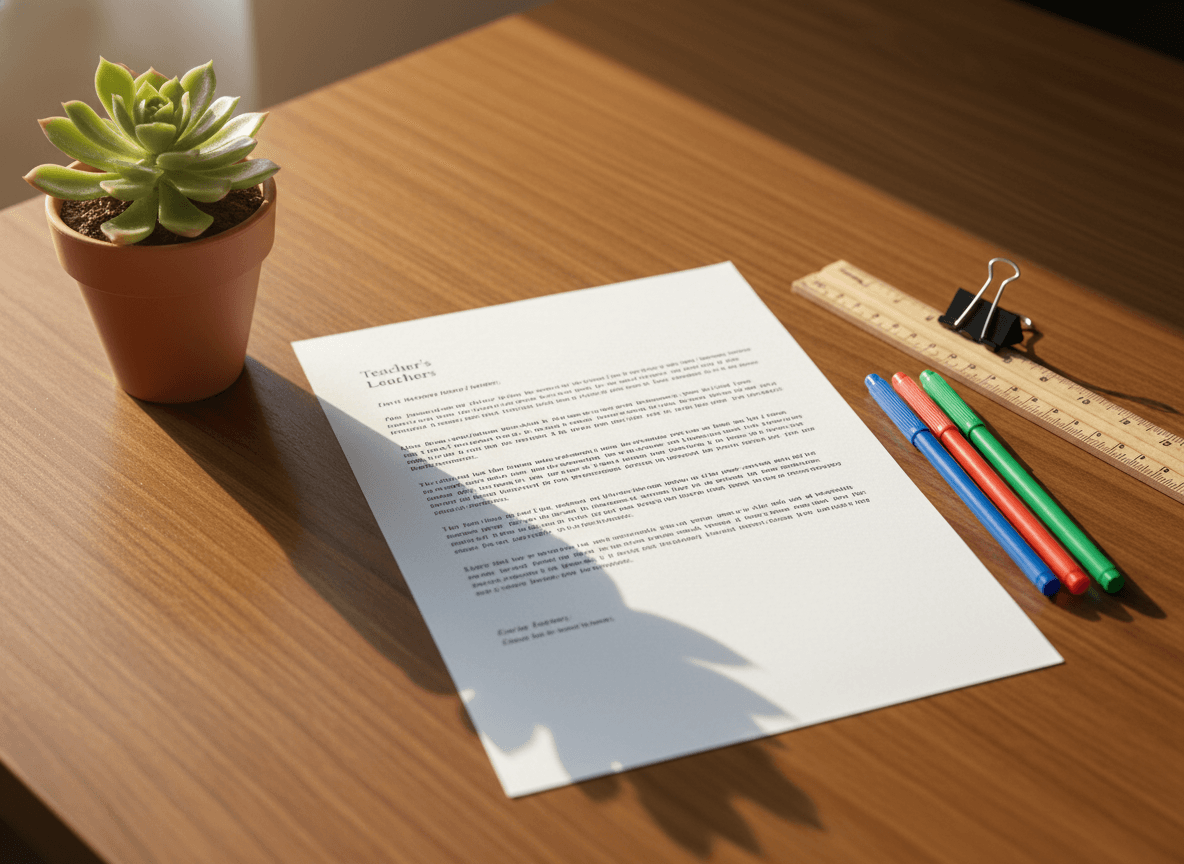
A teacher introduction letter is one of the first impressions you make on the families in your class. Most are forgettable. Yours should not be.
This guide covers exactly how to structure the letter, what to say in each section, what to avoid, and a complete example you can adapt.
Email vs. Printed Letter: Which to Use
Most teachers now send their introduction as an email rather than a printed letter. Email is faster, reaches more parents (not every family checks their child's backpack daily), and allows you to send it before school starts.
If your school has a strong culture of printed newsletters, or if a significant number of families in your class have limited email access, a printed letter is worth adding. But start with email as your primary channel. You can always print and send home a copy during the first week.
Structure of an Effective Introduction Letter
Five sections. Keep each one short.
1. Opening: Who you are and which class
State your name and what you teach in the first sentence. Parents with multiple kids need to know immediately which teacher is writing.
"My name is Mr. Callahan, and I will be your child's 4th grade homeroom teacher at Clearview Elementary this year."
That is the entire opening. Do not waste the first paragraph on pleasantries.
2. Brief personal background
Two to three sentences maximum. The goal is to be human, not to be impressive. Parents do not need your resume. They need to know that you are a real person who cares about their kid.
Things that work well here: why you became a teacher (one sentence), something specific about what you love teaching, or something brief about your background that connects to the community.
Things that do not work: a list of credentials and certifications, vague statements like "I am passionate about education," or anything that sounds like a cover letter.
3. What to expect in your classroom
Two to three sentences on the general approach in your classroom. Not a full curriculum overview. Not a rules list. The feeling of what it is like to be in your class.
"This year in 4th grade science, we will spend a lot of time on hands-on investigation rather than textbook work. Students will collect real data, make predictions, and argue about what the data means. I think science is most useful when students do it, not just read about it."
4. How to reach you
Give parents your email address and how long they can expect to wait for a reply. One contact method is better than three.
Do not list your cell phone, personal social media, or any channel you are not prepared to monitor consistently. Start with the channel you will actually check and respond to.
5. What to expect in terms of ongoing communication
Tell parents you send a weekly newsletter and when it goes out. This is a short statement, but it matters a lot. Parents who know to expect a Friday newsletter from you will look for it. Parents who do not know about it will miss the first three and only notice when there is something time-sensitive they missed.
"I send a short class update every Friday afternoon. It covers what we did that week, what is coming up, and anything I need from families. Look for the first one at the end of our first week together."
Tone: What Works and What Does Not
Aim for warm and direct. Avoid two traps:
Overly formal: "I look forward to the opportunity to collaborate with your family in support of your child's academic and social development." This sounds like a press release. It creates distance.
Performatively enthusiastic: "I am SO EXCITED to be your child's teacher this year!!! We are going to have the BEST year!!!" This reads as performative and exhausting. Parents are skeptical of it by October.
Write the way you talk to a friendly neighbor you just met. Warm, clear, specific.
Complete Example
Subject: Welcome to 4th Grade with Mr. Callahan, 2026-2027
Dear families,
My name is Mr. Callahan, and I will be your child's 4th grade homeroom teacher at Clearview Elementary this year. I am glad your family is in our class.
A little about me: this is my second year at Clearview. Before teaching, I worked in environmental consulting, which is why I bring a lot of real-world science examples into the classroom. I started teaching because I realized I was always the person at work who ended up explaining things to everyone else, and at some point I figured I should just do that professionally.
In our classroom this year, students can expect a lot of reading, a lot of discussion, and projects that connect what we learn to things happening in the world right now. 4th grade is a year where students start to develop their own opinions about things, and I take that seriously.
The best way to reach me is by email at t.callahan@clearviewes.edu. I respond to parent emails during school hours, usually within one business day.
I send a short class update every Friday afternoon. It covers what we did that week, what is coming up, and anything I need from families. Look for the first one at the end of our first week.
I am looking forward to getting to know your family. See you on September 2nd.
Best,
Mr. Callahan
After You Send It
Most parents will not reply, and that is fine. The ones who do are usually the ones who become your most engaged families.
If a parent replies with something that requires a response, reply the same day. The first week of school is when norms get set. A fast response in week one tells parents that when they email you, they hear back.
If a parent replies with a concern or a question that is complicated, offer a phone call. Do not try to resolve a complicated family concern over email.
Keep a copy of this email. If you ever need to demonstrate your initial outreach to parents, this is your record of day one.
Get one newsletter idea every week.
Free. For teachers. No spam.
Frequently asked questions
When should a new teacher send their introduction letter to parents?
Send it two weeks before school starts. Families are beginning to think about the school year at that point, and your letter arrives before any first-day anxiety sets in. Sending it the day before school starts is too late and too easily buried under other logistics.
What should a new teacher include in their introduction letter to parents?
Cover your name, the grade or subject you teach, your educational background in one sentence, your classroom philosophy in one sentence, and the primary way families should contact you. Close with something specific you are looking forward to about the year. Keep the total length under 300 words.
How should new teachers write a teacher introduction letter that feels personal rather than formal?
Write in first person, use contractions, and include one specific detail that could only be true about you. Mentioning that you spent last summer coaching a robotics camp, for example, tells parents more about who you are than any credential. Specific beats polished every time.
What do new teachers commonly get wrong in their introduction letter to parents?
The two most common mistakes are writing a letter so long families stop reading halfway through, and listing qualifications instead of personality. Parents do not need your full professional biography. They need to trust you, and trust comes from warmth and specificity, not credentials.
Can new teachers use Daystage to send their introduction letter?
Yes. Daystage works as your sending platform for the introduction letter and every newsletter that follows, so your parent contacts, send history, and newsletter drafts all live in one place from the very first communication of the year.

Adi Ackerman
Author
Adi Ackerman is a former classroom teacher and curriculum writer with 8 years in K-8 schools. She writes about school communication, parent engagement, and what actually works in real classrooms.
More for New Teacher
Ready to send your first newsletter?
3 newsletters free. No credit card. First one ready in under 5 minutes.
Get started free