

First Year Teacher Newsletter: What to Include and When to Send It
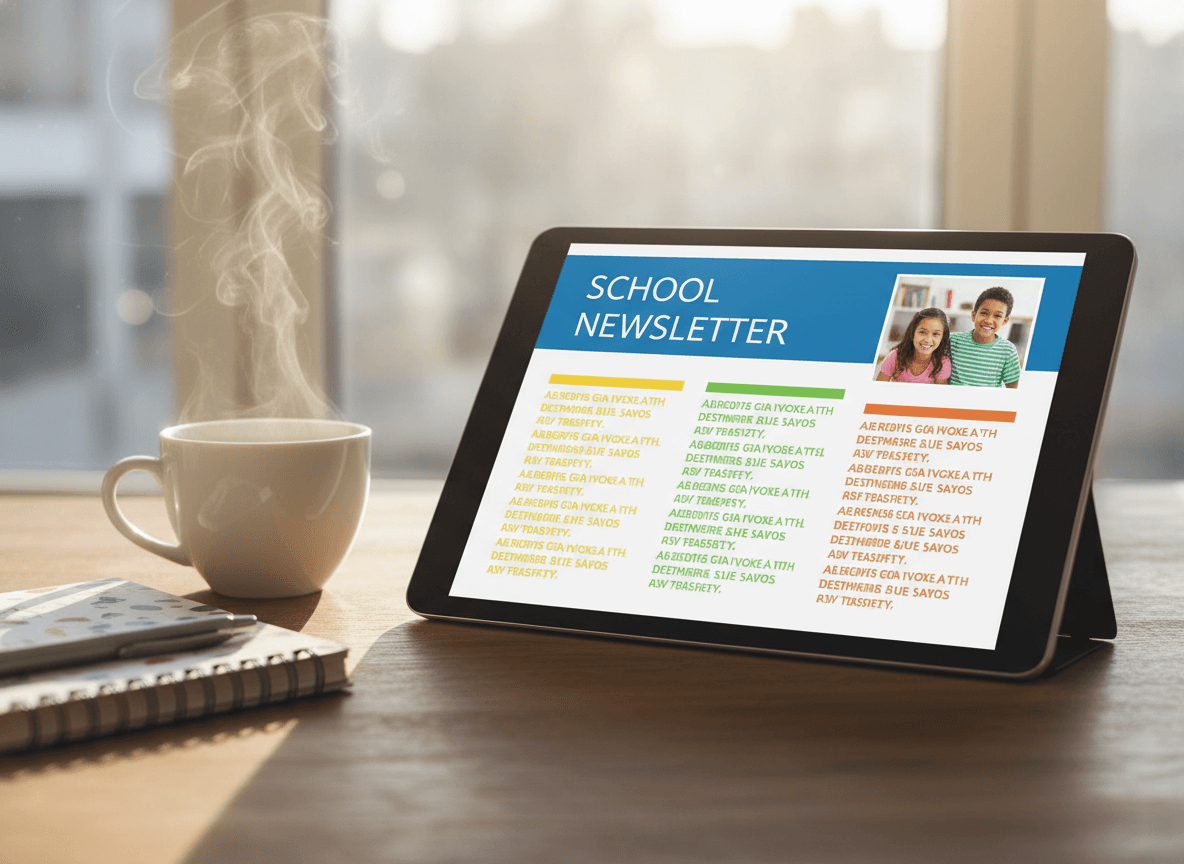
The question is not whether to send a newsletter. Most teachers know they should. The question is how to build a newsletter routine that is sustainable in a year when you are already learning how to be a teacher, managing 25 students, planning lessons from scratch, and surviving on less sleep than is reasonable.
Here is the approach that works for first-year teachers specifically.
How Often to Send It
Weekly. Same day, same time, every week.
Weekly is the minimum cadence that keeps parents informed without generating the "what is happening in that classroom" calls that come when families feel out of the loop. Monthly is not frequent enough in an elementary school context. Twice a week is unsustainable in year one.
The "same day, same time" part matters more than most new teachers realize. You are trying to build a habit, and habits require consistency to stick. If you decide to send on Fridays and then move it to Sundays when Friday feels too busy, you break the pattern and it becomes easier to skip the following week.
Pick a day. Protect it. Friday afternoon and Sunday evening are the most common choices. Most teachers who have been doing this for several years all say the same thing: the day does not matter as much as the consistency.
What to Include in Each Newsletter
Five sections. This is a template, not a rule. Drop a section if you have nothing to say in it that week. Add one temporarily for a specific event. But start here.
1. What we did this week
Two to three sentences. What subjects you covered and one specific thing that happened. Not a full accounting of Monday through Friday. One highlight that tells parents their kid was engaged.
"This week in reading we started our unit on informational text. Students discovered that several of them had strong opinions about whether zoos should exist, which turned into the best discussion we have had so far."
2. Coming up
Dates and events for the next two weeks. Tests, project due dates, field trip permission slip deadlines, picture day, early dismissal days. Anything that affects the family's schedule belongs here.
Format this as a list. Dates on the left, event on the right. Parents scan it like a calendar.
3. Things I need from you
This is the most important section for getting families to actually do things. Make it distinct from everything else. Bold it, bullet it, put a box around it, whatever your tool supports.
Only include time-sensitive items here. If a permission slip is not due for three weeks, wait to mention it until it is urgent. The more items in this section, the less each one gets noticed.
4. A positive moment
One specific win from the week. This can be a student achievement (anonymized or named, depending on your school's policy), a class milestone, a funny moment, or a reflection on something that worked well.
This section does something important: it gives parents a story to ask their kid about at dinner. "I heard your class had a debate about zoos, what did you say?" That conversation would not happen without this section.
5. How to reach me
Your email. Every week. Some parents lose the first newsletter. Some save a specific one and reference it six months later. Having your contact info in every newsletter means they always have it.
What Not to Include
This is where most new teachers run into trouble. They include too much, the newsletter becomes too long, parents stop reading it, and the teacher gets discouraged and stops sending it.
- Classroom rules and behavior expectations. These belong in a parent handbook or back-to-school night. Do not repeat them in weekly newsletters.
- Individual student concerns. Never address specific student behavior or academic issues in a class-wide newsletter. That is a private conversation.
- Extensive curriculum overviews. "This week in math we did long division using the partial quotients method, which is different from the standard algorithm, and here is why..." is a blog post, not a newsletter section.
- Appeals for donations, fundraisers, or extra help unless they are urgent.If there is a fundraiser deadline this week, mention it. If there is a general volunteer signup, mention it once per month at most.
How Long Should Each Newsletter Be
Three minutes to read. That is the ceiling.
Most parents read school newsletters on their phones, often while doing something else. A newsletter that takes five minutes to read will get saved and not come back to. A newsletter that takes three minutes or less will get read in the moment.
The way to control length: write everything, then cut. Most first drafts are one third longer than they need to be. Cutting is fast when you are reading for "does this section actually need to be this long."
Making It Sustainable in Year One
The teachers who send consistently every week are the ones who have built a system, not the ones who try to write a perfect newsletter every time.
Three things that make the newsletter habit stick:
- A template you reuse every week. Same five sections, same structure. You fill in the content, not the format. This cuts writing time from 45 minutes to 15 minutes once you have done it a few times.
- Notes throughout the week. When something happens that is worth mentioning, write it down immediately. A one-line note on your phone is enough. By Friday, you have a list to choose from instead of staring at a blank page.
- A hard deadline. Newsletters that you write "sometime on Friday" get written at 10pm or not at all. Newsletters that you write from 3:30 to 4pm on Friday get written. Give yourself a specific window, not a floating deadline.
When You Miss a Week
You will miss a week at some point. A sick day, a professional development crunch, a parent conflict that consumed your Friday afternoon. When this happens, do not try to write a catch-up newsletter. Just send the next one on schedule.
One missed newsletter does not break the relationship. Irregular communication that parents cannot rely on does.
Getting Families to Actually Read It
Two things matter: how you send it and what subject line you use.
Send the newsletter as an actual email, not a link. When parents receive an inline HTML email, the newsletter is right there in their inbox. When parents receive a link to a newsletter on another website, a meaningful percentage never clicks through.
For subject lines, be boring and specific. "Ms. Callahan's Class Update, Week of May 5" is better than "Exciting news from Room 12!" Parents who are skimming their inbox know exactly what that email is and can find it later when they need the date you listed.
Get one newsletter idea every week.
Free. For teachers. No spam.
Frequently asked questions
When should a first-year teacher send their classroom newsletter each week?
Thursday or Friday afternoon works best for most classrooms because it covers the week behind and previews the week ahead. Avoid Monday sends, which get buried under weekend email. Pick one day, keep it, and families will start expecting it.
What should a first-year teacher include in each newsletter?
Cover five things: what the class worked on this week, what is coming up next week, one student highlight or story, any reminders or dates, and one simple way families can support learning at home. Five short sections, written in plain language, take about 20 minutes to produce.
How long should a first-year teacher's classroom newsletter be?
Aim for 200 to 350 words. That is long enough to feel substantive and short enough for a parent to read in two minutes while standing at the counter. If you are consistently writing more than 400 words, you are including things parents do not need.
What mistakes do first-year teachers make with their classroom newsletter?
Three show up constantly: making it too long, skipping weeks when things get busy, and writing in school jargon families do not understand. The most damaging is the skipped week, because it breaks the trust you built. Write a shorter newsletter, not no newsletter.
What tool makes it easier for first-year teachers to send a classroom newsletter each week?
Daystage is a newsletter tool built for teachers, with a five-section template already set up so you fill in the blanks rather than starting from a blank page each week. First-year teachers use it to keep the habit going even during the hardest weeks of the year.

Adi Ackerman
Author
Adi Ackerman is a former classroom teacher and curriculum writer with 8 years in K-8 schools. She writes about school communication, parent engagement, and what actually works in real classrooms.
More for New Teacher
Ready to send your first newsletter?
3 newsletters free. No credit card. First one ready in under 5 minutes.
Get started free