

The First 100 Days: A New Teacher's Parent Communication Timeline
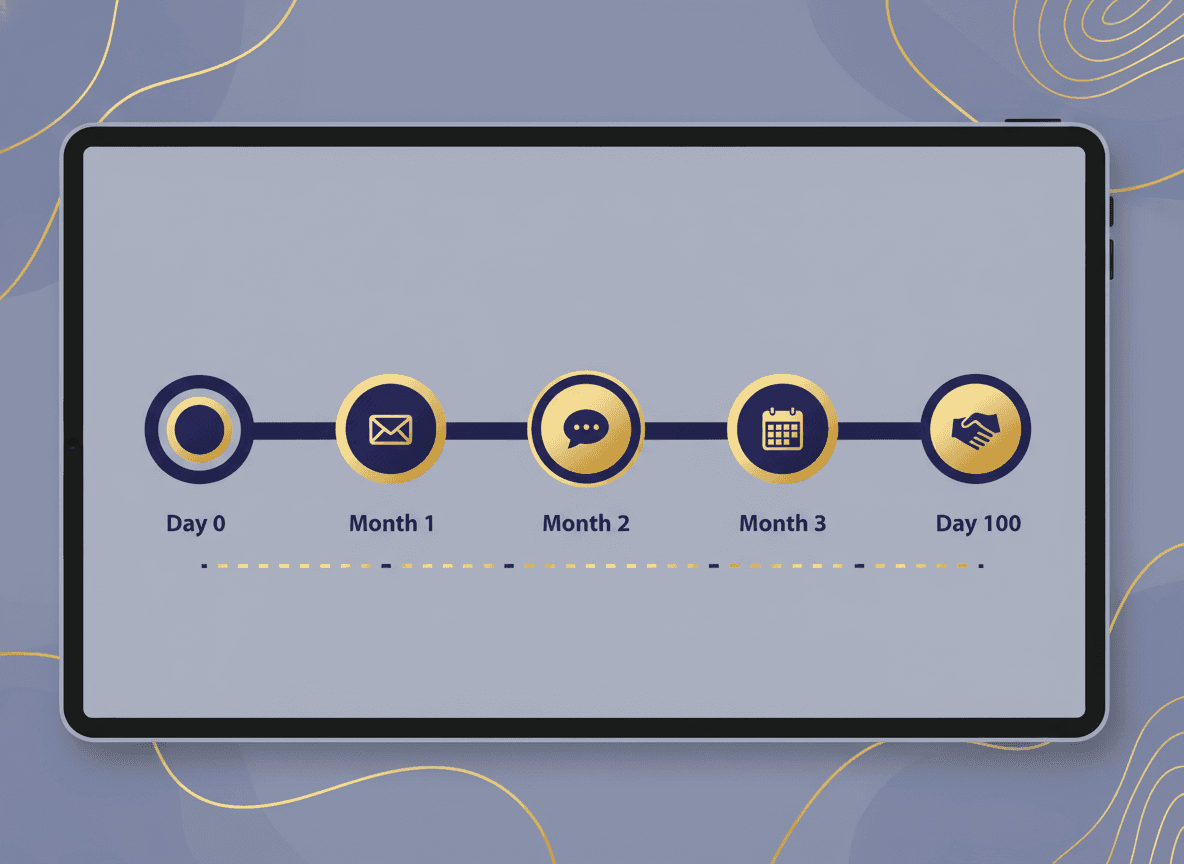
The first 100 days of school set the tone for your parent relationships for the entire year. The communication habits you build in September and October will still be operating in May. The parents you build trust with early will back you when things get hard in February.
This timeline gives you a concrete plan for what to communicate, when, and why, across the first 100 school days.
Before Day 1 (Two Weeks Out): The Introduction Email
Send your introduction email two weeks before the first day of school. Not one week. Not the night before. Two weeks gives families time to read it without being in the rush of first-week logistics, and it gives you time to handle replies before everything gets busy.
Include: your name, the grade and subject you teach, your communication plan for the year (when and how you will send newsletters), your contact information, and one specific thing you are excited about with this group. Keep it under four paragraphs.
Week 1: First Newsletter
Send your first newsletter at the end of week one, not the beginning. By Friday you will have actual content: what you did, how students settled in, what the first week showed you about the class. Do not send a newsletter on Monday of week one. You have nothing to report yet.
First-week newsletter focus: warmth and stability. Parents are anxious about how their child is settling in. Your job is to reassure them that class is organized and their child is in a functional, caring environment. One specific classroom moment from the week is worth more than any general statement.
Weeks 2-3: Establishing the Rhythm
Send your newsletter on the same day both weeks. This is when the pattern gets established in parents' minds. The parent who says at dinner in October "Friday is when Ms. Williams sends her newsletter" is a parent who has internalized your communication rhythm. That happens because you did it the same way three weeks in a row.
If your school has a back-to-school night or curriculum night in these weeks, send a specific newsletter before it (what to expect, where to find your classroom) and a brief follow-up after it (thank families for coming, summarize what you covered for those who could not make it).
Week 4: The First Month Check-In
One month in, send a slightly longer newsletter that includes a brief state of the classroom. What you have learned about this group. What is going well. What you are going to focus on in the coming weeks. This does not need to be long. Three or four sentences that give parents a sense that you have been paying attention to their specific group of kids, not just running a generic class, is enough.
Weeks 5-8: The Steady Middle Ground
These weeks do not require anything special beyond your weekly newsletter. Send consistently. Fill in the same five sections. This is where the habit either solidifies or breaks down.
The teachers who stop sending newsletters during this period almost always explain it the same way: "There was not anything exciting happening." But parents are not waiting for exciting. They are waiting for consistent. A week where you covered the standard curriculum, had no major events, and everyone showed up is still worth a newsletter.
Weeks 9-10: Pre-Conference Communication
Most schools schedule their first round of parent-teacher conferences between weeks 8 and 12. One week before conferences start, send a pre-conference newsletter. This should cover: when conferences are, how to schedule if they have not yet, what you plan to discuss, and a prompt like "come prepared to tell me one thing about your child I should know."
This newsletter does significant work. It tells parents what to expect, which reduces anxiety. It signals that you are prepared, which builds confidence. And it frames the conference as a two-way conversation, which sets a better tone than a one-way report.
Weeks 11-12: Post-Conference Follow-Up
Within one week of conferences ending, send a brief follow-up newsletter. Thank families for attending. Mention one or two themes from conversations (without identifying any specific family). Share what you are going to prioritize in the coming weeks based on what you learned.
For families who could not attend their scheduled conference, send an individual email within the same window with a brief summary and an offer to connect by phone.
Weeks 13-20: The Long Middle
From post-conference to winter break is often the longest uninterrupted stretch of the school year. No major milestones, fewer events. This is when newsletter consistency matters most, because it is easiest to let it slide when there is nothing driving it.
Keep sending. Keep it short. Vary the classroom win section to prevent it from feeling formulaic: some weeks spotlight a class achievement, some weeks include a quote from a student, some weeks mention a specific skill that has noticeably improved.
The 100-Day Mark
Many schools celebrate the 100th day of school as a milestone. Your newsletter around day 100 is a natural moment to step back and share what the class has accomplished, what you are proud of, and what is coming in the second half of the year. This is one of the more substantial newsletters you will write, and one parents tend to appreciate and share.
A brief "look at how far we have come" section, grounded in specific things rather than general praise, resonates with parents who have been following along all year.
What These First 100 Days Build
By the time you reach day 100, you will have sent approximately 14 to 20 newsletters depending on holidays and absences. You will have sent a pre-conference communication and a post-conference follow-up. You will have responded to dozens of individual parent emails within your committed timeframe.
What you will have built is a parent community that knows you, trusts you, and is prepared to support you through whatever the second half of the year brings. That is the compounding value of consistent communication. The work you put in during the first 100 days pays dividends for the remaining 80.
Using a newsletter tool like Daystage to handle the formatting and delivery means the time investment for each of those newsletters is minimal. The thinking and writing take 20 minutes. The rest is automated.
Get one newsletter idea every week.
Free. For teachers. No spam.
Frequently asked questions
When should a new teacher send parent communications during the first 100 days?
The timeline has four key moments: an introduction email two weeks before school starts, a first newsletter at the end of week one, a monthly check-in around week four, and a pre-conference email around week nine. Everything in between is your weekly newsletter, sent on the same day each week without exception.
What should a new teacher communicate to parents during the first 100 days?
Early communications should cover who you are, your classroom expectations, and the homework and grading approach. By month two, shift to curriculum updates, student progress highlights, and upcoming events. By the 100-day mark, parents should know what is being taught, how their child is doing generally, and how to reach you.
How should a new teacher adjust their communication style as the first 100 days progress?
Week one communications should be warm and welcoming. By week four, add more classroom-specific content like units, upcoming tests, and volunteer needs. After conferences in weeks nine or ten, move toward a steady rhythm where families feel informed without being overwhelmed.
What mistakes do new teachers make in their first 100 days of parent communication?
The most common mistake is front-loading communication in September and then going quiet in October and November. Parents notice the silence and start to worry. A second mistake is skipping the pre-conference communication, which leaves parents unprepared and leads to longer, harder conferences.
Is there a tool that helps new teachers stay on track with communication through the first 100 days?
Daystage gives you a built-in newsletter schedule so you can plan ahead and send consistently without having to reinvent the format each week. Many first-year teachers use it to manage the whole first 100 days without a single missed update.

Adi Ackerman
Author
Adi Ackerman is a former classroom teacher and curriculum writer with 8 years in K-8 schools. She writes about school communication, parent engagement, and what actually works in real classrooms.
More for New Teacher
Ready to send your first newsletter?
3 newsletters free. No credit card. First one ready in under 5 minutes.
Get started free